Xbox at 25: Helix, exclusives and the cloud roadmap
Published on · Updated on
Microsoft says the console remains at the core, but it is betting on Helix, selective exclusives and cloud gaming to survive the worst hardware crisis.
Xbox turns 25 on November 15, 2026, with a question bigger than the party: will Microsoft still make consoles? The official answer is yes — but the Xbox that comes next will no longer be just a box under the TV. The company has confirmed that Project Helix, its next home console, will also run PC games; it promises to carry four generations of library and progression into the new hardware; and it has made the cloud and the PC central to its strategy. At the same time, it cut 3,200 jobs, divested studios and admitted the business "is not healthy" amid the worst component crisis the industry has ever seen.
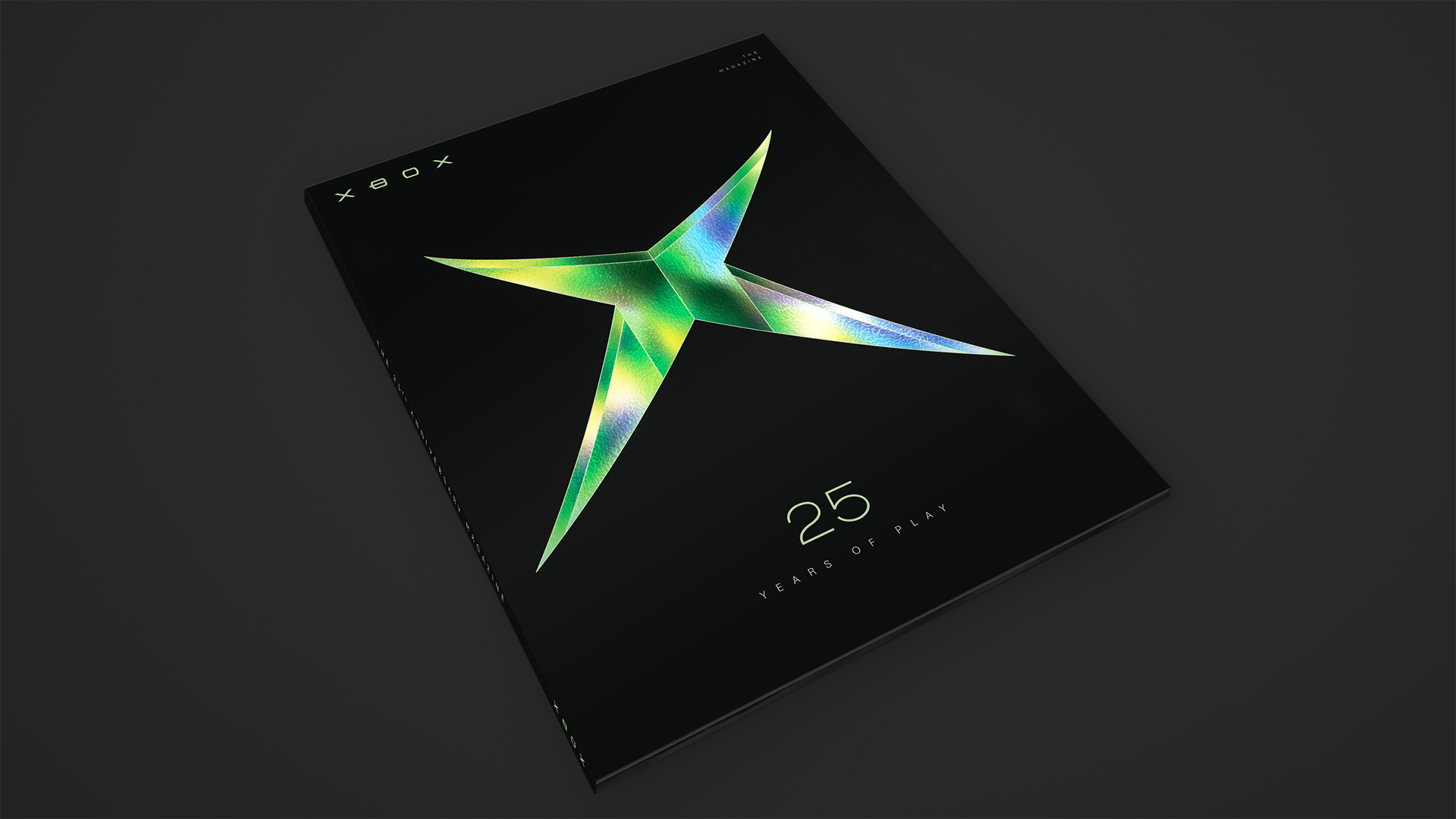
The anniversary date is November 15: that was the day, in 2001, that the original Xbox reached US stores at $299, with an 8 GB hard drive and an Ethernet port — choices that helped define what came next. Twenty-five years later, Microsoft published the 25th Anniversary Magazine, a 116-page publication featuring an interview with Xbox vice president of next generation Jason Ronald that became the month's most important statement about the brand's future. It produced the line that sums up the plan: Helix is a console that also plays PC games, not a PC that also plays console games.
What Microsoft has already confirmed about Project Helix
Project Helix stopped being a rumour in March 2026, when Microsoft described it at GDC as its first-party console for the next generation. The device uses a custom AMD SoC, co-designed for the next generation of DirectX and FSR, and the company promised an "order of magnitude" leap in ray tracing. Microsoft also said it plans to ship alpha hardware to developers starting in 2027 — a development milestone, not a consumer launch date.
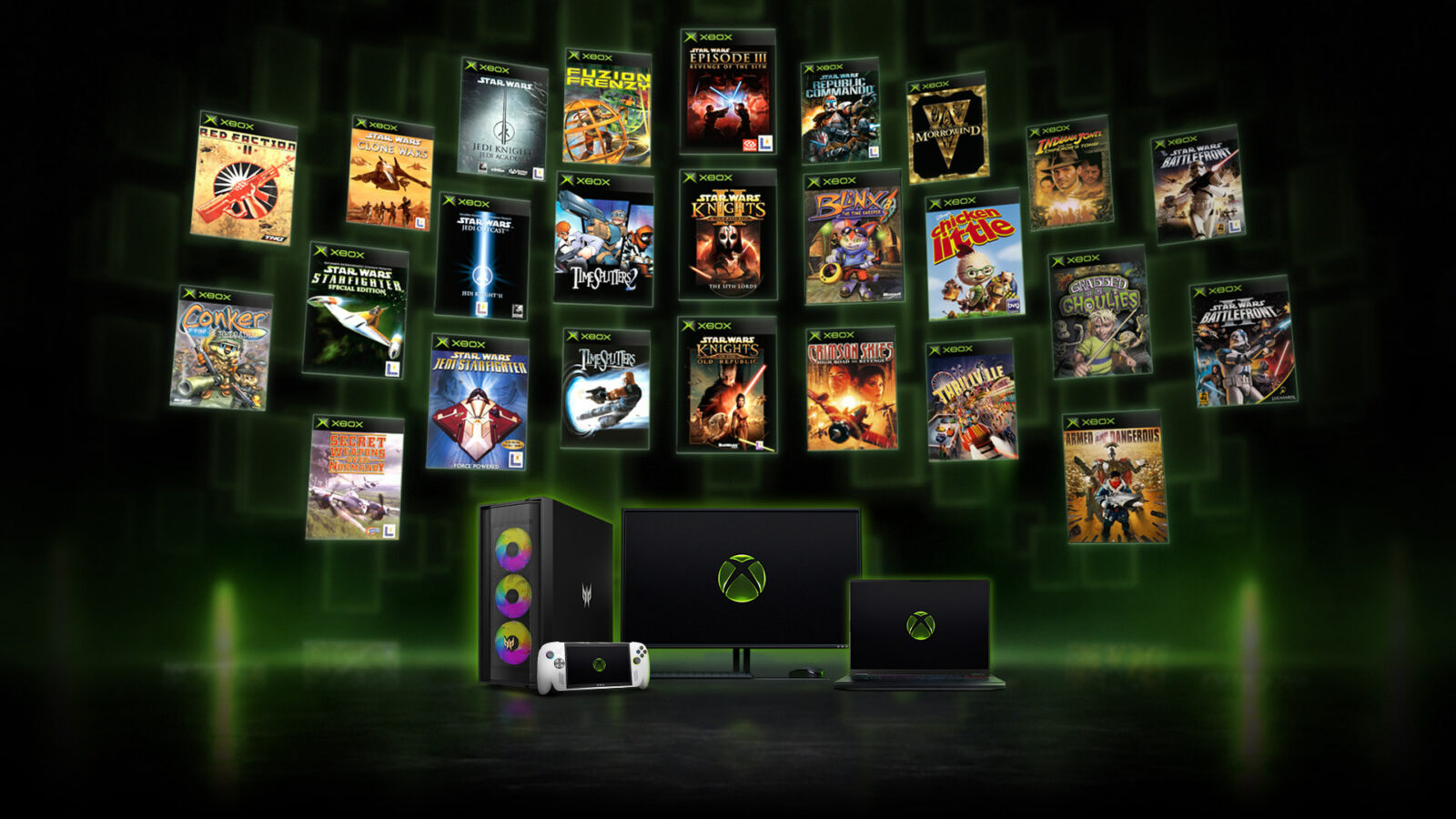
In the anniversary magazine, Ronald added what was missing to understand the concept. The console will have its own interface, informed by what the company learned from the ROG Xbox Ally handheld and Xbox mode on Windows, and it will bring libraries from several stores into one place. Players will be able to bring "four generations" of games and progression — original Xbox, Xbox 360, Xbox One and Xbox Series X|S — and, on the PC side, the promise is to remove "the arbitrary constraints between console and PC games".
"When we think about Project Helix, it's really designed to be the ultimate gaming machine, one that removes all the barriers of play that have historically existed. My entire library is accessible to me. I'm able to bring four generations of my Xbox library and progression with me and have it available instantly."
What is not confirmed matters just as much. Microsoft has not announced a price, a release date, final specifications or which PC stores will be supported — Steam and the Epic Games Store are the ones most cited by the press, but the company has confirmed neither. It is also unclear whether there will be access to a Windows desktop or how PC games will be installed. Reports from outlets such as Wccftech and T3 point to a console in 2028, priced between $1,200 and $1,800, and a first-party handheld in 2027; all of that remains speculation.
A brand that wants to be bigger than the console
The current strategy was formalised in April 2026, when the division stopped calling itself Microsoft Gaming and became simply XBOX. In the "We Are XBOX" document, signed by CEO Asha Sharma and chief content officer Matt Booty, the company set four priorities — hardware, content, experience and services — and a new north star: daily active players, rather than consoles sold.
The text is explicit about each piece's role: "Console is at the foundation, delivering a premium experience, and cloud brings that experience to any device." In June, the pair went further in an internal memo: Xbox reaches more than 1 billion players a year, totalling 72 billion hours across console, PC, mobile and streaming, and the competition is now "for attention".
That change of yardstick explains why Microsoft keeps insisting on Helix even as the console market shrinks. If the future is hybrid, the next Xbox has to be both a console and a gateway to the PC catalogue — and that is exactly what the company is promising.
The price of reinvention: 3,200 layoffs and the component crisis
The optimistic talk coexists with hard numbers. On July 6, 2026, Asha Sharma announced what she called "the most significant restructure in XBOX history": about 3,200 layoffs across fiscal year 2027, including 1,600 immediately, equivalent to 20% of the division. Four studios left Microsoft — Compulsion Games and Double Fine became independent; Ninja Theory and Undead Labs moved to new owners — and Arkane entered consultation in France to define its future.
In the memo published on Xbox Wire, the CEO did not soften the situation: "Our business today is not healthy. We are operating at margins that are 3-10x lower than comparable platform and publishing businesses." According to her, Xbox lost 64 cents for every dollar invested in a typical year and bet on Game Pass, multiplatform and a broader content portfolio without the expected growth.
"History is full of companies that mistake longevity for inevitability. We will not be one of them."
The backdrop is the component crisis. In June, Sharma revealed that the price of console storage components was more than double what it had been the previous autumn and had since doubled again; for the 2027 holiday season, the projection is to exceed five times the prices paid only two years earlier. "We are currently unable to make as many consoles as players want to buy, and we need a new business model and partnerships for hardware as we remain committed to Helix," she wrote.
The results for the quarter ended September 30, 2026 show the scale of the challenge: Xbox revenue fell 2% to $5.38 billion, with content and services also down 2% and hardware revenue dropping 14% on lower console volume, according to Microsoft's 10-Q filing. The company does not disclose hardware revenue in dollars.
Exclusives are back — but only some of them
Microsoft's answer to falling hardware was not to abandon the console, but to try to give people reasons to buy it. At the June 2026 Xbox Games Showcase, the company announced that Gears of War: E-Day and Clockwork Revolution would be Xbox console exclusives — and not timed exclusives. It was a sharp turn from the Phil Spencer years, when titles such as Starfield and Forza Horizon 5 ended up on PlayStation.
The new rule is not universal. Multiplayer and live-service games remain multiplatform, and everything already promised for PS5 will be delivered: Halo: Campaign Evolved, Fable and the Forza Horizon 6 port. Matt Booty summed up the logic in an interview with Gamertag Radio: "We want people to have a reason to buy an Xbox." Sharma said the company is starting with "one to two signature exclusives" and will only expand the list once the business is healthy.
For players outside the United States, the practical reading is that the 2027 Xbox will not be a closed territory. The trend is to see big franchises alternate between exclusivity and multiplatform releases, decided case by case — which makes the release calendar less predictable than in previous generations.
Cheaper Game Pass, capped cloud
The subscription service, once the brand's big bet, has been through a course correction. In October 2025, Ultimate rose to $29.99; on April 21, 2026, Microsoft cut the price to $22.99 and PC Game Pass to $13.99. In the same announcement, it confirmed that new Call of Duty titles no longer join Ultimate or PC Game Pass at launch — they arrive about a year later, in the following holiday season.
Since November, the plans have also included a monthly cloud gaming allowance: 15 hours on Ultimate, 10 on Premium and 5 on Essential, with extra hours sold separately. The change turns cloud gaming, previously unlimited on the top tier, into a metered feature — a sign that Microsoft wants predictable costs while trying to get subscriptions growing again. The company said in June that Game Pass had returned to growth after more than eight months of decline.
What we still don't know
The question in the headline has no closed answer because half the pieces are still up in the air. The table below separates what Microsoft has confirmed from what remains open:
| Item | Status |
|---|---|
| Helix runs PC games | Confirmed by Microsoft in November 2026 |
| Four generations of library and progression | Confirmed |
| Alpha hardware for studios | Confirmed for 2027 |
| Price and release date | Not announced |
| Supported PC stores (Steam, Epic) | Not confirmed |
| Console in 2028 for $1,200 to $1,800 | Reported by specialist press |
| First-party handheld in 2027 | Reported |
There is also a trust problem on the developer side. A GDC Festival of Gaming survey released on November 12 found that only 8% of the professionals polled plan to release their next games on Project Helix, against 10% for the next PlayStation and 21% for the Steam Machine. The figure is consistent with the calendar: without final kits before 2027, few studios can plan production for the device.
The scenarios on the table
Most likely scenario: Microsoft launches Helix between late 2027 and 2028 as a premium console with a unified library and a price above the Series X, while keeping the Series S|X selling as an entry point and using the cloud to reach TVs and phones. Hardware revenue keeps shrinking, but the ecosystem — Game Pass, PC, mobile and publishing on other platforms — sustains the business.
Alternative scenario: if the component crisis keeps pushing costs up, the company could delay the console, prioritise the handheld and sell Helix as a niche machine, closer to a pre-built PC. The CEO herself has described Helix as "a family of devices", not a single box, which leaves room for more than one format.
What is not on the plan: leaving hardware. Microsoft has repeated in internal and public documents that it remains "committed to Helix". For a brand that was born betting on a green box with a hard drive, exiting consoles would be the most radical break possible — and it is precisely what the company says it will not do.
What this means for players today
For anyone who already owns an Xbox, the message is continuity: the promise is that the library bought over 25 years will keep working on the next device, with progression preserved. For PC players, the interest is different: Helix could be Microsoft's first serious attempt to unite the two libraries in a single interface, without depending on separate launchers.
For players in Brazil, the picture is less certain. The component crisis and the exchange rate should keep prices high, and the cloud — now with an hours allowance — becomes the cheapest doorway into the catalogue. It is worth watching what Microsoft announces in 2027: that is the year development kits reach studios and the final shape of Helix should become clear.
In the meantime, the anniversary serves as a balance sheet. Xbox changed how people play online with Xbox Live, popularised the hard drive in a console, bought half the industry and, 25 years later, has to prove that selling a box still makes sense. Microsoft's answer is ambitious and expensive: a console that is also a PC, a cheaper subscription and a cloud with limits. Whether it works is something only time — and the market — will tell.
To understand how Xbox got here, revisit the highs and lows of every generation and what is already known about Project Helix and why developers are still waiting. Anyone wanting to make the most of the anniversary can check the step-by-step guide to claiming the 25 free games on PC and our analysis of the US console market crisis.
With information from Xbox Wire (We Are XBOX, Next 100 Days: XBOX Reset, Resetting XBOX, the Game Pass update and the 25th Anniversary Magazine), Microsoft (10-Q filing), Eurogamer, The Verge, Game File, GamesIndustry.biz, Bloomberg and Tweakers.
Suggested and related articles
Xbox Tests Free Ad-Supported Game Streaming; Here's How It Works
How to enable the Xbox 25th anniversary background
How to play classic Xbox games on PC with mouse and keyboard
Xbox at 25: how to claim 25 free games on PC
Xbox at 25: the highs and lows of every generation