Xbox at 25: the highs and lows of every generation
Published on · Updated on
From Halo and Xbox Live to the Xbox One fiasco and the Project Helix gamble: 25 years of Microsoft in consoles, with the wins and misses of each generation.
Xbox turns 25 this Sunday (15), a date that closes a cycle of four console generations and turns the brand created in Redmond into one of the longest-running names in the games market. It all began on November 15, 2001, with a heavy black box, an oversized controller and a game that became the symbol of an entire platform: Halo: Combat Evolved. A quarter of a century later, Microsoft is marking the anniversary with a fan festival tour that ended in Seattle, a personalised annual recap for players and a new leadership team trying to answer the question that has haunted the brand since 2013: where, after all, does Xbox belong in this market?
The most complete retrospective of the moment comes from Ryan McCaffrey, an IGN editor who has covered the industry since his days at Official Xbox Magazine. In the video Xbox at 25, published this Sunday, and in the article that accompanies it, he walks through the highs and lows of every generation — and the result is a portrait of a company that scored a direct hit by betting on networking, community and subscriptions, but stumbled badly every time it tried to guess what players wanted before listening to them.
Xbox (2001–2005): a first year carried by a single game
The original console reached North American stores on November 15, 2001, priced at $299, with a built-in hard drive — unprecedented for a video game system — and an Ethernet port that looked excessive at a time when most homes were still on 56k modems. The broadband bet would only pay off a year later, but it was what set Xbox apart from its rivals.
The first year, however, was uneven. As McCaffrey recalls, outside Combat Evolved much of the launch catalogue was weak, with experiments that went nowhere, such as the now notorious Blinx: The Time Sweeper. There were cult favourites — the wildly expensive Steel Battalion, with its 40-button controller and pedals, and The Elder Scrolls III: Morrowind, which planted the seed of Xbox as a home for Western RPGs — but first-party output had not yet found its footing.
Year two changed everything. On November 15, 2002, exactly one year after the console launched, Microsoft debuted Xbox Live, a $50-a-year paid service that shipped with a headset and used broadband for lag-free matches. MechAssault and Tom Clancy's Ghost Recon opened the service, and Splinter Cell, released two days later, became a technical showcase with real-time lighting and the charisma of Sam Fisher.
The rest of the generation stacked up wins: Star Wars: Knights of the Old Republic in 2003, Ninja Gaiden and Splinter Cell: Pandora Tomorrow in 2004, Halo 2 on November 9, 2004 — the biggest launch the industry had seen until then — and, in its final year, Forza Motorsport, Jade Empire, Psychonauts and a console version of Half-Life 2. Even so, Xbox finished the generation far behind the PlayStation 2, with around 24 million units against more than 150 million for its rival.
Xbox 360 (2005–2013): the peak, the defect and the change of focus
The Xbox 360 arrived on November 22, 2005, just four years after the first console, with 18 launch games and an architecture developers loved. That was where the brand reached its peak popularity — and also where it learned, the hard way, the cost of growing too fast.
Between 2006 and 2007 the console lived through what IGN calls the glory days: Oblivion, Gears of War, Dead Rising and, within a three-month stretch, BioShock, Halo 3, The Orange Box, Call of Duty 4, Assassin's Creed, Mass Effect and Rock Band. Xbox Live Arcade created the model for smaller, cheaper digital games before the App Store existed, and the Summer of Arcade programme would introduce titles such as Braid, Castle Crashers and Limbo.
The other side came in the form of the Red Ring of Death, a hardware failure that hit a huge share of consoles and forced Microsoft to extend the warranty to three years, at a cost of more than $1 billion. The brand survived the episode, but the second half of the generation already revealed the pattern that would repeat: chasing new audiences — Kinect, streaming apps, home entertainment — at the expense of the player who had bought the console for its games.
Kinect and the detour
Announced in 2009 as Project Natal and released in 2010, Kinect sold a lot and produced good casual titles such as Dance Central and Kinect Sports, but never anything on the level of the franchises that sustained the 360. For IGN, that was where the leadership of the time lost focus on what had taken it to the top in North America — and that detour would lead straight into the worst month in the brand's history.
Xbox One (2013–2020): 21 seconds that cost a generation
On May 21, 2013, Microsoft unveiled the Xbox One by pitching it as the centre of the living-room entertainment system, with TV, a mandatory Kinect and the slogan that became a joke: "TV, TV, TV". The following month, at E3, the company confirmed a $499 price — a hundred dollars above the PlayStation 4, which cost $399 and was more powerful.
Worse than the price was the 24-hour online check-in policy and the restrictions on used games, which Sony exploited in a 21-second video. Jack Tretton, then head of PlayStation, took the stage to state the obvious with surgical precision:
"When a gamer buys a PS4 disc, they have the rights to use that copy of the game. They can trade in the game at retail, sell it to another person, lend it to a friend, or keep it forever."
Microsoft reversed the policies within days, but the damage was done. According to IGN, Xbox lost around 30 million players in that generation — precisely the generation in which the public began building digital libraries. Phil Spencer, who took over the division after the fiasco, summed up the problem years later:
"We lost the worst generation to lose in the Xbox One generation, where everybody built their digital library of games."
Not everything was ruin. Titanfall, Sunset Overdrive, Inside, Gears 4 and Gears 5 and the rise of Forza Horizon kept the console alive, the Xbox One X reclaimed the horsepower crown with true 4K and backward compatibility became one of the brand's flagships. It was also in this generation that Xbox Game Pass was born, in 2017, and that Microsoft bought Bethesda and Activision Blizzard — moves that would change the logic of the business forever.
Xbox Series X|S (2020–2026): plenty of power, an identity in dispute
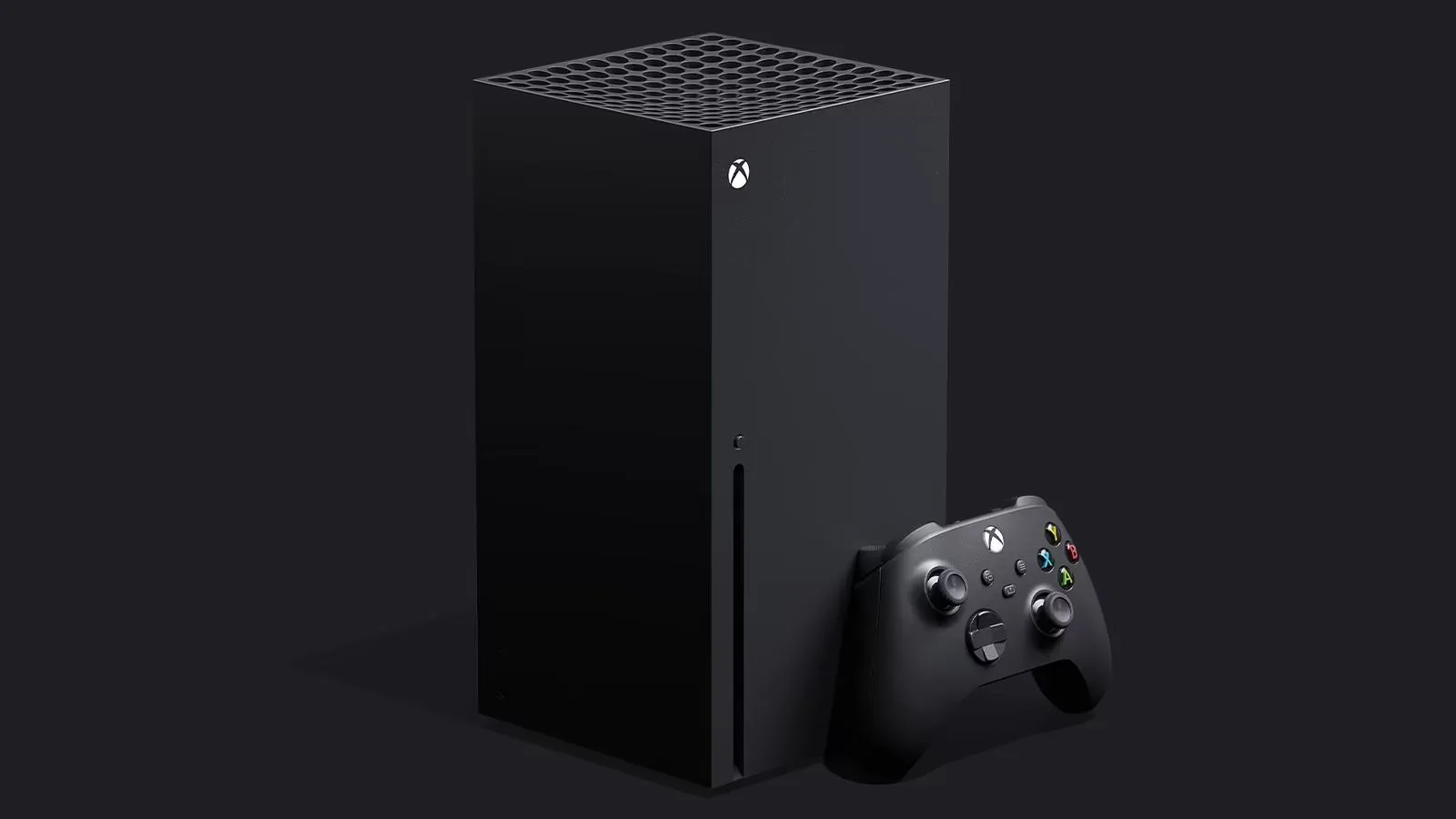
Launched on November 10, 2020, in the middle of the pandemic, the Series X|S delivered a powerful, quiet and reliable console, free of the chronic hardware problems of the past. The pair bet on two price points — $499 and $299 —, on broad backward compatibility and on Game Pass as the core of the proposition. The problem was everything else: component shortages, an absence of big exclusives early on and an increasingly multiplatform strategy that left many players asking why they should buy an Xbox at all.
IGN sums up the paradox: the Series X is an excellent piece of hardware, but a cloud of uncertainty hung over the whole generation. Microsoft began shipping games on PS5, Game Pass Ultimate rose to $30 a month and, according to IGN, the global surge in memory and storage prices driven by AI data centres pushed the Series X from $500 to $750 — a 50% increase no console from the brand had ever experienced.
In 2026, the picture changed again. Phil Spencer, a Microsoft employee since the days of the first Xbox, retired. Asha Sharma took over, cut Game Pass Ultimate to $23, scrapped the "This is an Xbox" campaign, handed Halo to Activision, cancelled an Avowed sequel and promised to "return to exclusives". The price of the reorganisation was high: mass layoffs and five studios spun out of the company.

How Xbox reached 25 — and what the party delivered
The official celebration began well before the anniversary. The FanFest tour stopped in Los Angeles, Cologne, Tokyo, London, Mexico City, Sydney and Toronto before ending in Seattle, the city where it all began, at the Museum of Pop Culture (MoPOP) on November 12. The party featured a drone show with Master Chief, the Pip-Boy, Steve and other brand figures, plus play stations and a historical display.
On the same date, Xbox Wire published its round-up of announcements: Xbox Playback arrived to show players their own history on the platform, 25 original Xbox games became playable on PC with achievements — including Knights of the Old Republic and Morrowind —, commemorative items were handed out in Forza Horizon 6, Minecraft, Gears of War: E-Day and Flight Simulator 2024, and Halo: Campaign Evolved received the Firefight mode in a free winter update.
The loudest announcement was Wolfenstein 3, confirmed by Asha Sharma herself and in production at MachineGames, with Brian Bloom and Debra Wilson returning as BJ Blazkowicz and Grace Walker. "This is a franchise with an important place in gaming history, and I'm excited to see the team continue its story," the executive said. Xbox Wire also showed new Fable gameplay and noted that 111 employees across Xbox and its studios have been with the company for 25 years or more.
For anyone who wants to revisit their own history on the console, Xbox Playback 2026 remains available on console and on the web until December 31. IGN's retrospective is linked below:
The 25-year balance sheet, generation by generation
| Generation | Launch | Launch price (US) | Biggest win | Biggest stumble |
|---|---|---|---|---|
| Xbox | 11/15/2001 | $299 | Halo and Xbox Live | A first year dependent on a single game |
| Xbox 360 | 11/22/2005 | $299 to $399 | The 2007 release streak | Red Ring of Death |
| Xbox One | 11/22/2013 | $499 | Game Pass and Xbox One X | The May 2013 reveal |
| Series X|S | 11/10/2020 | $299 to $499 | Hardware and backward compatibility | Lack of exclusives and price hikes |
Project Helix and the next 25 years
The immediate future has a codename: Project Helix. Microsoft has announced a console-PC hybrid for the next generation, a break from the traditional model that Sony is expected to keep with the PlayStation 6. The logic is simple — the console market is not growing, the PC market is — but the risk is enormous: it is the first time Xbox has stepped away from the format that defined the brand.
There are, of course, reasons for optimism. Forza Horizon 6 was another winner, Gears of War: E-Day marked the franchise's return, Fable arrives in a few months from Playground, Clockwork Revolution promises an ambitious RPG and The Elder Scrolls 6: Sentinel, still a few years away, could reignite the exclusives war if the new leadership keeps its promise. The market context, however, is the harshest in decades: console sales in the United States have hit their lowest level since the 1980s, as our industry analysis showed.
Twenty-five years on, Xbox is a brand that changed the industry by proving that networking, subscriptions and backward compatibility could be pillars of a console — and that paid dearly every time it tried to decide on its own what players should want. This Sunday's celebration is at once a reckoning and a bet: that the next decade still has room for an Xbox, even if it is no longer exactly a console.
With information from IGN and Xbox Wire.
Suggested and related articles
Xbox Playback 2026: who qualifies and how to watch

Harada slams Xbox Series S, fears a 'Helix S' next gen
Xbox Disc-to-Digital: Ubisoft, Square Enix and Sega Are Blocking Disc Game Conversion
Xbox Game Pass: Microsoft plans à la carte plan with add-ons
Xbox Tests Free Ad-Supported Game Streaming; Here's How It Works