PEGI raises to 16 the rating of games with loot boxes
Published on · Updated on
PEGI is reclassifying existing games with paid loot boxes to PEGI 16 and requiring a paid random items label on digital stores across all of Europe.
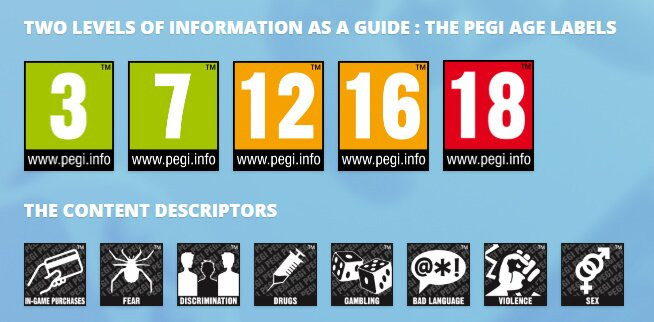
Brussels — The Pan-European Game Information (PEGI), the body that age-rates video games in 38 European countries, has begun reclassifying games already on sale that sell paid random items — known as loot boxes — to the 16 age bracket. The change was announced on October 6, 2026, and is being rolled out throughout this month across every digital storefront that uses the PEGI label. Titles that previously carried PEGI 3, PEGI 7 or PEGI 12 will now display PEGI 16 and the Paid random items descriptor. The measure applies both to games rated through the traditional PEGI Classic procedure and to titles rated under the International Age Rating Coalition (IARC) system used by stores such as Google Play and the Microsoft Store.
In practice, the update hits digital productions that remain active and keep receiving content years after launch, from competitive shooters to sports games and mobile titles built around gacha systems. The reclassification is retroactive only for digital versions: games sold on physical media are not part of the package for now. The work will be carried out sequentially and may take weeks to appear on every storefront, because each publisher has to update its own product listings.
What changes in practice for players
The first visible effect is the number on the label. A game that currently shows "12" in a European store may be displayed as "16" without any change to its violent, sexual or language content. The difference lies in the monetisation mechanic: the presence of random items bought with real money or virtual currency is now treated as a relevant interactive risk, not merely as an informative descriptor.
Beyond the minimum age, product pages must now carry the Paid random items descriptor, which already existed in PEGI's vocabulary but is now mandatory for these titles. Companies also need to reflect the new rating in future marketing materials, trailers and campaigns that mention the age bracket. Those who fail to update their listings are subject to the system's compliance rules and to oversight by the national authorities that administer PEGI.
- Digital games already released with PEGI 3, 7 or 12 and paid loot boxes move to PEGI 16;
- New releases with paid random items have entered as PEGI 16 since June 2026;
- Mandatory descriptor for paid random items on store pages;
- Gradual update throughout October, with no single date for the whole catalogue.
Why PEGI decided to revisit older games
The decision expands a reform announced in March and implemented in June, when the body began assessing "interactive risks" in new submissions. Until then, the rule applied only to games submitted from that month onward. With the back catalogue falling behind, PEGI chose to apply the same criteria to live-service titles that remain popular and keep receiving updates.
"Online games can remain available and updated for a very long period of time. To avoid that our age ratings over time become inconsistent, we decided to perform this update."
Dirk Bosmans, Director of PEGI
The official notice says the review aims to ensure that older games, when they remain relevant, reflect the system's current standards. Germany's USK authority adopted similar logic in 2023 after an update to the country's youth protection law. PEGI says it worked with USK to align the rules and avoid divergence between two markets that share part of the same audience.
The organisation also argues that an age rating should not be confused with difficulty or quality. The label indicates suitability for a given age group, and including interactive risks is meant to give parents a more accurate picture of the experience: how much money, time and social interaction a game asks for. For families already familiar with the in-game purchases descriptor, the novelty is that this element now directly changes the number shown on the box.
Marvel Rivals already shows 16
The most cited case in the first weeks is Marvel Rivals. The NetEase hero shooter carried PEGI 12 in European stores and, on October 17, moved to PEGI 16. The game has seasonal passes and cosmetic items sold in bundles, plus rewards for playtime — a combination the new framework classifies as an interactive risk. Players noticed the change before any statement from the developer, which raised questions about the reach of the measure.
"We are aware that a significant volume of rating changes will occur within a relatively short timeframe. Publishers and developers with questions or concerns regarding the process can receive further guidance through the PEGI Helpdesk."
Connor Hinde, Policy Manager at the Games Rating Authority (GRA), which administers PEGI in the UK
The statement, published on LinkedIn and reported by specialist outlets, confirms that the authority expects a wave of simultaneous adjustments. For players, the immediate effect is seeing games already installed on a console or phone change bracket without any content update. For companies, the challenge is operational: each store has its own review workflow, and the timeline depends on how fast each platform moves.
The four new interactive risk categories
Since June, PEGI has assessed four groups of features that did not fit well into traditional classification, which is based on violence, fear, sex, drugs and language. The table below summarises how each one influences the minimum age:
| Category | Example | Rating |
|---|---|---|
| Paid random items | Loot boxes, card packs, gacha | PEGI 16 (can reach 18) |
| In-game content purchases | Time-limited or quantity-limited offers | PEGI 12 |
| NFTs and blockchain | Tokenised collectible items | PEGI 18 |
| Play-by-appointment | Daily quests and return rewards | PEGI 7; PEGI 12 if it punishes absence |
| Unrestricted communication | Chat without blocking or reporting | PEGI 18 |
Reading the categories together explains why a football game with no explicit violence can move up a bracket: if it sells packs of random players, it falls under the PEGI 16 criterion. The same reasoning applies to mobile titles that rely on gacha for progression and to experiences that mix a battle pass with daily rewards. PEGI notes that analysis is case by case and that the presence of parental tools can be considered in the overall assessment.

Experts welcome the move but want broader reach
The change was welcomed by organisations working on children's digital safety, though with caveats. In March, when PEGI announced the new categories, Ygam chief executive Emily Tofield called it "a step in the right direction" and argued that the rule should also apply to games already available. The extension announced in October meets part of that request, even if it is limited to digital versions.
"Without applying the rules to current games the policy will do little to protect the children who are already playing them."
Emily Tofield, chief executive of Ygam, in an interview with the BBC
Researchers also point out that recognising loot boxes as a risk factor is relevant but insufficient without enforcement. "Recognising loot boxes as a risk factor in age ratings is an important step towards reflecting the realities of modern game design, helping to provide parents with clearer signals about potential harms," Dr Ruijie Wang of Bournemouth University, who led a 2025 study on gambling-like mechanics among young people, told the BBC. Freelance games journalist Vic Hood noted that the practical effect depends on parents understanding why the rules changed.
In the UK, loot boxes remain without specific legislation. The government decided in 2022 not to amend the Gambling Act 2005, saying there was no evidence of a causal link to harm. Since 2023, a set of industry principles published by trade body Ukie has recommended restricting purchases by under-18s without parental consent. Age ratings, in this context, work more as a warning sign than as a ban.
What it means for players outside Europe
PEGI has no authority over Brazil, where the Ministry of Justice issues the ClassInd rating and digital stores usually display both the Brazilian and European labels depending on the account region. Even so, the European decision matters to Brazilian players for two reasons: it pushes publishers to review how they communicate globalised games, and it sets a precedent for debates about loot boxes in the country.
If you play on a European account or follow stores such as the European PlayStation Store, you are likely to find the new label on titles already in your library. It is worth checking a game's page before buying credits for random boxes and, in the case of children and teenagers, using console or phone parental controls to limit spending and playtime. In Brazil, the debate over loot box regulation continues in Congress, with no specific national rule approved so far.
To follow how age ratings have been reshaping the market, compare with other recent cases, such as the GTA 6 18+ rating and Marvel Rivals' new conduct rules. It is also worth browsing the games archive to see how labels appear on the pages we publish.
Timeline and next steps
PEGI has not published a closed list of affected titles or a single completion date. The official notice says updates will be carried out across all stores using the system and "will take some time to complete". Guidance to publishers is to keep listings and marketing materials up to date, with support from the Helpdesk when in doubt.
Further waves of reclassification are expected in the coming weeks as Google Play, the Microsoft Store, the PlayStation Store, the Nintendo eShop and PC storefronts process requests. PEGI has also said it will keep monitoring the implementation of the criteria over the next year, which may lead to new adjustments. For the public, the message is simple: the number on the box can change without the game changing — and now that number says more about how a title charges players.