Final Fantasy Resonance: HD-2D JRPG comfort done right
Published on · Updated on
The first HD-2D Final Fantasy rebuilds Brave Exvius with sharp turn-based combat, gorgeous pixel art and a predictable yet comforting classic story.
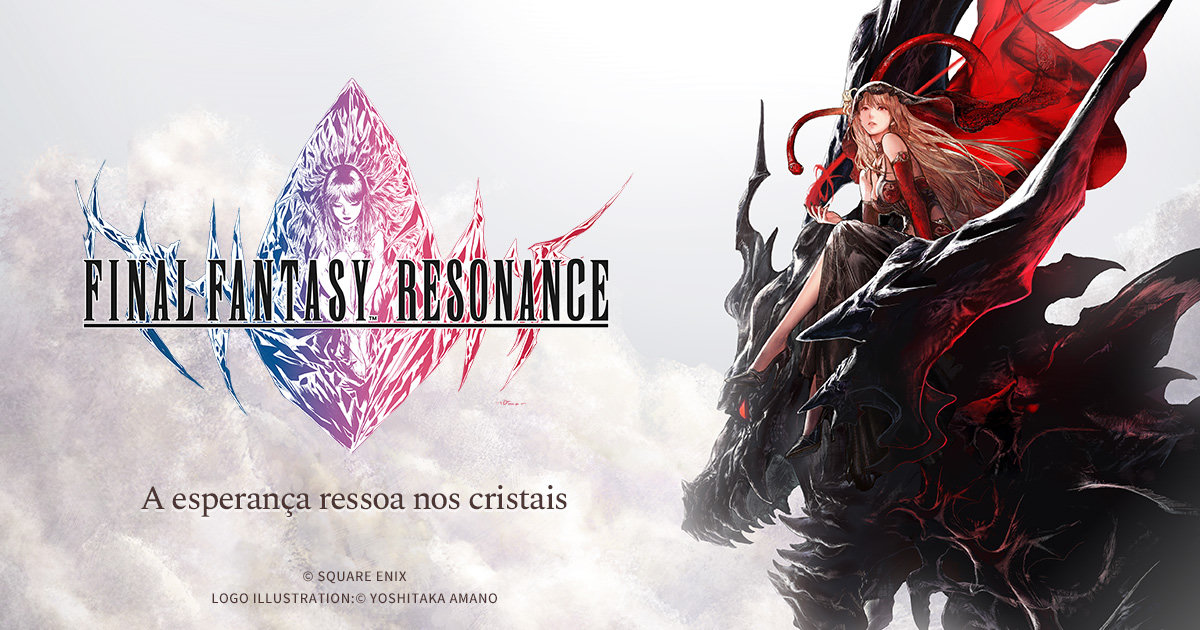
LOS ANGELES — Square Enix released Final Fantasy Resonance this Thursday (22), the first game in the Final Fantasy series built in the HD-2D style, for PlayStation 5, Nintendo Switch, Nintendo Switch 2, Xbox Series X|S and PC (Steam and Microsoft Store). Co-developed with Japanese studio Lancarse, the title rebuilds the first arc of Final Fantasy Brave Exvius (2015) — the discontinued mobile RPG — as a complete turn-based adventure with no gacha and no randomized monetization. The pitch cuts both ways: give veteran fans the comfort of a classic JRPG and prove that Square Enix's 3D pixel-art technology can carry a console-scale Final Fantasy, not just catalog remakes. The result is a technically superb and narratively conservative game that nails almost everything it sets out to do while avoiding, on principle, any major risk.
The launch was accompanied by a free demo with save transfer across all platforms, a move the publisher used to ease concerns from players who associated the project with the ghost of dead mobile games. This review is based on official launch material, the PlayStation 5 review build analyzed by the specialist press and the international critical consensus — the game's Metacritic sits at 85, with 46 reviews counted by Thursday afternoon.
What Final Fantasy Resonance is — and why it exists
Resonance is neither a port nor a remaster. It is a reconstruction of the "Lapis" arc, the first narrative season of Brave Exvius, rewritten and re-sequenced into a premium, single-purchase RPG. That distinction matters because the original was a free-to-play game sustained by random summons: its quest structure, difficulty curve and even battle pacing existed to serve monetization. Bringing that skeleton to consoles required more than prettier sprites. It required redesigning combat from scratch.
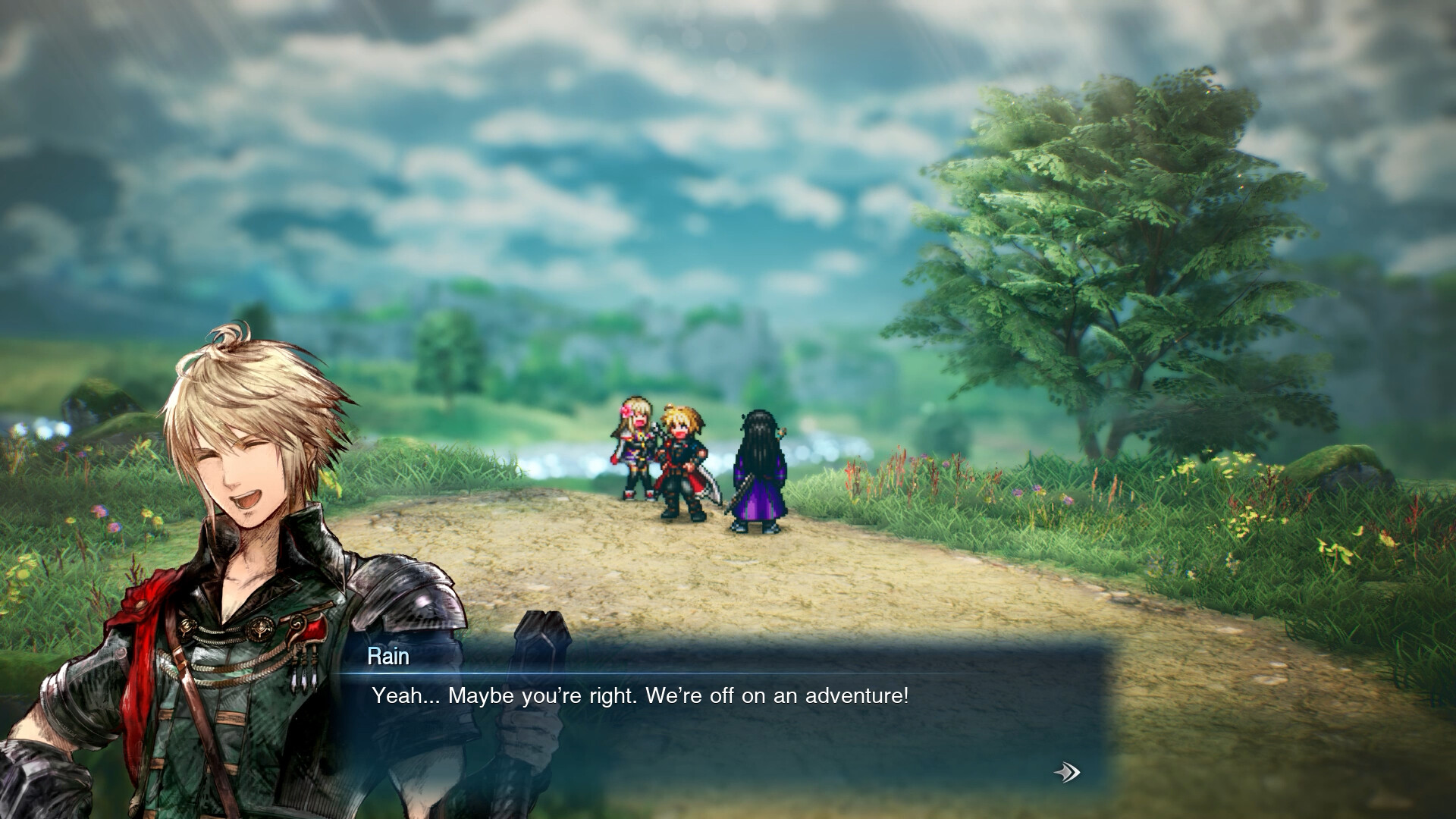
The plot keeps the classic backbone of the franchise: a world whose existence depends on crystals, a threat bent on destroying them and a party of heroes who must stop the disaster. The protagonist is Rain, a knight of the Kingdom of Grandshelt who, at a very young age, is entrusted with commanding an airship squadron. Alongside childhood friend Laswell, he crosses the continent on a journey packed with dramatic twists, emotional beats and epic confrontations — plus the usual traveling companions: the spunky mechanic Lid, the amnesiac heroine Fina and a cast players recognize before they are even introduced.
That familiarity is deliberate and works as an entry point. Anyone who never played Brave Exvius understands the world within minutes, and anyone who never played a Final Fantasy finds a well-executed summary of the series' codes: chocobos, espers, airships, crystals and summons. It is a textbook JRPG in the best and worst sense of the term.
Visuals: when pixel art becomes cinema
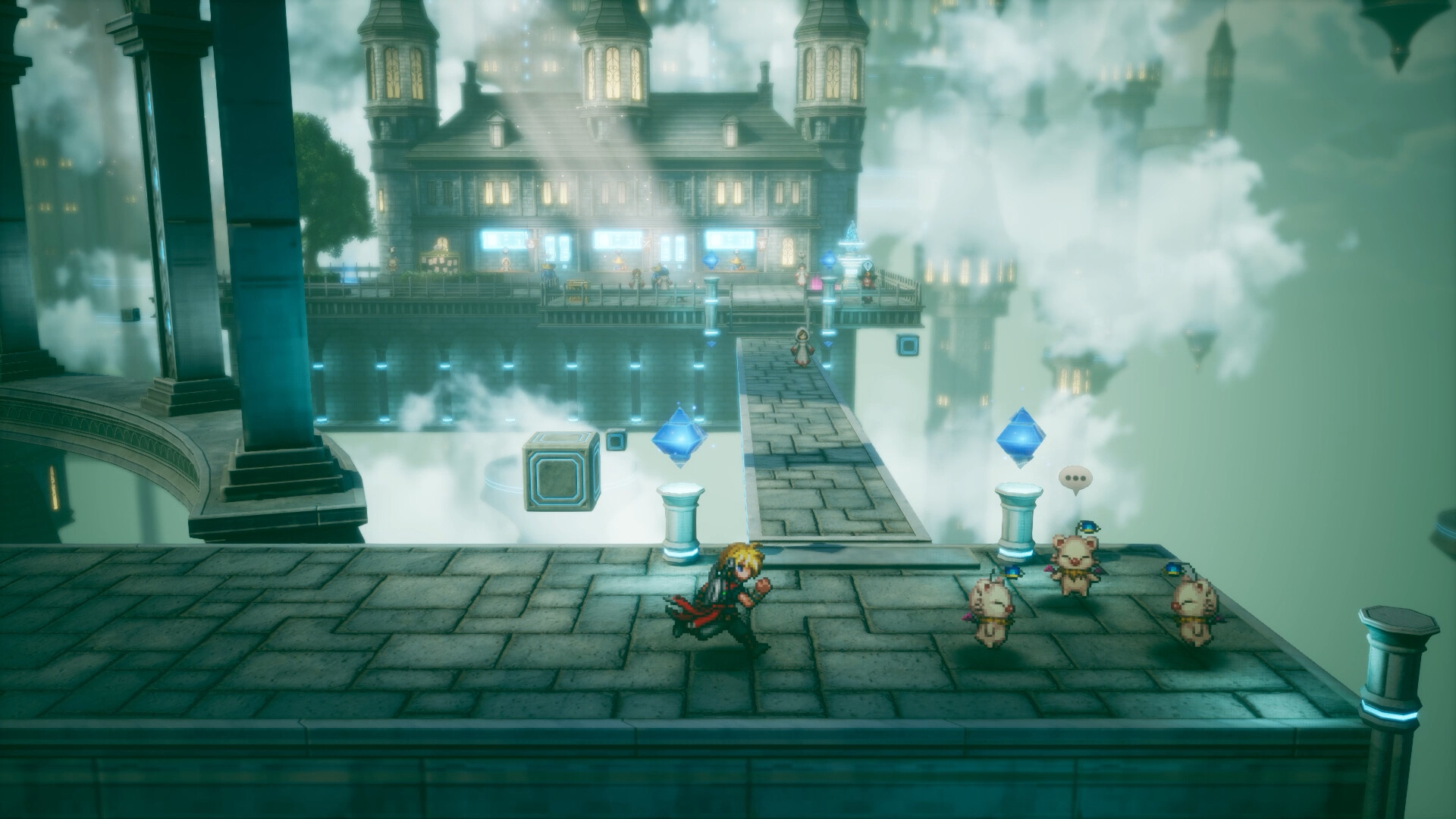
HD-2D debuted in 2018 with Octopath Traveler and became Square Enix's visual signature: pixel-art sprites over 3D environments with depth of field, dynamic lighting and particles. Eight years on, the technique no longer surprises on its own — which is exactly where the risk lay for Resonance: looking like one more chapter of a worn formula. The studio's answer was technical: the so-called Cinematic Pixel technology, which renders 3D scenes with a pixelated treatment, erasing the visual break that used to separate 3D cutscenes from the sprite-based game.
In practice, the effect solves HD-2D's historic problem with large-scale scenes. Instead of falling back on 3D cutscenes that clashed with the art direction, the game keeps the same visual language from start to finish, including its biggest spectacles — special attacks, summons and fights against colossal bosses. Specialist critics are nearly unanimous here: this is the best use of the technology to date, with the caveat that we are talking about refinement, not reinvention.
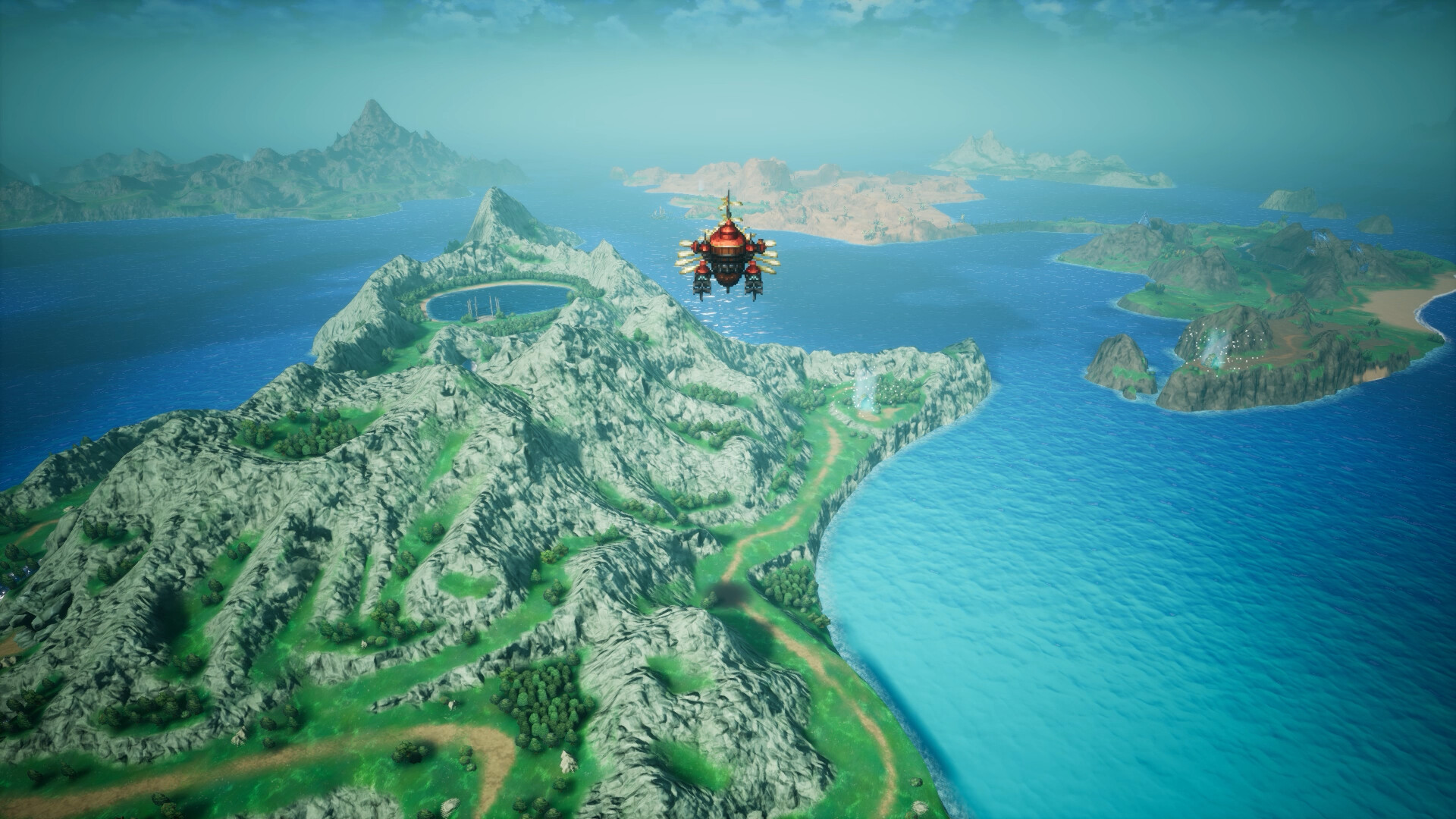
The world map deserves its own paragraph. Instead of static selection screens, the player flies over a continuous continent with islands, mountain ranges, towns and points of interest that only reveal themselves as you approach. The scale is generous and the layout rewards detours: hidden chests, side quests and optional bosses sit off the main path. It is the kind of structure that gives substance to the verb "explore" in a genre that often outsources that job to menus.
Combat: the Break Gauge changes the rhythm of turns
The foundation is old-school turn-based combat, without the ATB (Active Time Battle) system that defined the series in the 1990s — a direct inheritance from the mobile original, which also skipped time bars. The big addition is the Break Gauge, a bar separate from enemy HP. Regular attacks chip it; hitting the foe's elemental weakness drains it far faster; and some skills trade raw damage for accelerated breaking.
Breaking the bar has three consequences that reorganize tactics. First, it cancels boss mechanics: when an enemy builds a red aura for a heavy strike, a Break before its turn interrupts the pattern. Second, it opens burst windows — the target loses its action until the next turn, takes increased damage and grants an extra action (Extra Phase) to whoever caused the break. Third, it speeds up pacing: encounters that drag in traditional JRPGs now peak with a decision every two or three turns.
The system gains body with Full Break, triggered when every enemy is broken at once. Instead of an extra action for one character, the whole party gets additional turns. That is the moment to unload Resonance Skills, the ultimate moves of Vision characters, with bespoke animations and utility effects beyond damage. The sequence of collective break, extra party turn and ultimate attack is the heart of the spectacle — and the reason battles rarely feel bureaucratic.
There is a strategic counterweight. Some bosses retaliate with devastating counterattacks right after recovering from a break, so breaking as fast as possible can be a mistake. Knowing when to hold the gauge, waiting for the right moment and choosing who triggers the break is the difference between a controlled fight and a three-turn defeat. It is a layer of reading that speaks the series' classic vocabulary without demanding action-game reflexes.
Progression: Visions, Abilities and Mastery Bonuses
Vision Crystals are the soul of character building. In fiction, they are crystallized memories of legendary heroes from the franchise; mechanically, they work like equipment granting active and passive abilities. Cloud, Terra, Tidus, the Warrior of Light and other familiar names enter battle as powers attached to your party, not as standalone playable characters.
The practical impact is large because the party has only four slots. Bringing Fina as a healer is the safe route, but it makes her a mandatory fixture and locks team composition. Equipping another character with a Vision that grants healing frees the slot and adds flexibility. Conversely, giving Fina an area-of-effect Vision solves her problem in regular encounters, where dedicated healing is less efficient than group damage.
Passive Abilities act as percentage stat modifiers. Picking the right Vision means comparing archetypes: a magic-oriented Vision such as Terra's offers little to physical attackers like Rain and Laswell. The third layer fixes that rigidity: every Vision has a Mastery Rank, and leveling it unlocks Mastery Bonuses that can be equipped on any character, subject to an AP (Ability Points) cap.
This is where the system reveals its ambition. Mastery bonuses are weaker than native passives, but by leveling several Visions the player assembles tailor-made combinations — dedicated breakers, focused magic attackers, hybrid supports. The progression loop stops being "equip the item with the bigger number" and becomes "cultivate a collection and solve the puzzle". For a game inheriting a mobile title's structure, that is a smart translation of grind into planning.
Story: classic comfort, built-in predictability
The story is where Resonance pays the price for its fidelity. Because the script adapts Brave Exvius' characters and lore almost literally, there is little room for structural surprise. Rain is the incorrigible optimist, Laswell the reserved loyalist, Fina the amnesiac heroine, Lid the loud mechanic. The archetypes are executed competently, but anyone who has been through half a dozen JRPGs will see the twists coming from miles away.
That does not make the experience empty. The narrative bets on comfort: characters who alienate no one, a world explained quickly, a conflict understood in the first scene. For an audience that grew up with the franchise and now has little free time, that is exactly the kind of smooth curve that matters. The problem shows up for those expecting the next thesis-driven Final Fantasy — and Resonance never promised that.
"FF Resonance won't satisfy every type of player. But for fans who appreciate classic story tropes, charming cast dynamics, and solid, familiar turn-based combat in JRPGs, it hits the mark. Even if it lacks bold innovation, FF Resonance delivers fully on the classic JRPG charm it sets out to achieve."
Endgame, pricing and what to expect
The content package goes beyond the campaign. Square Enix confirms high-difficulty optional bosses, a Colosseum with monsters and its own rewards, the Chamber of Arms — where foes are sealed inside legendary weapons — and a showdown with Ultima Weapon, a recurring presence in the franchise. It is material designed for players who enjoy optimizing compositions and testing builds, not just following the script.
| Fact sheet | Detail |
|---|---|
| Development | Square Enix and Lancarse |
| Publisher | Square Enix |
| Release | October 22, 2026 |
| Platforms | PS5, Switch, Switch 2, Xbox Series X|S, PC (Steam and Microsoft Store) |
| Price | US$ 49.99 (standard) · Digital Deluxe US$ 59.99 · Collector's US$ 209.99 |
| Demo | Free, with transferable save data |
| Gacha | No random summons and no in-game purchases |
| Languages | Text: EN, FR, DE, ES, ZH (simplified and traditional), JA, KO. Voices: EN and JA |
One detail matters for Brazilian players: the Steam listing does not include Portuguese among its interface and subtitle languages. The game offers text in English, French, German, Spanish, Simplified and Traditional Chinese, Japanese and Korean, with voice acting in English and Japanese. For anyone who relies on Portuguese subtitles, this is a linguistic import — and that weighs heavily in an RPG with dozens of hours of reading.
Pricing also deserves attention. At R$ 219.90 on Steam Brazil (roughly US$ 40 at current rates), Resonance sits in the AAA launch bracket locally, despite a more contained scope than a numbered Final Fantasy. Players in no hurry can wait for sales; those who want the early purchase bonus — the Squire Kickstart Pack, available until November 6 — need to decide quickly.
Verdict: a well-made classic, not a landmark
Final Fantasy Resonance is the kind of game that keeps its promise without exceeding it. HD-2D reaches the highest technical level yet seen under that label, the Break system injects rhythm into combat that could have felt anachronistic, and Vision-based progression offers real depth for build enthusiasts. Against it weigh the predictable narrative, the lack of Portuguese subtitles and the sense that Square Enix chose safety over ambition.
| Category | Score |
|---|---|
| Visuals and art direction | 9.5 |
| Combat | 8.5 |
| Progression and builds | 8.5 |
| Story and characters | 7.5 |
| Soundtrack | 9.0 |
| Endgame content | 8.5 |
| Final score | 8.5/10 |
The international consensus helps calibrate expectations. Inven Global scored it 8.1 and praised the remake of its mobile predecessor; PSX Brasil reached 90 and called it one of Square Enix's best games of the last decade; VGC landed on 60, arguing that in a market with HD-2D remakes and Pixel Remasters of the first six Final Fantasy games, Resonance is not essential. All three readings are compatible: quality is undeniable, relevance depends on the player's appetite for familiar formulas.
"The first HD-2D game in the FINAL FANTASY series is a celebration of classic and modern FINAL FANTASY that evokes the beloved titles of yesteryear. It is the culmination of nearly 40 years of FINAL FANTASY games."
For anyone looking for a turn-based JRPG to play at a calm pace, with a generous map, a memorable soundtrack and combat that rewards planning, Resonance is a safe, polished pick. For anyone expecting the game that would redefine the franchise, Thursday's launch is a reminder: Square Enix knows how to craft the classics with care — but this time it chose not to gamble. Read more reviews in Games and follow our coverage of new releases in Releases.
Suggested and related articles
Romancing SaGa 3: Destinies United – Classic RPG Returns With Revamped Visuals
Final Fantasy VII Revelation: What the Final Chapter Inherits and How It Expands with Highwind, FITS System and Combat Chocobo
Xbox Disc-to-Digital: Ubisoft, Square Enix and Sega Are Blocking Disc Game Conversion

Persona 4 Revival: Atlus Details Remake With 3D Inaba and Revamped Combat