Mustache Protocol: how to play Henry Cavill's free game
Published on · Updated on
Henry Cavill and Google launched Mustache Protocol, a free 16-bit browser game. See where to play, how the controls work and how each run funds Movember.
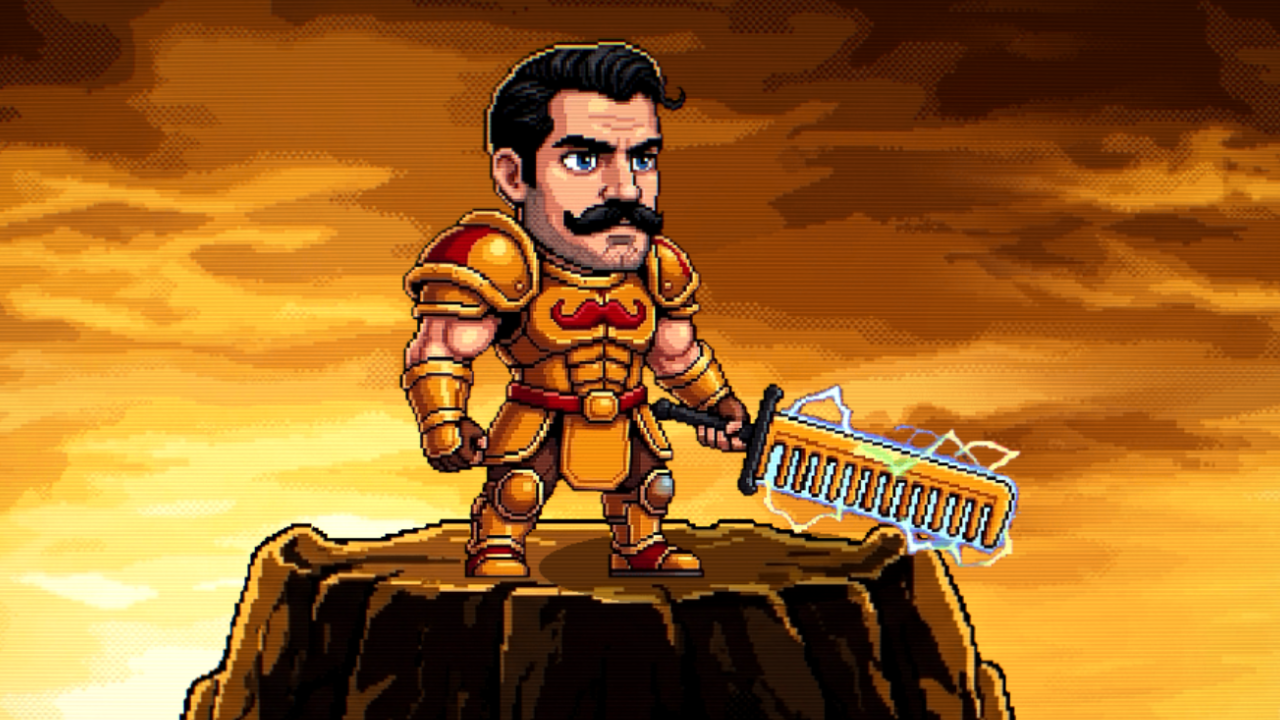
Mustache Protocol, the free game Henry Cavill built with Google, is now playable straight from a web browser. It went live on November 11, 2026 on the official Googlebook page (googlebook.com/henry), with no download, install or sign-up. For every run played through November 30, Google donates $11 to the Movember Foundation, up to $500,000, to fund men's health work. The game is a 16-bit retro platformer with three levels in which a mustachioed hero has to stop a rogue CGI agent from erasing every mustache on the planet.
The pitch is simple: short runs, arcade controls and a real cause behind the joke. The launch landed on the same day Google published the third and final episode of the behind-the-scenes series that followed production — turning the project into one of the most talked-about marketing campaigns of the season.
What Mustache Protocol actually is
Mustache Protocol is a side-scrolling platformer with a 16-bit look, inspired by the console games of the 1980s and 1990s. The player controls a pixelated version of Henry Cavill, complete with a thick mustache and golden armor, fighting through three levels to stop a computer-graphics agent determined to wipe out every mustache in the world.
The spelling is part of the joke. Google's official title is Mustache Protocol, the American spelling. Some Portuguese-language outlets rendered it as Moustache Protocol, the British form. It is the same game: either spelling leads to the same address.
The joke goes back to Justice League
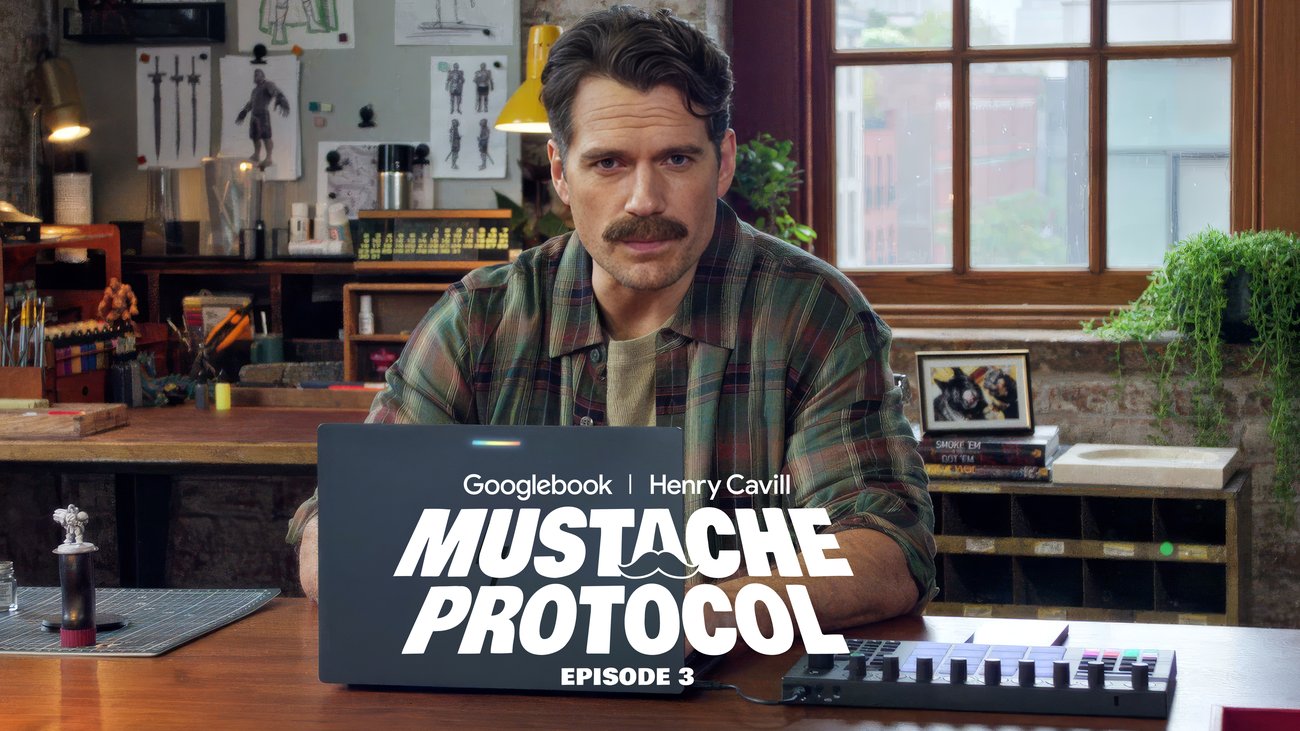
The villain is not random. In 2017, Cavill had to keep the mustache he was growing for Mission: Impossible – Fallout during reshoots for Justice League. The production's solution was to erase it digitally, with results that instantly became a meme. Mustache Protocol turns that episode into a premise: now the CGI artists are the ones trying to delete the mustache, and the hero fights to keep it.
Asked about the tone of the project, Cavill summed up the joke in one line. The game, he said, is "super serious."
"The game is about stopping rogue CGI artists from erasing every mustache on the planet. It is 'super serious.'"
Where to play and how the browser gameplay works
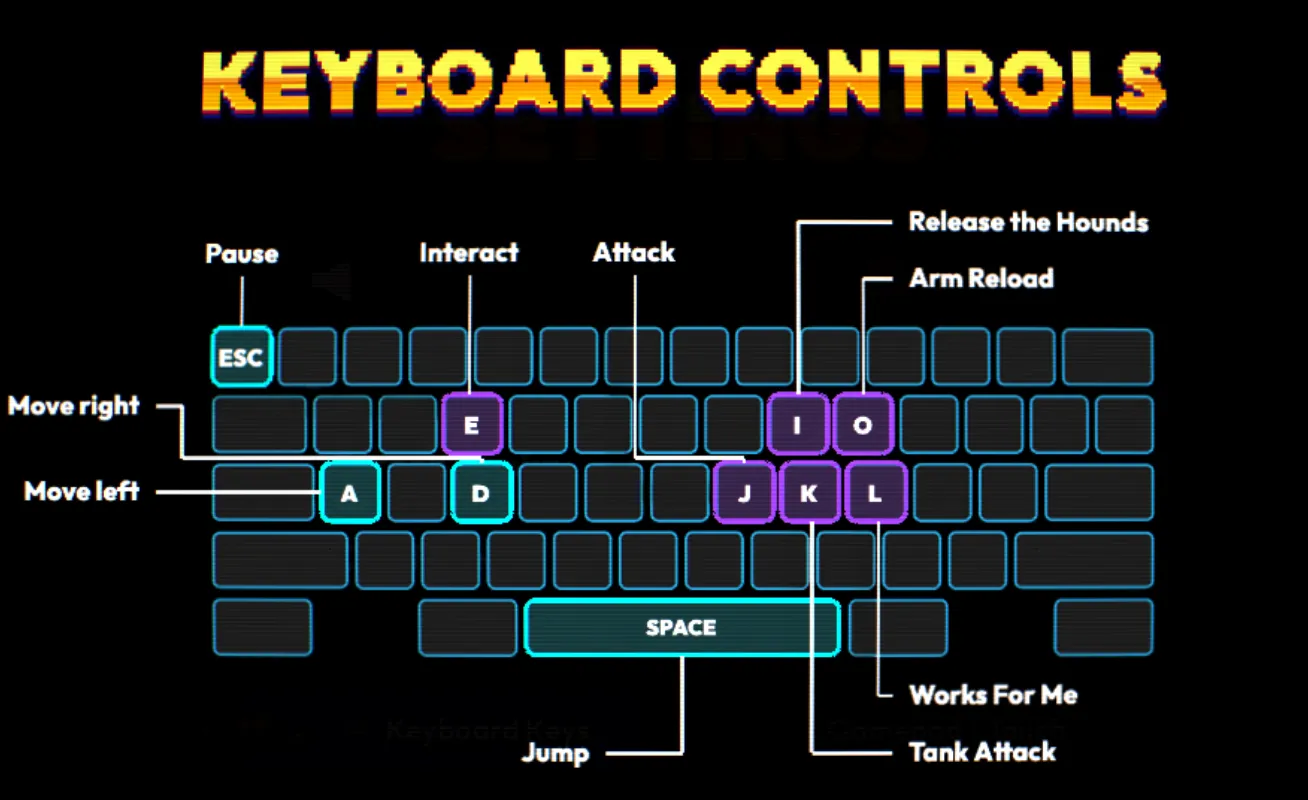
There is no PlayStation, Xbox, Switch or app store version. Mustache Protocol is a browser game: it opens on the Googlebook page dedicated to the project, loads in seconds and runs on computers as well as phones and tablets. The logic is pure arcade: move, jump and attack.
The attack is the most entertaining detail. Instead of a sword, the hero wields a giant mustache comb that works like a dueling blade — the inspiration, according to Cavill himself, came from a 15th-century sword. Health is restored by eating slices of brisket, the smoked beef cut typical of American barbecue, according to Eurogamer.pt.
| Where to play | How it works | Install required? |
|---|---|---|
| Desktop or laptop (Windows, macOS, ChromeOS) | Browser with keyboard controls to move, jump and swing | No |
| Phone and tablet | Mobile browser with on-screen arcade buttons | No |
| Googlebook and Chromebook | Same experience as Chrome on desktop | No |
| Consoles and app stores | No version available | — |
Readers who follow gaming news can compare the format with other browser experiments the industry has been testing. The difference here is the direct link between play time and donation: every run, however short, counts as one play for the campaign. There is no real-time donation counter and no minimum score required by Google.
How the Movember donation works
Movember is an international foundation known for encouraging men to grow a mustache during November as a way of drawing attention to men's health. The partnership with Google follows the same logic: the mustache is the symbol, and the game is the fundraising trigger.
The mechanism is straightforward. Between November 11 and 30, 2026, Google pledges $11 to the foundation for every game played, regardless of the outcome. The commitment is capped at $500,000 — roughly 45,400 plays would use up the available amount. The money goes to four areas: men's mental health, suicide prevention, prostate cancer and testicular cancer.
| Item | Detail |
|---|---|
| Value per play | $11 |
| Campaign period | November 11 to 30, 2026 |
| Total cap | $500,000 |
| Causes supported | Mental health, suicide prevention, prostate cancer and testicular cancer |
| Cost to the player | None |
"And while the robot may be fictional, the cause behind the game is very real."
The amounts actually transferred will only be known after the campaign closes, when Google and Movember publish the final tally. As of publication, there was no public dashboard showing the total raised.
Power-ups, Easter eggs and Cavill's dogs
Much of the game's charm comes from the details Cavill added during development. Some are in-jokes about his own career; others reference his life off screen.
- Arm Reload: a power-up inspired by the arm-cocking gesture the actor popularized in interviews, boosting attack power before bigger fights.
- Tank Attack: a special move that forces enemies to stop fighting and start dancing, complete with a celebration from the hero.
- Kal and Baggins: the actor's real-life dogs, an Akita and a French bulldog, appear as cameos across the levels.
- Brisket: the food that restores health, a nod to the American barbecue the actor often cites as a passion.
Google describes the extras as "hilarious power-ups and Easter eggs" and challenges players to find them all. The hunt for secrets is, in practice, the main reason to replay the three levels — and every replay also earns another donation.
How the game was built on a Googlebook
Mustache Protocol began as a showcase for the AI tools built into the Googlebook, Google's new laptop line manufactured by partners including Acer, ASUS, Dell, HP and Lenovo. The company followed the process in a three-part series published across November.
According to the official account, Cavill used Rambler to organize his thoughts and scripts, Magic Pointer to select and combine visual elements on screen, Continue On to switch between his Android phone and the laptop without losing context, and Antigravity to turn natural-language prompts into working 16-bit game mechanics. The soundtrack was assembled with BandLab in the final episode.
The result is what the industry has come to call "vibe coding": a game built from plain-language prompts and iterative tweaks rather than line-by-line programming. The approach draws criticism inside the development community, but it also works as an accessible showcase of what the tools can do — and, in this case, as a fundraiser for a public health cause.
Why the campaign matters
November campaigns tied to men's health often struggle to engage an audience that rarely seeks preventive information. By turning the subject into a short, free and shareable game, Movember widens its reach without asking players to donate their own money.
There is, of course, an obvious commercial interest: the game is part of the Googlebook launch strategy and leans on an actor associated with fantasy and superhero franchises to draw attention. Transparency about the arrangement is what separates the effort from a standard ad — the amount per play, the cap and the beneficiary organizations have been public since day one.
For readers who follow geek culture, the project also closes a loop. The mustache that had to be erased in a hurry in 2017 became the lead character of a game in 2026, with Cavill himself as the hero and CGI artists as the villains. It is humor about his own image, wrapped in pixel art.
How to play before the deadline
Access is immediate: open the project page in a browser, hit play and use the on-screen or keyboard controls. There is no account, email address or extension required. The donation campaign ends on November 30, 2026, and runs played after that date do not generate a donation.
For more on indie releases and experimental productions, follow our games section and the pop culture section. The full announcement, with the technical details released by Google, is on the company's official blog, and the campaign description is on the Movember website.
Suggested and related articles
Roblox accused of scraping 145GB in 3D models for AI
What is QSSR on PS5 and how it improves graphics
Xbox at 25: how to claim 25 free games on PC
Wordle in Portuguese: How to Play and How Termo Differs

Modern Warfare 4 PC requirements and 60 fps settings