What is QSSR on PS5 and how it improves graphics
Published on · Updated on
The standard PS5 now has AI upscaling: here is what QSSR does, how image quality and frame rate change, and the full list of games that already support it.
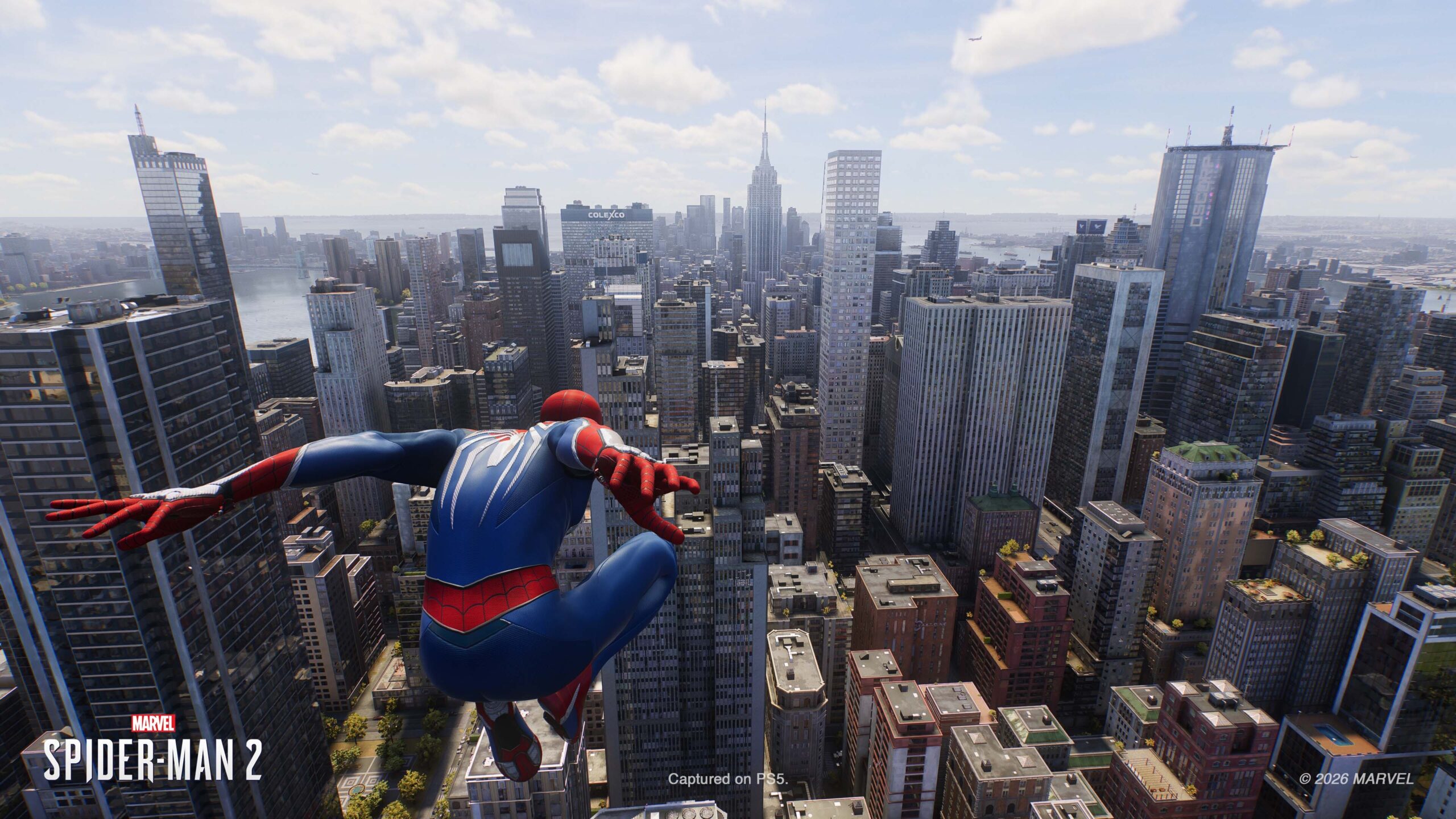
QSSR is the AI upscaling technology Sony brought to the standard PS5 in 2026. The acronym stands for Quick Spectral Super Resolution, a lighter version of PSSR, the upscaler that debuted on the PS5 Pro. In practice, the console renders a scene at a lower internal resolution and uses a neural network to rebuild it at a higher resolution, with more sharpness and stability than traditional methods.
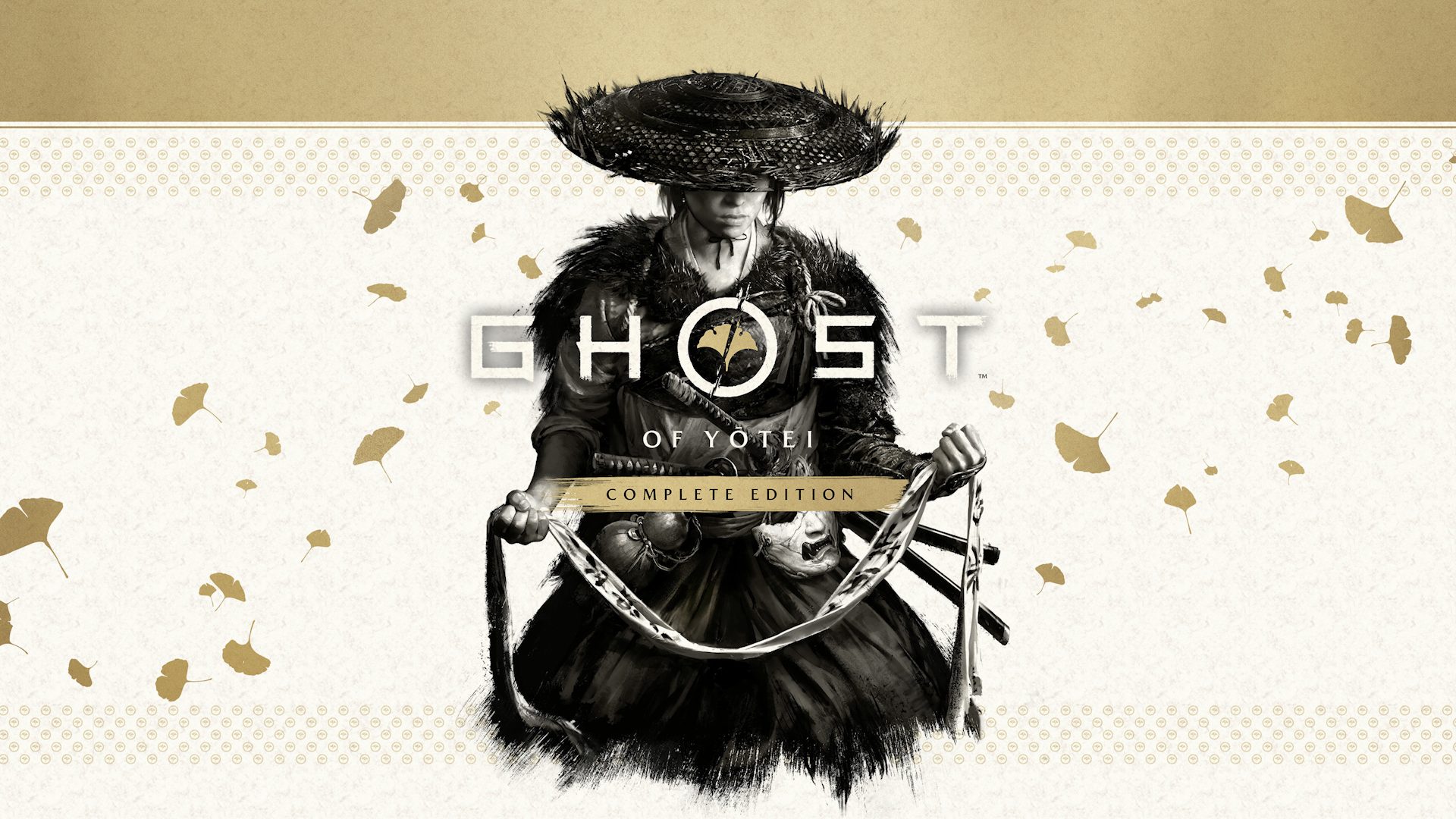
The feature was announced on October 1, 2026 on the PlayStation Blog and launched in Marvel’s Wolverine and Ghost of Yōtei. On November 13, Sony confirmed a second wave of games: Marvel’s Spider-Man 2 got QSSR that same day, while Control Resonant, The Finals, ARC Raiders, No Man’s Sky and Hell Let Loose: Vietnam receive it in updates over the coming weeks. You do not need a PS5 Pro or a new console: everything arrives through patches, game by game.
What upscaling is, in plain language
Every 3D game has to decide how many pixels to calculate per frame. Rendering at native 4K drains the console; rendering at 1080p leaves the image soft and jagged. Upscaling is the third path: the game draws the scene at a lower resolution — say, 864p — and an algorithm stretches it to 1440p or 2160p before sending the frame to your TV.
Classic upscalers such as FSR do this with mathematical filters. They are cheap, but they get fine detail wrong: branches, fences, hair and foliage turn into blurs that “boil” when the camera moves. QSSR swaps part of that work for inference: a neural network trained on reference images tries to guess the missing pixel, rebuilding edges and textures with more consistency from one frame to the next.
It is the same principle as Nvidia’s DLSS and the PS5 Pro’s PSSR. The difference lies in where the math runs and how much it costs.
How QSSR fits inside the standard PS5
The PS5 Pro has hardware dedicated to machine learning — Digital Foundry estimates around 300 TOPS and INT8 instruction support. The base PS5 has none of that. That is why PSSR could never simply be copied to the older console: the math did not fit inside a frame.
Sony’s solution, presented by engineer Daniel Craig from the Graphics R&D team at Sony Interactive Entertainment, relies on two changes. The first is a streamlined neural network architecture, with fewer layers and fewer operations per pixel. The second is an implementation hand-tuned for the PS5’s hardware, relying mostly on FP16 math and packed-math instructions.
QSSR grew out of Project Amethyst, the AI graphics collaboration between Sony and AMD that also produced the upgraded PSSR. According to Sony, it delivers “sharper details, cleaner edges, and more stable images than traditional upscalers.” And because it shares its interface with PSSR, games that already use the Pro upscaler are natural candidates to receive the base-console version.
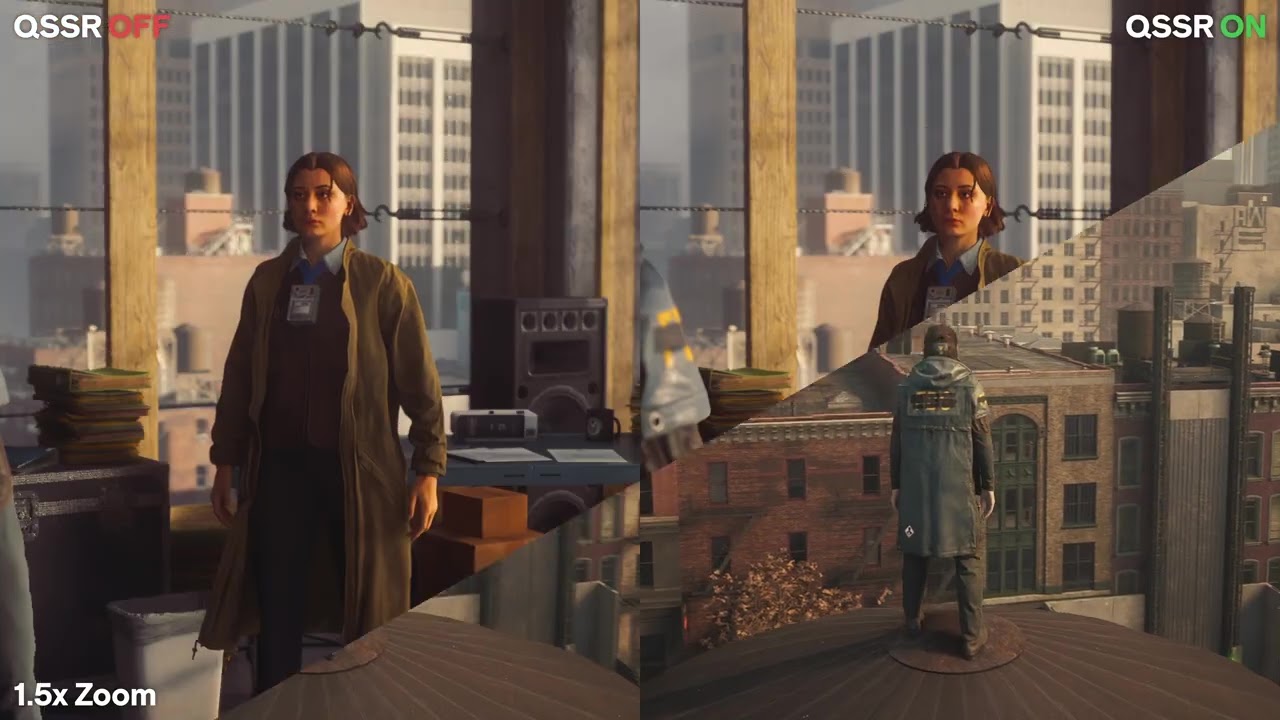
What it costs in performance
Here is the part that answers the most common question: QSSR is not free. It consumes GPU time, and that cost varies with the output resolution and the game. The most reliable numbers so far come from Digital Foundry, which tested Marvel’s Wolverine on PS5 dev kits before the feature’s public launch.
| Test scenario | Internal → output resolution | QSSR cost | Practical effect |
|---|---|---|---|
| Wolverine, uncapped performance mode (VRR) | ~864p → 1440p | +1.5 to 1.8 ms per frame | 8 to 10 fps less than Insomniac’s upscaler |
| Wolverine, uncapped fidelity mode | → 2160p | +4.4 ms per frame | Steep cost; 1440p is the more realistic target |
| Wolverine, 60 Hz performance mode | Dynamic | Absorbed by dynamic resolution | Similar frame rate, much better image |
| Ghost of Yōtei, uncapped performance (120 Hz) | Variable | Practically the same as FSR 3 | Quality gain at almost no cost in that test |
Those numbers need context. The 1440p test compares QSSR against another upscaler already present in the game; the 2160p test measures the feature’s additional overhead. Even so, Digital Foundry’s conclusion is consistent: 1440p is QSSR’s natural range on the base PS5, and aiming for reconstructed 4K costs too much.
With dynamic resolution, the impact disappears for the player. The game simply lowers its internal resolution a little to hold 60 fps and uses QSSR to deliver a cleaner final image than it could before. That is why Sony frames the feature as a quality option, not a performance mode.
What changes in the image
Digital Foundry describes clear gains in temporal stability, apparent detail and sub-pixel integrity, with fewer artefacts on moving elements such as foliage. In Marvel’s Wolverine, the difference over Insomniac’s previous upscaler was described as transformative in several scenes; in Ghost of Yōtei, which already looked solid, the leap was smaller.
It is important to separate studio claims from what was measured. The image improvements are Digital Foundry’s observations in a controlled environment, not public measurements any player can replicate. The outlet itself notes that the PS5 Pro remains ahead: it starts from higher internal resolutions, delivers larger outputs and uses PSSR, which spends around 2 ms to reach 4K.
“It’s great to see PlayStation bringing the same kind of leap on the PS5 that PSSR brought to PS5 Pro. QSSR gives Control Resonant a much more stable and detailed image, and we’ve worked closely with Sony to have it ready in an update coming in December.”
The eight games with QSSR (and when they arrive)
The official list has eight titles so far. Three already have the feature live; five are confirmed but depend on an update. Check your game version before looking for the option in the menu.
| Game | Studio | Status | When |
|---|---|---|---|
| Marvel’s Wolverine | Insomniac Games | Available | Since October 1 (patch 1.002.000, on by default) |
| Ghost of Yōtei | Sucker Punch | Available | Since October 1 (extra option in the menu) |
| Marvel’s Spider-Man 2 | Insomniac Games | Available | Since November 13, in Fidelity and Performance modes |
| Control Resonant | Remedy Entertainment | Confirmed | December update |
| No Man’s Sky | Hello Games | Confirmed | “In the next few weeks” |
| ARC Raiders | Embark Studios | Confirmed | “Coming soon” |
| The Finals | Embark Studios | Confirmed | “Coming soon” |
| Hell Let Loose: Vietnam | Expression Games | Confirmed | “In an upcoming update” |
The studios describe different gains because each game has its own bottleneck. Spider-Man 2 is a dense city seen from above, full of buildings and reflections; No Man’s Sky depends on procedural detail in every direction the player looks; ARC Raiders and The Finals are competitive and cannot afford to lose frames.
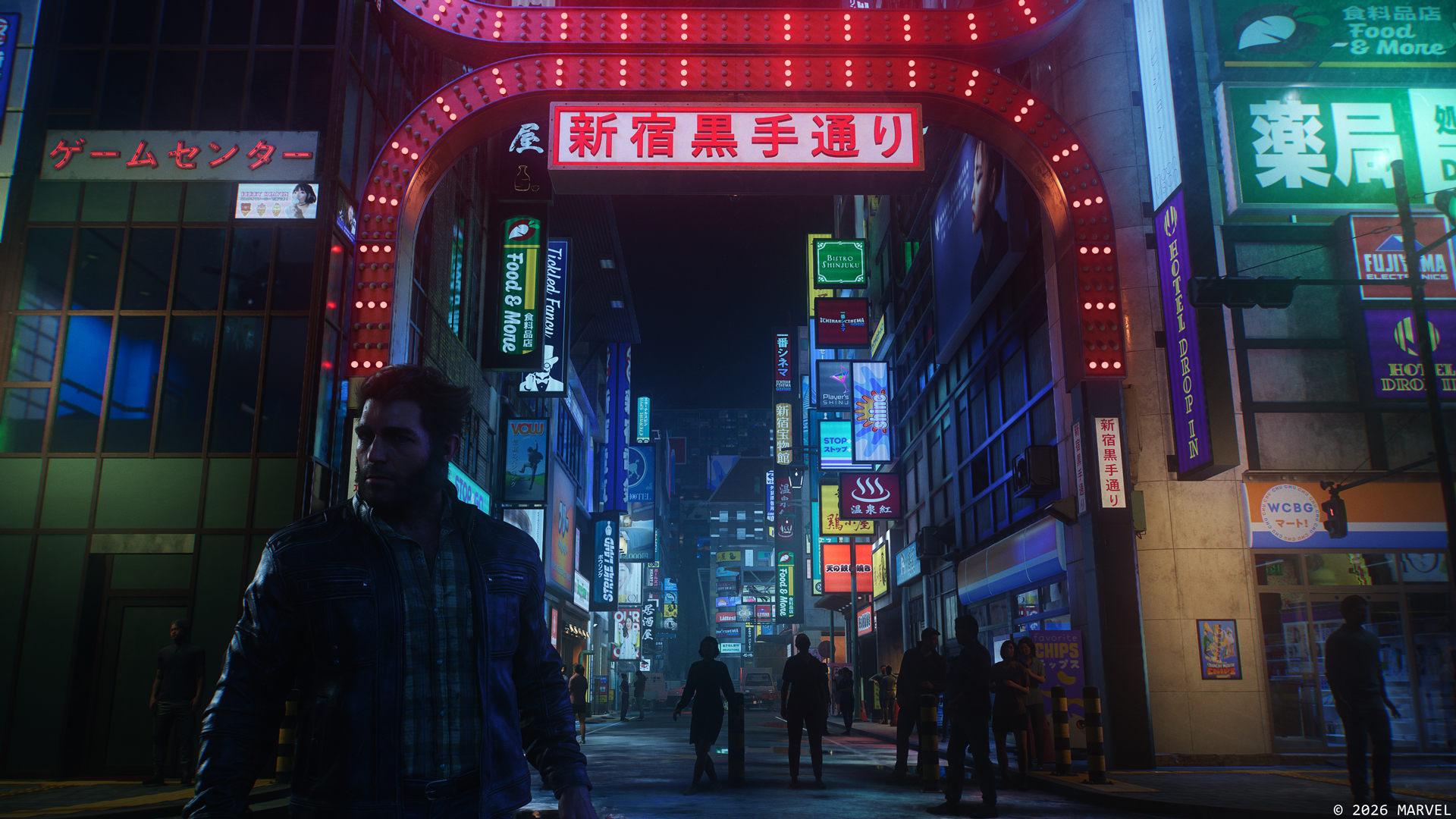
“No Man’s Sky gives players an infinite procedural universe to explore. When every star in the night sky is a real solar system players can visit, we care a great deal about the quality of every pixel. QSSR allows us to render the universe in sharper, cleaner and more beautiful detail, while delivering the best possible framerate.”
QSSR, PSSR and FSR: what is the difference
The three names show up together in discussions, but they do not compete in the same space. FSR is an open upscaler that runs on any hardware and does not use AI to reconstruct the image. PSSR is the PS5 Pro upscaler, with a heavier neural network and access to dedicated hardware. QSSR is the middle tier: real AI, at a cost low enough for the 2020 console.
For Sony, PSSR “remains the gold standard on PS5 Pro”. QSSR does not replace the Pro’s upscaler and does not come close to matching it in output resolution. What it does is narrow the gap between the two consoles — relevant for anyone with the base model watching new games ship with increasingly expensive graphics features.
There is also a practical effect for developers. Daniel Craig told Digital Foundry that QSSR is “fundamentally a drop-in replacement” for games that already support PSSR. It is not automatic: a few days of tuning are still required, including changes to texture streaming so higher-quality mip levels stay resident in memory.
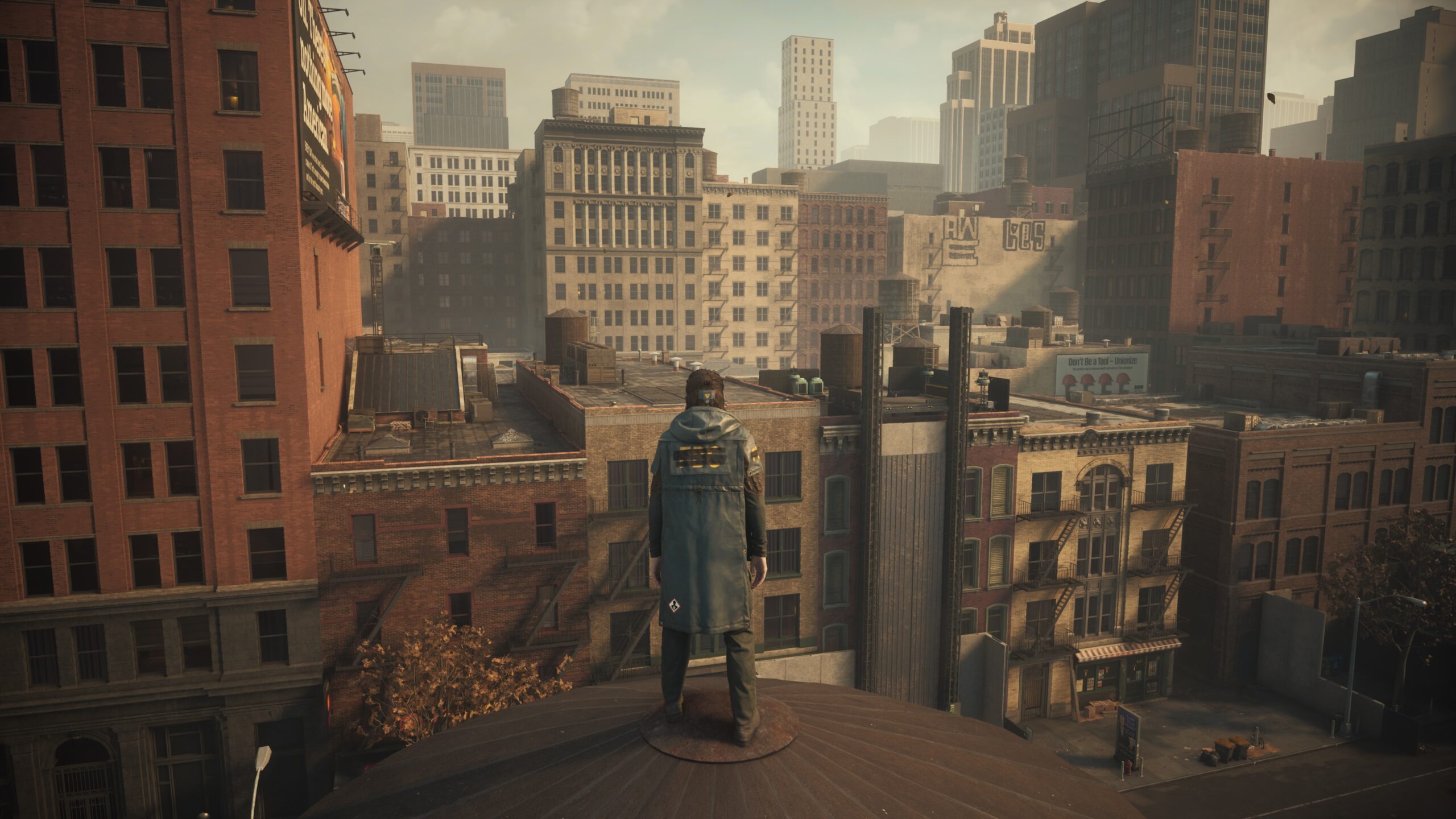
How to use QSSR on your PS5
There is no system-wide button. QSSR is a library each game implements, so activation happens inside the game itself. The path is always similar:
- Update the game. Download the latest patch. Sony does not require a console firmware update; the feature ships with the game build.
- Open the graphics options. Look for “QSSR”, “Upscaling” or “Resolution” in the video menu. In Spider-Man 2, Insomniac said the feature appears in the graphics settings and applies to both Fidelity and Performance modes.
- Compare with the previous mode. Toggle it on and off in the same scene. The biggest gain usually shows up in motion, with the camera turning, not in still screenshots.
- Keep dynamic resolution on. If the game offers it, leave it enabled. It is what absorbs QSSR’s cost and keeps the frame rate steady.
In Marvel’s Wolverine, QSSR is on by default on PS5, according to the 1.002.000 patch notes. In Ghost of Yōtei, Sony describes it as an additional graphics option — meaning you have to open the menu and turn it on. In competitive games such as The Finals and ARC Raiders, test it before ranked matches: extra sharpness is not worth it if the frame rate fluctuates.
Is it worth it on the base PS5?
Yes, with calibrated expectations. QSSR does not turn a standard PS5 into a PS5 Pro, and Sony itself avoids that comparison. The real gain sits in three problems that have bothered the base console for years: shimmering edges in motion, fine detail that vanishes at distance, and artefacts in vegetation.
For players on a 4K TV at 60 Hz — the most common setup in Brazil — the feature tends to be welcome: the game gives up a little internal resolution to deliver a cleaner final image without touching fluidity. For those on a 120 Hz monitor who prioritise competitiveness, the decision is case by case.
The most interesting part is the precedent. Six years after launch, the PS5 is still gaining image features through software, with no hardware revision. That suggests QSSR should appear in more games over the coming months — Sony says studios are “just getting started” and that the library is available to all PlayStation developers.
If you follow the console ecosystem, you may also want to understand what a PS5 jailbreak is and what the risks are, revisit Sony’s U-turn on PC and PS5 exclusives and check what changed in GTA 6’s 1.002 patch on PS5. If you are deciding whether to buy hardware now, the story of the unofficial Astro Bot PC port shows how the community works around platform limits.
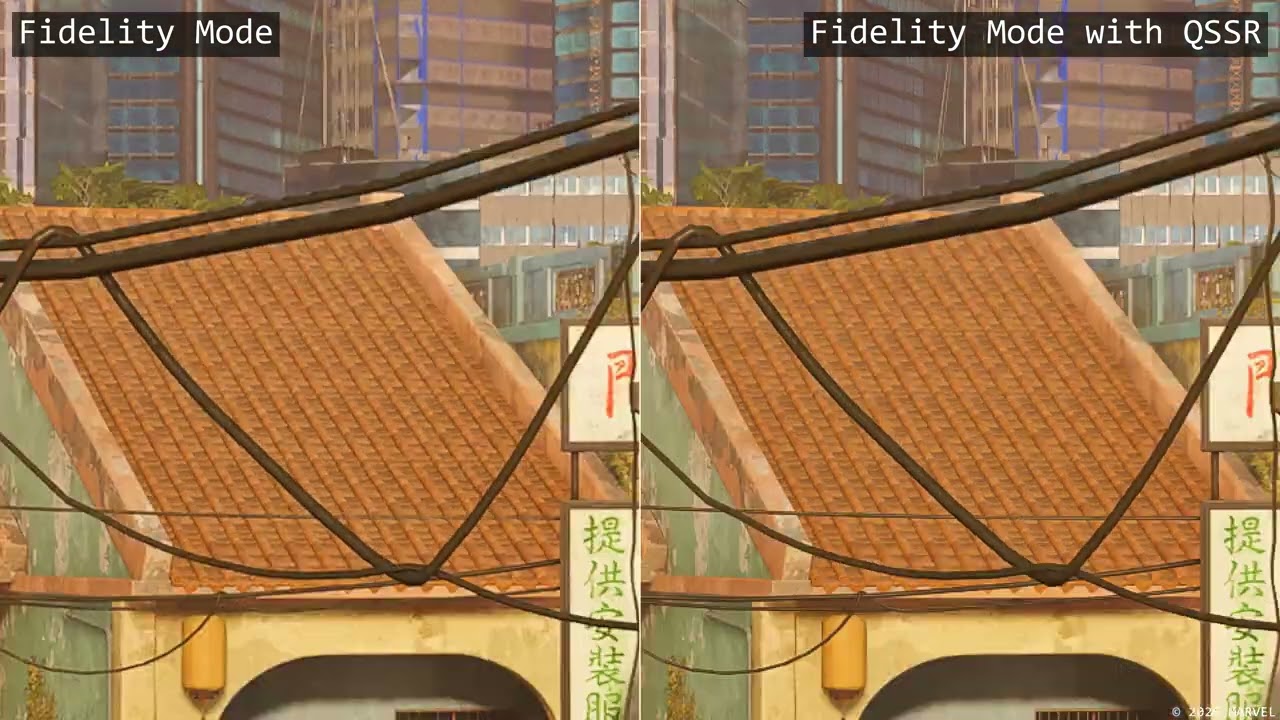
PlayStation’s official video compares Fidelity Mode with and without QSSR in Marvel’s Wolverine and shows other games. (Video: PlayStation / YouTube)
With information from PlayStation Blog (October 1 and November 13, 2026 announcements), Digital Foundry, Insomniac Games, Sucker Punch, Remedy Entertainment, Embark Studios, Hello Games and Expression Games.
Suggested and related articles
What Is a PS5 Jailbreak and What Are the Risks?
PS5 shipments top 100 million, fourth PlayStation to do it
GTA 6 may need 210 GB on PS5; Lexar SSD on sale
Astro Bot on PC: what the unofficial port already does
Sony U-turns on PC and bets on PS5 exclusives