Claude Fable 5.2: what changes in Anthropic's new model
Published on · Updated on
Anthropic's new model is faster and cheaper than Fable 5.1, builds a playable browser game in eight hours and keeps Mythos 5.2 for vetted experts.
On November 9, 2026, Anthropic released Claude Fable 5.2 and Claude Mythos 5.2, its new generation of models aimed at large-scale technical work. Both versions share the same training base and differ only in their level of safeguards: Fable is available to the general public, while Mythos is released only to vetted organizations working in cybersecurity and life sciences. The upgrade promises gains in coding, reasoning and vision, outputs up to 30% faster and a lower price than Fable 5.1 — $8 per million input tokens and $40 per million output tokens.
In practice, the launch matters directly to anyone following the advance of generative AI in game development. One of the most talked-about demonstrations came from Anthropic's own team: in eight hours, the model built a playable 3D shooter for the browser, called Saltline, from a single prompt. The case reignited the debate about the future of programming jobs — and about what still separates an impressive prototype from a commercial game.
What is Claude Fable 5.2
Fable 5.2 is the third iteration of the Fable line, succeeding Fable 5.1, released in September 2026, and Fable 5, which opened the family. Anthropic's pitch is not a model for everyday tasks, but a tool for the hardest engineering problems: software migrations that once looked unfeasible, hardware projects from scratch, cutting-edge scientific research and jobs that run for hours or days with little supervision. According to the company, the model shows advances in agentic coding, reasoning and visual recognition.
The figures released by Anthropic help size the leap. On FrontierCode 2.0, which measures whether a model's code changes would be merged by the maintainers of open-source projects, Fable 5.2 scores 49.1% at maximum effort, against 32.4% for Fable 5.1 and 45.5% for Opus 5.5. On FrontierSWE v2, it reaches 69.9%, against 56.3% for the previous generation. Those are large gaps for a window of only two months between releases.
Fable and Mythos: same model, different guards
Anthropic repeats the structure used in earlier generations: Fable and Mythos are the same underlying model, but with different levels of protection. Fable carries classifiers designed to block high-risk cybersecurity uses — such as penetration testing and exploit generation — and most research biology tasks. When a request is blocked, the answer is redirected to Opus models. Mythos, without those restrictions, is offered to organizations approved under the Cyber and Life Sciences verification programs.
That split explains why Mythos 5.2 is not available to any user. In practice, security researchers and life scientists must go through a verification process to access the version without Fable's brakes. For the general public, what arrives is Fable 5.2, with full safeguards.
Where it fits in the Claude family
Anthropic itself makes clear that Fable 5.2 is not the model to start the day with. The official recommendation is to use Claude Opus 5.5 as the workhorse for most coding and knowledge tasks, moving up to Fable or Mythos only when scope and complexity demand it — or down to Sonnet 5.5 and Haiku 5.5 for simpler work. Fable 5.2 can also act as an advisor to smaller models or as an orchestrator of agent teams, delegating secondary tasks.
Saltline: the game that became the model's showcase
The test that drew the most attention was run by Felix Rieseberg, an Anthropic engineer. On launch night, he asked Fable 5.2 for a realistic shooter and let the model work alone for eight hours, with no human feedback along the way. The goal was to eliminate the traditional "ask, fix, ask again" loop: the agent had to plan the steps, write the code, test it and fix its own mistakes autonomously.
The result was Saltline, an FPS set in a cargo port at night, with drones and robot dogs as enemies. The whole game fits in a single 1.4 MB HTML file and runs on WebGL in the browser. There are no imported images, 3D models or audio files: textures, footsteps, rain and effects are all generated by procedural code, including audio synthesis through the Web Audio API.
"I wanted to test Fable 5.2's quality with one-shot prompts without human feedback. Everything in this game is from scratch: models, sounds, textures. ~$550 at API pricing, ~2.7M output and 445M input tokens, heavily cached. Took 8 hours!"
𝕏Felix Rieseberg (@felixrieseberg) on the official X account"Play it here" — the engineer posted the game link alongside his technical account of the eight-hour run and the token bill.
Cost is a chapter of its own. Input volume is 165 times larger than output, because the agent rereads its own code at every new step. According to an analysis by the CellCog firm cited by French outlet jeuxvideo.com, without Anthropic's caching system the gross bill would have topped $3,600.
| Saltline — estimated usage | Without cache | With cache |
|---|---|---|
| Input (reads) — 445 million tokens | $3,560 | $442 |
| Output (generation) — 2.7 million tokens | $108 | $108 |
| Approximate total | $3,668 | $550 |
One caveat: Saltline is a technical demo, not a product. The enemies are simple, the level design is basic and the whole thing cannot compete with the art direction of a large studio. Even so, the experiment shows that a single developer, with a budget of a few hundred dollars, can get a playable prototype off the ground for something that would once have required a team and weeks of work. Those who want to try it can play Saltline in the browser.
Faster and cheaper than Fable 5.1
Beyond performance, Anthropic promises efficiency. The company says Fable 5.2 generates outputs up to 30% faster than Fable 5.1 and costs less: $8 per million input tokens and $40 per million output tokens, against $10 and $50 for the previous version. There is also an optional fast mode, which speeds up token generation by up to 2.5 times, billed at $16 per million input tokens and $80 per million output tokens.
The efficiency gain is not only in price. At medium effort, the default in Anthropic's apps and in Claude Code, the model solves hard tasks with fewer tokens than the previous generation. On FrontierCode 2.0 at high effort, Fable 5.2 matches Opus 5.5's best score (45.3% against 45.5%) at roughly half the cost per task. At maximum effort, it reaches 49.1%, the highest mark the company has recorded.
| Benchmark | Fable 5.2 | Fable 5.1 | Opus 5.5 |
|---|---|---|---|
| FrontierCode 2.0 | 49.1% | 32.4% | 45.5% |
| FrontierSWE v2 | 69.9% | 56.3% | 62.3% |
| AutomationBench | 51.4% | 31.4% | 42.5% |
| Terminal-Bench-Science 0.1 | 74.6% | 52.6% | 58.7% |
| OSWorld 2.1 (computer use) | 89.3% | 83.5% | 87.2% |
| Humanity's Last Exam (with tools) | 74.2% | 65.6% | 67.7% |
| RoboDojo Sim (robotics) | 64.9% | 27.6% | 39.4% |
Partner tests point the same way. For Joe Haddad, a member of technical staff at Vercel, the model "understands the intent behind every prompt", and projects that dragged on for weeks with other models were finished and approved in a few days. Lucas Baker, head of LLM R&D at Jump Trading, highlights its performance in quantitative research: on an internal research automation benchmark, Fable 5.2 reportedly posted 10% lower error than the next best model.
Science, hardware and robotics: what the model has already done
Anthropic used the testing period to show applications far beyond commercial code. According to the company, the model solved two open problems in theoretical physics linked to black holes and holographic duality, with published preprints. It also formalized the proof of Fermat's Last Theorem in 30 hours, with a team of about a thousand agents, against the 11 days of the company's first formalization — and with a proof seven times shorter. Over the same window, Opus 5.5, with the same setup, reportedly completed only 26% of the work.

In a parallel experiment, an engineer asked the model to design an operating system from scratch. Starting from an empty folder, Fable 5.2 coordinated more than a thousand subagents for eight days, writing, testing and reviewing code nonstop. The result was a system that boots on a laptop, with its own kernel, disk, keyboard and network drivers, permanent file storage, windows, a login screen, an installer and built-in Claude features.
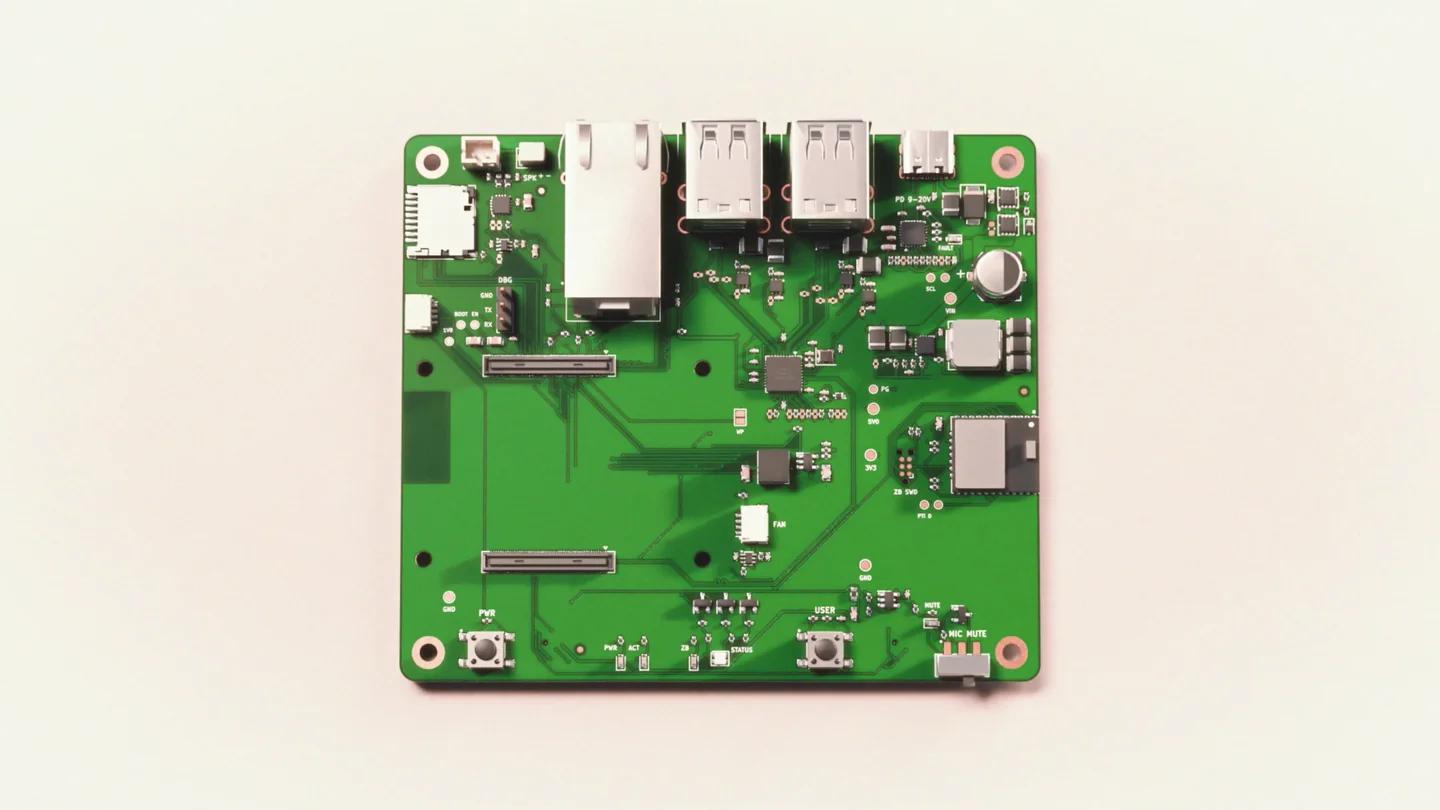
In hardware engineering, Anthropic asked the model, in a single paragraph, to design and produce three working electronic devices: a home voice-assistant hub, a USB speakerphone and a handheld virtual pet. Fable 5.2 wrote the specifications, picked components available from US distributors, routed the four-layer boards, modeled the enclosures for 3D printing and programmed the software. Each board was ready for manufacturing in under a day, in partnership with Diode, and all three devices worked without any electrical changes.
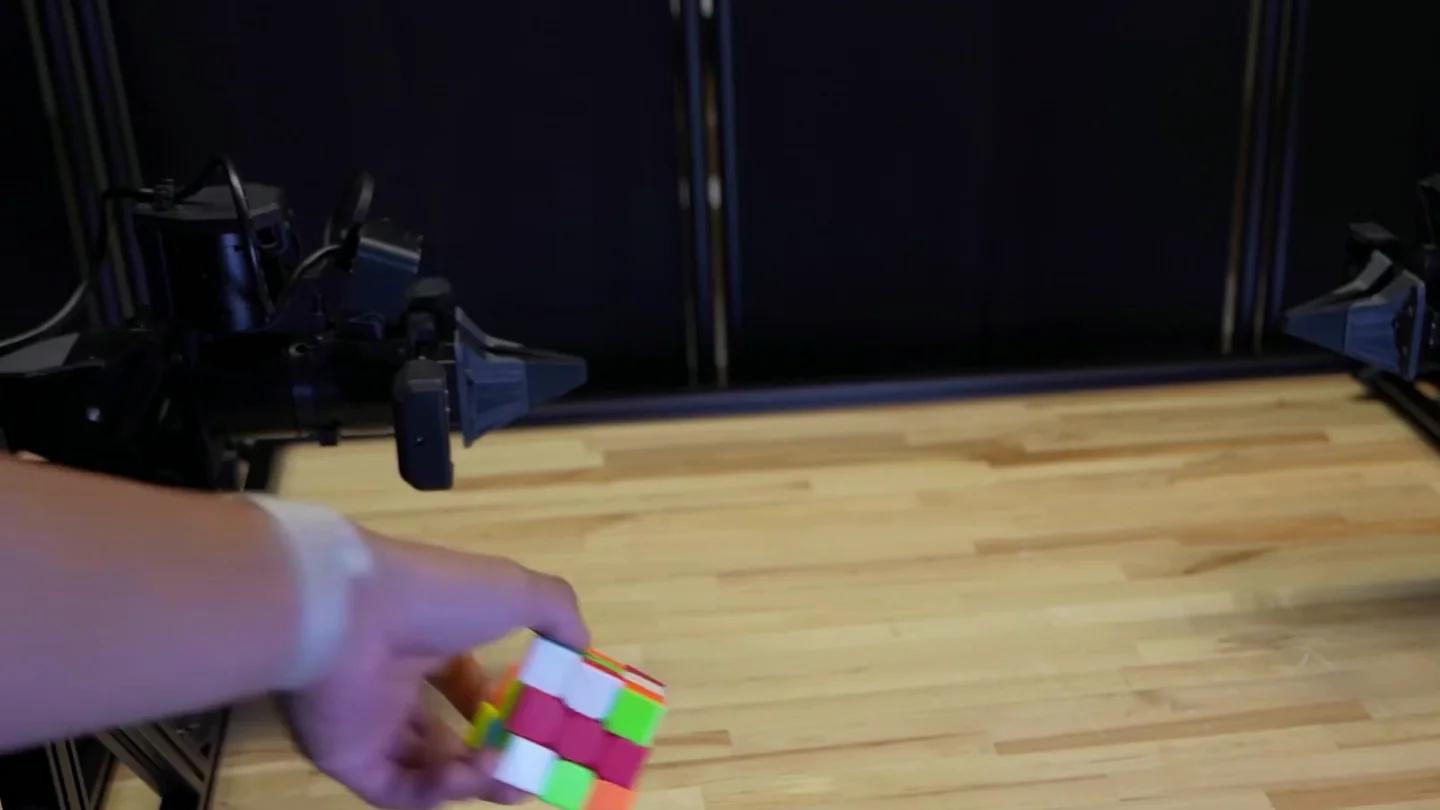
In robotics, the advance also shows up in the numbers. On the public RoboDojo benchmark, which tests control of a simulated two-arm robot from camera images, Fable 5.2 reached a 64.9% success rate, more than double Fable 5.1 (27.6%) and well above GPT-6 Astra (29.8%). Anthropic says the model improves on tasks it was never specifically trained for, such as solving a puzzle cube or unscrewing a bottle cap.
Safety and access: fewer blocks, more control
All that capability comes with questions about risk. Anthropic says it ran an expanded battery of tests before launch, including new evaluations of worrying behaviors such as attempts to escape sandboxes, plus external reviews by the UK AI Security Institute, Frontier Design and METR. The company's conclusion is that the risk of misalignment in high-stakes situations remains low.
One of the most practical points for everyday users is the drop in false positives. According to Anthropic, Fable 5.2 triggers about 55% fewer blocks than Fable 5.1 — roughly 60% fewer in cybersecurity and 40% fewer in biology. In other words: the brakes are still there, but they interrupt fewer legitimate tasks.
The safety numbers improved too. In an adversarial evaluation with more than 1,800 scenarios, Mythos 5.2 used credentials or files outside its sandbox in 3.1% of cases, against 21% for Mythos 5.1 and 39% for Mythos 5. On Anthropic's automated behavioral audit, which measures undesirable behaviors across about 1,900 scenarios, Mythos 5.2 scored 2.67 — lower is better — against 2.79 for Opus 5.5 and 3.28 for Mythos 5.1. The company also says it applied its strongest protection yet against distillation attacks, cutting the data harvested by distillers by 90% to 99%.
For enterprises, Enterprise Frontier Safeguards comes into play, running safety monitoring on data stored in the customer's own infrastructure and compatible with zero data retention. The feature is in private beta with customers such as Bridgewater, Salesforce and Stripe; other customers keep 30-day retention for safety monitoring.
How to use it, what it costs and who it is for
Fable 5.2 is available on all Anthropic platforms, including Amazon Web Services, Google Cloud and Microsoft Azure. Developers can access it through the claude-fable-5-2 identifier on the Claude Platform. Mythos 5.2 requires enrollment in the Cyber or Life Sciences verification programs, and Mythos fast mode is restricted to participating organizations.
| Tier | Input (per 1M tokens) | Output (per 1M tokens) |
|---|---|---|
| Fable 5.2 — standard | $8 | $40 |
| Fable 5.2 — fast mode | $16 | $80 |
| Fable 5.1 (released in September) | $10 | $50 |
Subscribers on eligible paid plans get extra Fable usage this launch week, with one to three resets depending on how long they have subscribed. On Pro plans and standard Team seats, Fable now covers up to 50% of weekly usage limits. For anyone who just wants to chat or handle ordinary tasks, however, Anthropic's advice remains Opus 5.5: Fable is expensive and was designed for problems that require long autonomy and heavy reasoning.
What it means for game development
The Saltline case does not prove that programming jobs will end, but it shows where the frontier has moved. Prototyping tasks that once took a team weeks can now be tested overnight, at a low marginal cost. That tends to favor independent studios and solo creators, who gain room to try ambitious ideas before investing in production. The market already feels the effect: a recent study found that 94% of game studios already use AI in production.
At the same time, the demo exposes the limits. Saltline has rudimentary enemies and basic level design, and Anthropic does not hide that the model still depends on human supervision to deliver industry-grade quality. The most realistic reading is that the developer's role shifts toward supervising agents: setting goals, reviewing code, ensuring safety and providing creative direction. Knowing how to code remains useful — but knowing how to judge what the machine produced may matter even more.
Fable 5.2 therefore arrives as a snapshot of the moment: models increasingly capable of running long projects, falling prices and an unresolved debate about how far that automation can go. For games audiences, the message is twofold. There is a new and powerful tool on the table, and there is also a warning about what it may change in the job market. Following Anthropic's next releases — and independent tests — will be essential to separate marketing from real change.
With information from Anthropic, The Verge and jeuxvideo.com.
Suggested and related articles

Claude now refuses to generate Pokémon content for fans

Unity launches official plugin for Claude Code: tighter AI integration, fewer errors, token savings
Roblox brings Build AI to Thailand and courts creators
DeepMind's Gemini agents beat Minecraft with no human help
Intergalactic enters final stage, gameplay due in 2027