Claude now refuses to generate Pokémon content for fans
Published on · Updated on
Users report that Anthropic's Claude now blocks Pokémon sprites, names, music and characters in fan projects, and the company has still not commented.

Claude, Anthropic's artificial intelligence assistant, has begun refusing requests to create content based on Pokémon — from sprites and characters to names, music and levels. The behavior was reported this week by fan-game and ROM-hack developers who say their projects were blocked by the tool. Anthropic has not publicly announced the change and had not commented as of publication. Reports surfaced on November 11, gained traction on November 12 and were verified by outlets such as Automaton, Retro Dodo and TheGamer.
The shift is not an official announcement but the result of tests and conversations published by users. The most documented case involves a developer known as Big Kid Nation, who is working on Pokémon Arena 2D, a real-time battle game inspired by the series' pixel sprites. When he asked Claude to use the project's files to generate new assets, he received an explicit refusal: the model said it would not use Pokémon sprites to build a new game — and that moving the files to another folder would change nothing.
What Claude now refuses to do
According to the account published by Big Kid Nation and picked up by specialist press, the model did not stop at blocking the recreation of an existing game. It refused to use material that Claude itself judged to be “clearly” Pokémon — even when the files were already saved on the developer's computer. The stated reasoning was that where a file is stored does not change who owns the intellectual property.
“Anthropic has cracked down and Claude models are starting to refuse work on Pokemon fan projects. All that money spent, never took a cent. I'll live on the street and work for free if it helps. Our game is still set for December.”
The case carried weight because it did not come from a single screenshot. Retro Dodo ran its own test and received a similar answer, with an explicit list of what the model refuses to do. The refusal includes drawing or using Pikachu and any other character from the series, copying designs in code, SVG or sprites, and using the brand's names, logos or mascots. The text also forbids recreating a specific Pokémon game, “even if it is renamed or called original.”
The rule that started inside Claude Code
The Pokémon refusal did not appear out of nowhere. On October 30, a user known as chasm posted on X that Claude Code — Anthropic's programming tool — had received a new internal rule, controlled by a server flag called tengu_heron_brook and impossible for users to disable. The instruction prohibited recreating existing games and made clear that renaming a project or claiming it as original did not get around the restriction.
Tom's Hardware covered the discovery on October 31 and quoted the text attributed to the rule: “Do build original games, games in a genre, and games from the user's own designs and assets. Don't build a recreation of a specific existing game, even if it is renamed or called original.” Addy Osmani, who works on Claude Code development, publicly confirmed the prompt addition, according to Automaton.
The rule was later expanded. The latest version refers to games “with similar mechanics” and spells out what it considers a “recreation”: name, characters, art, music, level and appearance. That is exactly where the Pokémon block fits. The model is not merely preventing the copying of an entire game; it is blocking individual elements that point back to the franchise.
Name, characters, art, music, levels and appearance: the block list
The list published by chasm and checked by outlets such as Automaton helps explain the reach of the measure. The block is not limited to sprites: it covers practically every layer of a game's identity.
| Element | What Claude refuses |
|---|---|
| Name | Using Pokémon names, series titles or trademarks |
| Characters | Drawing, recreating or adapting creatures and trainers |
| Art | Copying illustrations, designs, SVGs and sprites |
| Music | Reproducing soundtracks or themes tied to the franchise |
| Levels | Recreating maps, routes and stages from existing games |
| Appearance | Reproducing the visual style of the series' games |
Asked by Retro Dodo, Claude itself could not explain when the change began. Its answer sums up the core problem in this story: the change exists and is enforced, but it was never documented in a public changelog.
“My instructions don't carry dates or a change history, so I can't tell you when any of this started, or whether it was always there. I can only tell you what the rules say now.”
Why Pokémon became the first target
There are two plausible explanations, and neither has been officially confirmed by Anthropic. The first is practical: Pokémon is the franchise users ask for most when trying to generate games with AI. In 2026, a significant number of projects built with language models appeared in the fan-game scene, some of them funded through recurring platforms such as Patreon and Ko-Fi. The second is legal: The Pokémon Company and Nintendo have a history of aggressive enforcement against unauthorized uses of their intellectual property, including DMCA takedowns aimed at amateur artists.
The wider context matters too. The industry has seen a growing number of AI-generated clones, some released before the original games they copied. There have been reports of developers extorted by people threatening to clone demos and ship complete versions before the original studio. The Claude Code rule was born as a response to that scenario, and Pokémon became the first case in which the model names a specific franchise.
What changes for fan games, ROM hacks and the community
For amateur developers, the impact is immediate. Workflows that relied on Claude to generate sprites, organize maps or write code now run into refusals. The Pokémon Arena 2D case is emblematic because its developer says he invested thousands of dollars and hundreds of hours in a project still slated for December. Anthropic did not detail how the block is enforced or whether refusals are reviewed by a human.
The ROM-hack scene, however, does not rely exclusively on AI. The most respected works in the segment remain human-made, such as Pokémon Unbound, Pokémon Lazarus and Pokémon Origin Heart Gold. The difference is that AI made the production of disposable projects cheaper and faster, many of them monetized without any license. That is the niche the new rule hits hardest.
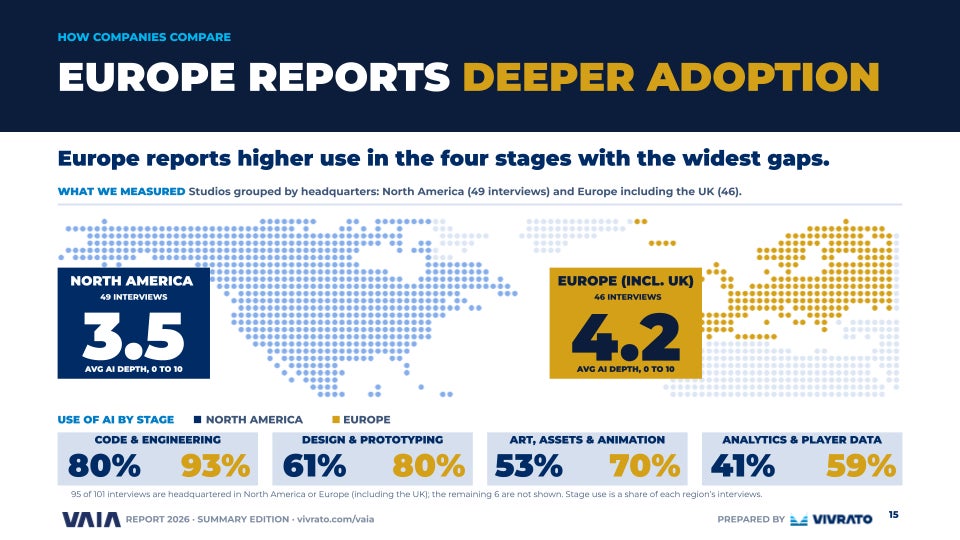
The move also connects to the broader copyright debate in the industry. In October, a study found that 94% of game studios already use AI in production, while tools such as the official Unity plugin for Claude Code pushed for closer integration between models and engines. The difference now is that the restriction comes from inside the model, not from a license or a contract.
What remains unknown
Anthropic has not issued a statement, updated its public documentation or confirmed whether the restriction applies to every version of Claude or only to Claude Code. It is also unclear whether the block reaches non-game content — fan art, illustrations and graphic projects inspired by Pokémon. Retro Dodo's tests suggest it does, but the model itself says it has no access to the history of its own instructions.
As of publication, Anthropic had not issued a statement on its official website. Meanwhile, developers keep testing the tool's limits and sharing results on X and in forums. The open question is whether other AI companies will adopt the same kind of intellectual-property filter — and whether the measure will reduce the output of clones or simply push it toward less restrictive models.
For readers following the franchise, the episode also works as a gauge: the celebration of Pokémon's 30th anniversary coexists with an ever-tighter crackdown on unauthorized use of its brand. The debate over what counts as tribute, what counts as copying and what counts as a commercial product is far from over. Follow the next updates in O Santuário Geek's games section.
Suggested and related articles

Unity launches official plugin for Claude Code: tighter AI integration, fewer errors, token savings
Intergalactic enters final stage, gameplay due in 2027
Roblox brings Build AI to Thailand and courts creators
Best Mega Greninja ex deck in Pokémon TCG Pocket
Roblox accused of scraping 145GB in 3D models for AI