The Celestial Zone: the wuxia comic becoming an anime
Published on · Updated on
Created by Wee Tian Beng in 1999, Singapore's wuxia comic sold millions of copies and now targets a multi-season AI-assisted anime starting in 2027.
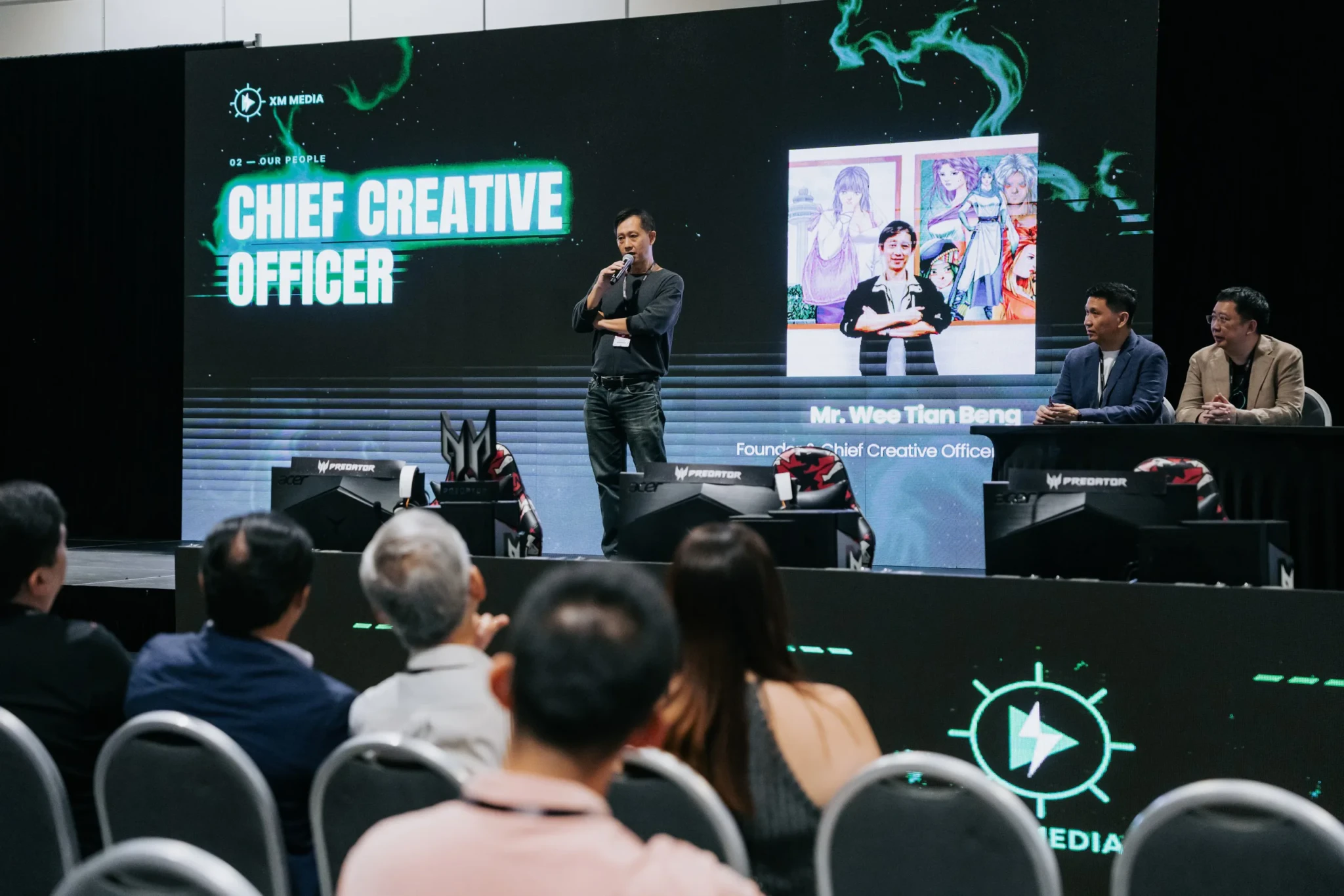
The Celestial Zone, the martial-arts comic created by Singaporean artist Wee Tian Beng in March 1999, is becoming a multi-season anime starting in 2027. The announcement was made on 13 November 2026 by XM Media, an intellectual-property company incorporated in August that year, on the opening day of Game Fest 2026 at the Suntec Singapore Convention & Exhibition Centre. The production will use AI-assisted animation, but the company says stories, characters and designs remain human-made. The work is the biggest commercial phenomenon in Singaporean comics, with millions of copies sold across roughly 40 countries, and it reaches the screen more than 25 years after its first issue.
What The Celestial Zone is
Wuxia is Chinese martial-arts fantasy: swordsmen, sects, secret techniques and codes of honour. That is the vocabulary Wee Tian Beng imported to Singapore in the late 1990s, blending it with a modern comic look, quick panel cuts and a running sense of humour. The result was a kung fu series that demanded no prior knowledge of ancient China from its readers — you only had to enjoy well-drawn fights and characters with charisma.
The first phase, The Celestial Zone I, is set during the Warring States period. Its protagonists are the Celestials, extraordinary people who live in a dimension of their own, the Celestial Zone, where they cultivate powers ordinary mortals cannot grasp. Some of them, however, take the path of corruption, a malign energy that devastates the human world. The central plot is the war between the two factions: on one side Xing Ling and Chi Xue, of the so-called Righteous Path; on the other, the Moon Monarch and his forces.
Later phases expand that universe. The Celestial Zone II picks the story up a few years after the Moon Monarch's fall, when a new and unknown threat endangers a peace won at great cost. The Celestial Zone 21 then breaks with the ancient setting and moves everything to 21st-century Singapore, where people with extrasensory powers live disguised among the population. The lead is Mi Sheng, a manga artist who, through an arrangement made by his younger sister Mi Yu, ends up trained by Xiaoxun — also known as Lavender — a mentor sent to develop a potential he did not know he had. Along the way come guardians of the Crane Shadow clan, hunting for the Mentor Stone.
That mixture of folklore, martial arts and urban science fiction explains part of the longevity: each phase can be read on its own, yet it converses with the ones before it.
Five phases and nearly 170 volumes: the timeline
The franchise is not a single series but five chained series published over more than two decades. Added together they reach about 170 volumes, according to the author's profile on the Pura Comixmag platform.
| Phase | Period | Volumes | Setting |
|---|---|---|---|
| TCZ I | Mar 1999 – Feb 2003 | 25 | Warring States period |
| TCZ II | Apr 2003 – Mar 2006 | 40 | Direct sequel, in colour |
| TCZ 21 | from Apr 2006 | 40 | 21st-century Singapore |
| TCZ X | from 2009 | 32 | Eastern spiritual power and Western magic |
| TCZ X.2 | from 2012 | ongoing | Sequel to TCZ X |
Why the comic became a phenomenon
XM Media calls The Celestial Zone "Singapore's first international comic hit". The exact number of copies, however, changes with the material consulted: the press release speaks of more than 4 million copies in 40 countries, while the company's page on the Game Fest website cautiously records that the series "reportedly" sold more than 2 million across 40-plus countries. The gap is relevant and worth noting: these are promotional figures, not audited by third parties.
What can be verified is the publishing reach. The author's official profile at TCZ Studio lists translations into 11 languages — simplified and traditional Chinese, English, French, Spanish, Vietnamese, Indonesian, Thai, Japanese, Korean and German. In France, the first six volumes were published by Toki. The series built loyal readers in Singapore, Malaysia, Hong Kong, Taiwan, Europe and North America.
Wee was also an infrastructure pioneer. He became Singapore's first full-time professional comic artist after being invited by publishers in Taiwan and Hong Kong to draw adaptations of novels by Ni Kuang and Louis Cha, the Jin Yong. In 1997 he received an Asian manga award at the Asian Manga Summit in Seoul. In 2001 he founded TCZ Studio; in 2003 he published the series' first spin-off, The Adventures of Chi Xue; that same year he launched TCZ II as Singapore's first fully coloured comic series, in A4 format, following the Hong Kong standard. In 2007 he founded the Comics Society (Singapore), which he has chaired since, with the aim of training new comic artists.
According to the author's profile, the work has accumulated almost 200 published volumes and around 100 licensed products — a record for the local industry.
What XM Media announced at Game Fest
XM Media's launch took over the first day of Game Fest 2026, a fair celebrating its tenth anniversary and occupying Hall 406 at Suntec in Singapore between 13 and 15 November. The company presents itself as an intellectual-property developer for the ACG sector — anime, comics and games — and has three founders: Kerr Sun as CEO, Frank Yong as chief business officer (and managing director of C2E4) and Wee Tian Beng as chief creative officer.
The teaser shown leans on the humour longtime readers recognise: a swordsman introduces himself, announces the name of his own sword and his "Meteor Shower" technique, then complains that the weapon and the kung fu are more famous than he is. It is a small detail, but it suggests the adaptation intends to preserve the work's personality instead of sanding it down.
The presentation slides describe "a multi-season series" that will retell the comic's stories "with advanced AI animation for a new generation of audiences worldwide". The company speaks of a start in 2027 — a studio target, not a locked date. So far there is no confirmed platform, animation studio, episode count, cast or language options.
"AI is used as a practical production assistant that drastically accelerates production scale while safeguarding full artistic integrity."
Where AI comes in — and why it divides fans
The promise sounds good on paper, but that is exactly where the project will be judged. XM Media does not detail which production steps go through artificial intelligence, how much of the final linework is machine-generated, or how human artists supervise the result. At least two names are attached: Wee Tian Beng himself and Koh Chong Wu, the filmmaker behind Late Night Ride, listed as the series' artist alongside its creator.
For Wee, the maths is simple. Across more than 30 years and more than 200 titles, offers to adapt his work for film and television — including interest from Hollywood — died in the budget, which usually ran into the millions. AI changed that arithmetic, and he insists the tool does not replace creation: stories, characters and designs remain human.
"We should make good use of it."
Kerr Sun takes the same line: he says the technology gives Singapore a chance to compete with foreign studios, recalling that an American film can cost hundreds of millions, and sums up the company's ambition as building "a sustainable, tech-driven engine for Singaporean creators".
Public mistrust, however, has grounds. In November, Amazon backed away from an AI-made dub for an anime after a fan backlash, as we reported in this article. In the same period, RisingJoy announced 20 vertical anime produced with AI for 2027, widening the debate over how much room is left for artists in projects of this kind.
XM Media's own numbers show the split. The company surveyed 195 people across six campus events — Singapore Polytechnic, Ngee Ann Polytechnic, Republic Polytechnic, ITE, Nanyang Polytechnic and Singapore Management University — and presented the first results on stage. Among respondents, 44.1% want to learn to use AI alongside traditional creative skills; 30.3% see the tool as most useful in animation and content creation; and 31.8% fear it will replace creative jobs and degrade art.
The company says it intends to work with higher-education institutions to train the next generation of creators and has already signalled a partnership with ITE's School of Design and Media. If it wants to win over the worried third, the finished anime will have to prove that artists are still in charge.
Mystical Gateway, the other project of the debut
The second teaser of the night was Mystical Gateway (玄門), a comic co-created in 2018 by Wee Tian Beng and XM Media CEO Kerr Sun, with art by Yeo Hui Xuan. XM Media presents it as Singapore's first fantasy comic to fuse wuxia-inspired action with manga aesthetics, and is developing it as an anime film slated for late 2026 — with no date, cinema or platform defined so far.
The premise is local: Singapore landmarks reimagined as hubs of magic and guardians, mixed with Asian folklore about destiny. The comic is still in production, with its most recent volume published in 2025. For anyone following the Southeast Asian animation market, the two projects form a coherent package: a veteran property with a proven fan base, and a new bet designed to become a transmedia franchise.
What to watch from here
Three points should decide whether The Celestial Zone anime works. The first is the full trailer: that is where audiences will feel whether the comic's humour and linework survived the move into motion. The second is transparency about AI — which steps are automated, who signs off on the art direction and how artists are credited. The third is distribution: with no platform announced, the promised global reach remains an intention.
For readers arriving now, the comic is still available in English and Chinese, and the first phase is the best entry point: 25 closed volumes, with a beginning, a middle and an end. The full series can also be followed through the Anime section of O Santuário Geek, which covers releases and productions in the sector.
After 27 years, the question the anime has to answer is not whether Singapore has stories for the world — the comic already proved it does. It is whether the technology that finally unlocked the budget will share the credits with the person who drew the first panel.
With information from DANAMIC, GameTrader.SG, TechCoffeeHouse, TCZ Studio and Game Fest 2026.
Sources and reporting
- DANAMIC — Wee Tian Beng: The Celestial Zone Is Getting an AI-Assisted Anime From 2027
- GameTrader.SG — XM Media Debuts at Game Fest: Celestial Zone AI Anime
- TechCoffeeHouse — XM Media Bets on AI Animation for Singapore IP
- TCZ Studio — Wee Tian Beng official profile
Suggested and related articles

Girls Band Cry: New Film Opens May 21, 2027
Roblox brings Build AI to Thailand and courts creators

Are You a Landmine, Chihara-san? Sets January 7 Debut

Naruto vs Luffy Death Battle sets November 22 premiere
Studio One Base: Kadokawa's new anime studio explained