Flyff Universe tournament quadruples game revenue
Published on · Updated on
The FWC 2026 Grand Finals for Flyff Universe take place this Saturday (24) in Manila, and the tournament already quadrupled Wemade Connect's revenue in 30 days.
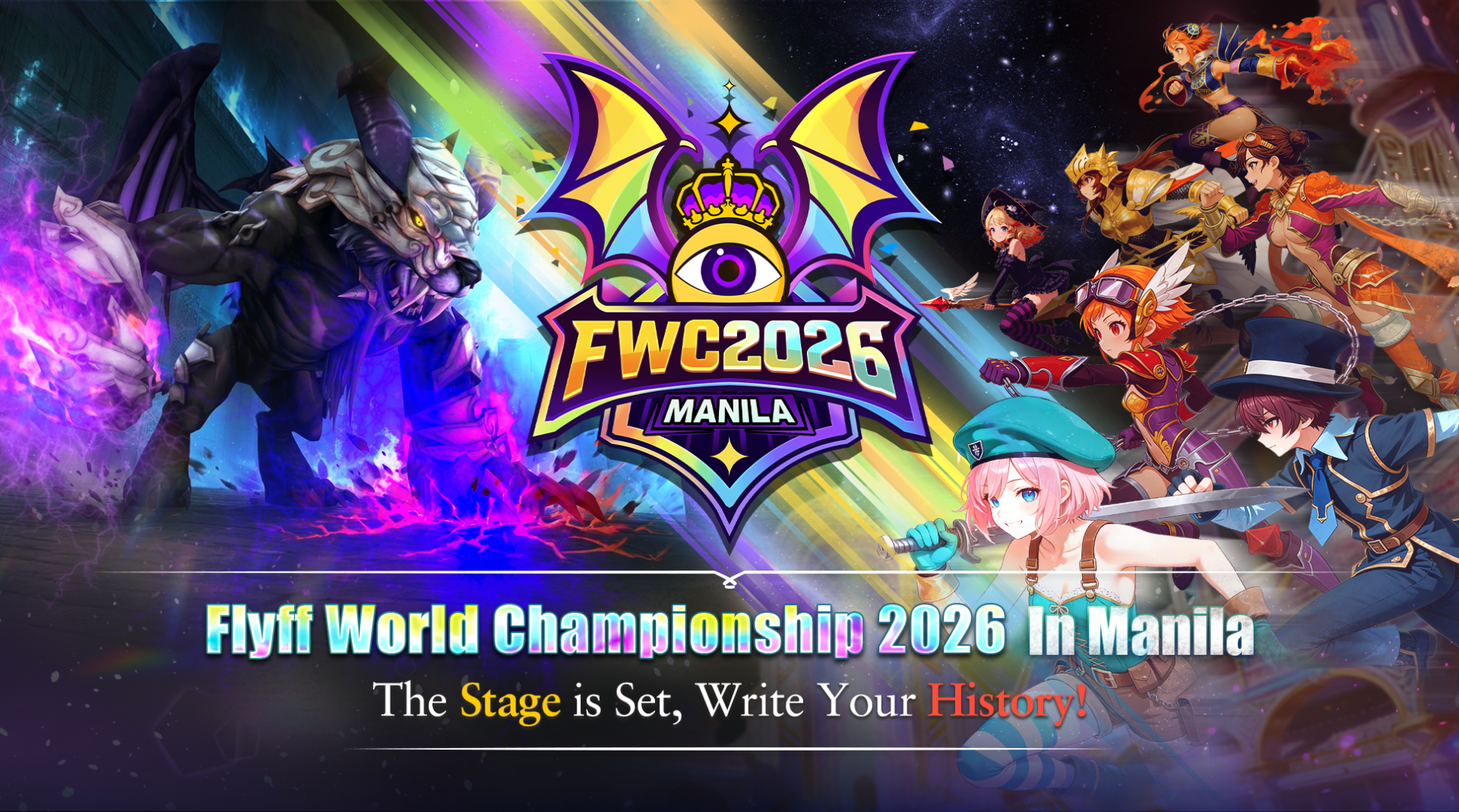
This Saturday (24), the SM Mall of Asia Music Hall in Manila, Philippines, hosts the Flyff Universe World Championship (FWC) 2026 Grand Finals, the world championship of the browser-based MMORPG developed by Gala Lab and published by Wemade Connect. Eight teams, with players from seven countries — including the Philippines, the United States, France and Chile — will share a record US$ 110,000 prize pool. The number that resonates across the industry, however, is a different one: according to figures from the publisher, revenue in the first 30 days of the dedicated tournament server, opened on April 23, quadrupled compared with the previous four weeks, up 18% over the same period of 2025. In a segment where championships are usually booked as marketing expenses, FWC has become, in its fourth year, a tournament that generates cash.
Not a marketing cost: a revenue engine
In conventional esports logic, competing is an investment in image: you rent an arena, pay out prize money and wait for diffuse returns in retention and awareness. For MMORPGs, the math is even harsher, because the gap between veterans with years-old characters and fresh newcomers makes any claim of fair competition difficult. That is exactly where FWC breaks the mold.
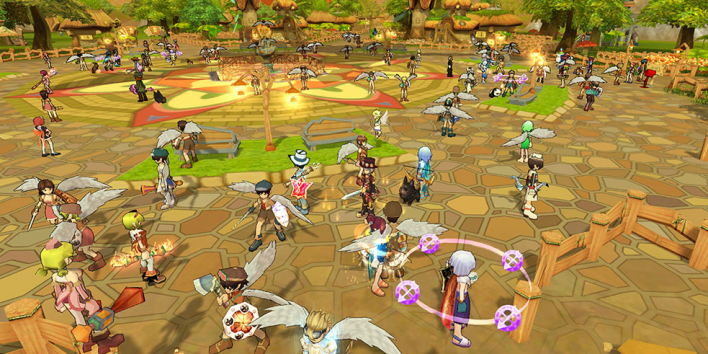
The key is the format. Every season, Wemade Connect opens a brand-new world, the FWC Server, where every player — from finalists to casuals — creates Level 1 characters on the same starting line.
"It is a system designed to eliminate the gap between early starters and latecomers."
How the dedicated server works
- Opened on April 23, 2026 and closing on October 29, with rules that let players transfer characters and gear intact to regular servers once the season ends;
- Experience, item drop rates and standard enhancement success rates doubled compared to regular servers;
- A 1.5x bonus on the success rate of ultimate enhancement;
- Exchange events for special FWC gear unlocked at Level 190.
This design turns the server into both the tournament qualifying stage and a boosting world. Newcomers and returning veterans use the accelerated progression to settle in without pressure; players from traditional servers create secondary accounts to try out classes; and the elite teams optimize their tournament builds — all of them moving the economy of the same world. Monetization happens organically: FWC-exclusive buff items and seasonal battle passes sell themselves along the way, with no pushy campaigns.
The numbers followed. According to Wemade Connect, revenue in the first 30 days of this year's server jumped roughly 4x over the previous month — and landed about 18% above the same window in 2025. The publisher turned the tournament into a self-sustaining cycle: opening a season attracts players, players move the server's economy, and that economy funds the championship's own expansion. Not by chance, the company has scaled the event up and increased stage investment every year.
Eight teams, seven countries and the hunt for a three-peat
The survivors of six months of progression racing reach Manila for 4-player party PvP, with character data locked in as of October 15. The US$ 110,000 total prize pool is heavily concentrated:
| FWC 2026 prize distribution | Amount |
|---|---|
| Champion | US$ 80,000 |
| Runner-up | US$ 20,000 |
| Third place | US$ 10,000 |
| Limited FWC 2026 mount and costume | For the finalists |
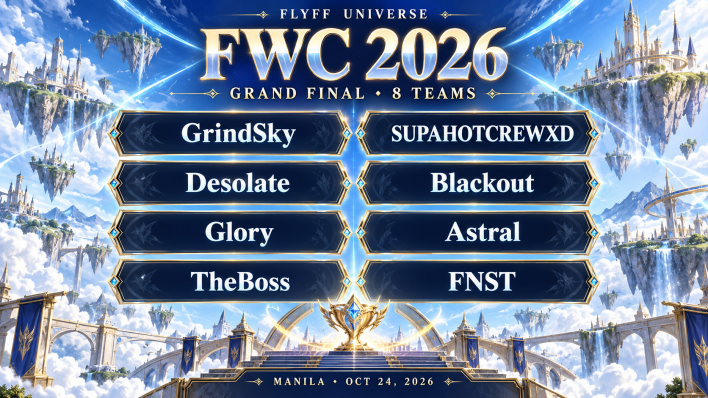
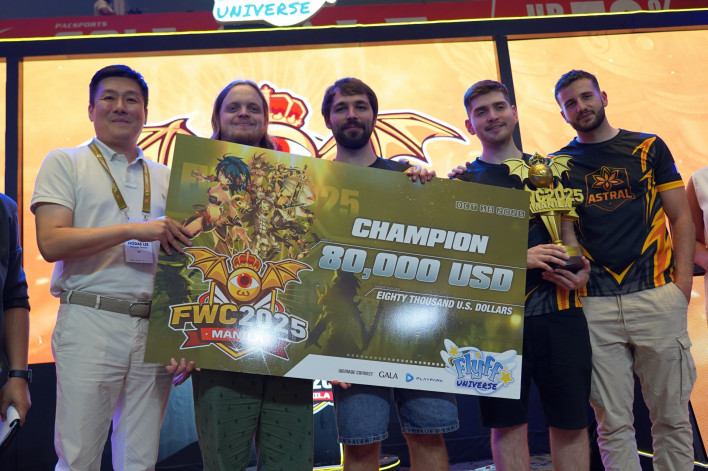
The dominant storyline is Astral's bid for an unprecedented three-peat, after winning the 2024 and 2025 editions. Last year's road was a tale of resilience, too: shaken by the rising power Blackout in the upper bracket, the team dropped to the lower bracket, met its rival again in the Grand Final and swept three straight sets to turn the score — real-time correction of exposed weaknesses became the team's trademark. Blackout, which went undefeated until the 2025 decision, is also in Manila, and the rematch between last year's protagonists is the main narrative thread of Saturday.
Opponent Selection and the bracket format
This year, the bracket gained a psychological twist: the Opponent Selection system. The three teams that topped their regional qualifiers, split by time zone — GrindSky, SUPAHOTCREWXD and Desolate, in that priority order — pick their bracket position and first-round opponent, and may even call out Astral or Blackout right away. Taking down a favorite in the debut earns prestige and momentum; a bad call means falling straight into the lower bracket.
The format is double elimination among eight teams, with bracket finals in best-of-three and the Grand Final in best-of-five — plus a decisive rule: whoever reaches the final undefeated keeps a one-win advantage, with no bracket reset. The upper-bracket finalist therefore needs only two set wins to lift the trophy, which makes a perfect run the surest shortcut to the title.
Manila as a festival: from Guild Rally to Meet the Devs
Inside and outside the arena, the organization turns the final into an on-site festival. Filipino girl group KAIA takes the stage for a special performance, alongside cosplay showcases with well-known names from the local scene — CHERIZAWA, ANINGNING, EEN, MYRTLE, PRINCE and YENDERE —, photo zones, photo booths, an official merch store and exclusive in-game rewards. On the community side, the Guild Rally gathers guilds with 20 or more members on site, with its own raffle, and the general prize draw gives away a Honda motorbike, a collab PC and a laptop to attendees.

On the eve, this Friday (23), premium ticket holders join Meet the Devs, a session where the core development team, including the general producer, talks to fans. It is the physical translation of the trait that, according to Kim, sets the project apart:
"Anything can become esports."
The executive cites the on-site reunion of guildmates previously known only through screens as the most rewarding return of running FWC — and the event's greatest asset.
How to watch
The live broadcast runs on October 24 across the championship's official YouTube, Facebook and Twitch channels, with multilingual streams from partner broadcasters for the global audience, full coverage of the matches, the awards ceremony and the attractions — plus three in-game coupon codes revealed during the live show. The key times, converted from Manila (PHT) to New York (EDT), are:
| Moment | Manila (PHT) | New York (EDT) |
|---|---|---|
| Event opening | 1:00 p.m. | 1:00 a.m. |
| First-round matches | 1:45 p.m. | 1:45 a.m. |
| Lower bracket | 3:45 p.m. | 3:45 a.m. |
| KAIA performance | 5:10 p.m. | 5:10 a.m. |
| Grand Final | 5:30 p.m. | 5:30 a.m. |
| Awards ceremony | 6:30 p.m. | 6:30 a.m. |
Those following a full weekend of esports can also catch the E7WC 2026 knockout stage from Epic Seven, which starts this same Saturday — the two finals anchor the genre's schedule for the period.
The pattern worth watching
If the result repeats every season, FWC consolidates itself as a case study for the industry: the competition works as a progression season — equivalent to live-service game seasons, but with esports in command. The mechanism is not isolated: fast-start servers have become a recurring lure in the genre, as with the recent Super Boost server in RF Online Next, and browser accessibility keeps feeding spontaneous fan ecosystems that keep classics running straight in the browser — including the Need for Speed: Underground 2 running in Chrome and Firefox. What Wemade Connect added was tying that lure to a calendar product, with an opening date, a finals date and progress transfer at the end.
There are honest caveats: the revenue figures come from the publisher itself, without independent auditing, and a browser MMORPG carries clear technical limits. But the model connects esports to the game organically, instead of insisting on standardizing the arena like a precision sport: everyone who completes the season moves on to the regular servers with leveled characters and in-world partners, and the championship recycles that attention cycle after cycle. The tournament, in the end, is the product — and the Manila Grand Final is just the cherry on top.
If Sunday arrives with the trophy going to Astral, the three-peat enters the record books; if Blackout settles the score from 2025, FWC's vocabulary gains a new dynasty. Regardless of whose name is engraved on the cup, the lesson for the rest of the industry is already on record: in Gala Lab's browser MMORPG, the championship does not cost audience — it pays the bills. To keep up with the genre's next developments, check the portal's game news page.
Sources: official FWC 2026 page and Inven Global.
Suggested and related articles
Legend of Mir 2: Red Knight marks its first anniversary
Sudden Attack Championship S2 main stage opens Saturday
Hans Sama hails Perkz on the eve of Worlds 2026
E7WC 2026: Epic Seven knockout stage starts Saturday
Ragnarok Online PLUS+ Opens CBT in South Korea