Fortnite Crossovers: The Definitive Guide to All Collaborations, Skins and Events
Published on · Updated on
Explore the definitive guide to all Fortnite crossovers. Full list of Marvel, DC, anime, Icon Series skins and events.
Fortnite has evolved from a simple Battle Royale game into the planet's biggest cultural “Metaverse.” The driving force behind this transformation is its unprecedented crossovers strategy, uniting universes that once seemed incompatible: Marvel and DC, Naruto and Dragon Ball, Ariana Grande and Travis Scott, all coexisting on the same Island.
To help you better understand and stay up to date on these crossovers, we have compiled this complete guide on the subject. This definitive guide is your central hub for cataloging every collaboration, skin, event, and Mythic item ever featured in Fortnite. Whether you are looking for the full history or just a skin gallery, your search ends here.
What Exactly Defines a “Crossover” in Fortnite?
In the context of Fortnite, a “crossover” (or collaboration) goes far beyond simply adding a guest character. It is the strategic, licensed integration of an external intellectual property (IP) directly into the game's ecosystem. This integration can range in scale, from a single cosmetic item (skin) in the Item Shop to massive narrative events that reshape the map, introduce game modes (LTMs), and intertwine with the central lore of the Zero Point. It is the tactical execution that turns Fortnite from a game into an interactive media platform.
The Metaverse Strategy: How Fortnite Became the Hub of Pop Culture
Fortnite's crossover strategy is the central pillar of its ambition to build the Metaverse. Epic Games positions the Island not as a game, but as a persistent digital social space — a “hub” where players come to socialize, create, and interact with their favorite franchises. By hosting virtual concerts (Travis Scott), movie trailer premieres (Star Wars), and anime events, Fortnite establishes itself as the neutral, dominant meeting point where all global pop culture can converge and be celebrated interactively.
Difference Between Collaboration, Icon Series, and Lore Crossover (Zero Point)
Although the term “crossover” is used broadly, Epic Games segments them into distinct categories with different purposes:
Standard Collaboration
Focused on cosmetics (skins, pickaxes, emotes) from famous IPs (e.g., Street Fighter, The Terminator), usually sold in the Item Shop.
Icon Series
A product line dedicated to immortalizing real-world celebrities and creators (e.g., Ninja, Ariana Grande, LeBron James), recognizing their cultural impact.
Lore Crossover (Zero Point)
The deepest integration. These are IPs that do not just visit, but are canonically pulled into Fortnite's central narrative (e.g., Marvel – Nexus War, DC – Batman: Zero Point), often through Battle Passes and events that shape the season's story.
Cultural Impact: Beyond Skins (Music, Emotes, Limited-Time Modes)
The true impact of a crossover in Fortnite is measured by its depth of integration, far beyond the skin. The most successful collaborations permeate the entire gameplay experience. This includes Lobby Tracks by real artists, Emotes replicating viral dances (such as “Gangnam Style”), Limited-Time Modes (LTMs) with unique mechanics (like Thanos' Infinity Gauntlet), and Mythic Items that drastically alter the gameplay meta (like the Star Wars Lightsabers or Dragon Ball's Kamehameha).

Marvel Crossovers: Infinity War and the Heroes' Dominance
No collaboration defines Fortnite with the same magnitude or scale as the partnership with Marvel Comics. What began as a surprising Limited-Time Mode (LTM) in 2018 celebrating “Avengers: Infinity War” evolved into the deepest lore integration ever seen in the game. The undisputed peak was Chapter 2, Season 4: “Nexus War,” an entire season dedicated to Marvel heroes and villains, culminating in the canonical battle against Galactus, the Devourer of Worlds. This section details the full timeline of that alliance and catalogs the characters that redefined the Zero Point.
Full Timeline: From Thanos (2018) to the Nexus War (Chapter 2, Season 4)
The Marvel partnership unfolded in tactical phases. Phase 1 (Chapter 1, Season 4) was the “Infinity Gauntlet” LTM, where one player could transform into Thanos and wield his powers. Phase 2 (Chapter 1, Season 8) was the “Endgame” LTM, letting players wield iconic Avengers weapons against Thanos' army. Phase 3, the most significant, was Chapter 2, Season 4 (“Nexus War”), a canonical event in which Thor summoned heroes to the Island to stop Galactus, resulting in a map filled with Marvel locations and powers.
Skin Gallery: Avengers (Iron Man, Captain America, Thor, Hulk)
The core of the collaboration lies with the Avengers. The central “pack” — Iron Man (with his built-in transformation emote), Thor and She-Hulk — was the backbone of the Nexus War Battle Pass. Others, such as Captain America, were introduced as premium Item Shop purchases celebrating events like the 4th of July. Characters like Hulk (and his variants), Black Widow (multiple versions), and Hawkeye (Clint Barton and Kate Bishop) complete the main roster, alternating between Shop and Pass.
Skin Gallery: X-Men and Allies (Wolverine, Deadpool, Storm, Doctor Doom)
Beyond the Avengers, Marvel brought its most famous mutants and iconic villains. Deadpool was notably the “secret skin” of Chapter 2, Season 2, “hijacking” the Yacht. In the Nexus War (Ch. 2, Season 4), Wolverine was the secret Battle Pass challenge, while Storm and Doctor Doom (with his own Mythic Location in Latveria) were direct Pass rewards. Essential characters such as Mystique (also from the Pass), Cable, Psylocke, Gambit, and Rogue expanded the mutant universe through the Item Shop.
Mythic Items and Events (Infinity Gauntlet, Nexus Powers)
Marvel's true impact was felt in the gameplay. The “Infinity War” and “Endgame” LTMs introduced revolutionary mechanics, such as the Infinity Gauntlet and Avengers weapons (Captain America's Shield, Mjolnir, Hawkeye's Bow). The Nexus War, however, integrated Mythic powers directly into the standard Battle Royale loot, letting players use Iron Man's Repulsors, Doctor Doom's Arcane Gauntlets, and Wolverine's Adamantium Claws. Later, items like Spider-Man's Web-Shooters and the Carnage/Venom symbiote redefined mobility in the game.
DC Comics Crossovers: From Gotham City to the Zero Point
DC Comics' incursion into the Fortnite universe set a unique precedent for transmedia storytelling. Unlike Marvel's “total war” approach, DC focused on deep canonical integration through external media — specifically, the “Batman/Fortnite: Zero Point” comic series. This collaboration not only brought Gotham and Metropolis' greatest heroes and villains to the Island, but used Batman to actually explain the mechanics of the Loop and Zero Point lore to a global audience. DC's strategy proved that crossovers could actively expand the game's story instead of being mere cosmetic events.
Batman and the Zero Point: Integrating Comics and Game Lore
The pillar of the DC collaboration is the “Batman/Fortnite: Zero Point” comic miniseries. This canonical transmedia event was pivotal, following Batman as he is pulled into Fortnite's Loop, losing his memory (like all “Loopers”) and teaming up with characters like Catwoman to investigate Zero Point mechanics. This narrative was not just a tie-in; it actively explained the rules of the Fortnite universe. The series introduced exclusive skins (such as Zero Batman and The Batman Who Laughs) tied to purchases of physical and digital editions, creating a highly successful physical-digital engagement model.
Skin Gallery: Justice League (Superman, Wonder Woman, Flash, Aquaman)
DC's “Trinity” and its key allies were integrated through different acquisition methods, demonstrating their importance and status. Aquaman was the main Battle Pass reward skin of Chapter 2, Season 3 (along with his Arthur Curry style). Superman (Clark Kent) was the secret skin of the Chapter 2, Season 7 Battle Pass, unlockable through special missions. Wonder Woman and Flash (Barry Allen) were introduced as premium Item Shop releases, completing the core Justice League lineup in the Metaverse.
Skin Gallery: Villains and Anti-Heroes (Joker, Harley Quinn, Black Adam)
DC's villain pantheon is as robust as its heroes, with Harley Quinn among the most recurring and commercially popular collaboration skins (including the Rebirth, Suicide Squad, and Zero variants). The Joker was introduced in the physical and digital “The Last Laugh Bundle”, alongside Poison Ivy. Characters such as Catwoman (Zero Point and standard versions), Black Adam (in a movie tie-in), Deathstroke (Slade Wilson – Zero Point), and Bloodsport showcase the vast gallery of anti-heroes available in the Shop.
Mythic Items and Locations (Explosive Batarang, Gotham Locations)
The first major Batman collaboration (Chapter 1, Season X) set the standard for themed map changes. A Rift Zone transformed Tilted Towers into a dark Gotham City, complete with its gothic aesthetic and building restrictions. During this event, two Mythic items were introduced into the loot pool: the Explosive Batarang (a guided projectile that exploded on proximity) and the Batman Grapnel Gun, which offered superior mobility and the unique ability to reopen the glider.
Icon Series: Celebrating Real-World Legends
The “Icon Series” represents one of Epic Games' most successful metaverse strategies. This collaboration category shifts the focus from fictional Intellectual Properties (IPs) to real-world personalities that define global culture. By immortalizing influential figures from music, streaming, sports, and fashion inside the game, Fortnite positions itself as a digital pantheon. The “Icon Series” is not just a set of skins; it is the “canonization” of cultural influencers, turning their real-world impact into persistent digital capital within the Fortnite ecosystem.
Musicians and Virtual Events (Travis Scott, Ariana Grande, Marshmello)
The musical pillar of the “Icon Series” redefined the concept of live entertainment. Marshmello's 2019 concert was the proof of concept, but it was Travis Scott's 2020 “Astronomical” event that set the new gold standard — an immersive, interactive experience-event that broke concurrent player records. Ariana Grande's 2021 “Rift Tour” evolved further, turning the show into a psychedelic journey through the Zero Point. These events are not concerts in Fortnite; they are metaverse-native digital tours, generating massive revenue and unmatched cultural relevance.
Content Creators (Ninja, TheGrefg, Loserfruit, Flakes Power)
This subcategory is a direct recognition of the creator economy that formed the backbone of Fortnite's community. By granting “Icon” skins to pioneering streamers like Ninja and Loserfruit, Epic Games validated their importance in the ecosystem. The launch of TheGrefg's skin, which broke simultaneous viewership records on Twitch, proved the commercial power of this strategy. The inclusion of global creators such as Brazil's Flakes Power demonstrates a localized strategy to celebrate and engage key regional markets, directly rewarding those who built the game's audience.
Athletes (LeBron James, Neymar Jr., Naomi Osaka)
The “Icon Series” expands its reach into the lucrative global sports market, associating Fortnite with athletic excellence. Including global superstars like LeBron James (basketball icon) and Naomi Osaka (tennis star) attracts demographics that may not be native players. The collaboration with Neymar Jr. was particularly notable, as he was integrated not only through the Item Shop but as the secret reward of the Chapter 2, Season 6 Battle Pass, demonstrating a deeper level of partnership and marketing integration.
Other Personalities (Bruno Mars, Chloe Kim)
This category demonstrates the flexibility of the “Icon Series,” serving as a hub for cultural figures who transcend specific niches. Including the musical duo Silk Sonic (Bruno Mars and Anderson .Paak) brought funk and soul to the metaverse, appealing to a different audience than rap or pop events. Likewise, snowboarder Chloe Kim's skin, released at the height of the Winter Olympics, shows Epic's ability to capitalize on real-time cultural and sporting events, keeping Fortnite at the center of any global conversation.
Anime and Manga Crossovers: The Eastern Phenomenon
Introducing anime and manga to Fortnite marked a new and lucrative frontier for the Metaverse. More than just skins, these collaborations represented a technical challenge: successfully implementing cel-shading aesthetics (cartoon style) to preserve the visual fidelity and artistic identity of the original characters. Strategically, these crossovers introduced some of the most powerful and visually spectacular Mythic Items in the game's history, drastically altering gameplay and successfully capturing a massive, highly engaged global audience from the Eastern market.
Dragon Ball (Goku, Vegeta, Kamehameha Mythic)
Possibly the most impactful and long-awaited anime collaboration, Dragon Ball's arrival redefined the concept of power in the combat meta. The event not only introduced iconic skins (Goku, Vegeta, Bulma, and Beerus) but integrated Mythic Items that dominated matches: the Kamehameha, a devastating energy beam capable of vaporizing structures and opponents, and the Flying Nimbus (Kintoun), a fast, unlimited rotational mobility item. The collaboration was so deep that it included themed locations (Kame House) and a dedicated quest event (“Power Unleashed!”).
Naruto Shippuden (Team 7, Akatsuki, Explosive Kunai Mythic)
The Naruto Shippuden collaboration was Fortnite's pioneering incursion into the “Big 3” anime universe, setting the model for future successes. Due to its massive popularity, the launch was split into multiple waves (including “Rivals”), bringing core Team 7 characters (Naruto, Sasuke, Sakura, Kakashi) and iconic Akatsuki antagonists (Itachi Uchiha, Orochimaru). In terms of gameplay, it introduced the Paper Bomb Kunai as a tactical damage Mythic and added Kakashi as an NPC on the map, plus a Hidden Leaf Village hub in Creative Mode.
Attack on Titan (Eren Yeager, Mikasa, Levi, ODM Mythic)
Marking a different strategic integration, Attack on Titan (Shingeki no Kyojin) was anchored directly in the Chapter 4, Season 2 Battle Pass. Eren Yeager was the special quest reward (the season's “secret skin”), while fan favorites Captain Levi and Mikasa Ackerman launched as Item Shop highlights. The absolute standout was the ODM Gear (Omni-Directional Mobility Gear) Mythic Item, one of the most complex mobility Mythics faithful to the original work, letting players swing across the map and attack with Thunder Spears.
Other Collaborations (My Hero Academia, Jujutsu Kaisen)
Following its predecessors' success, Fortnite accelerated its shonen anime strategy with high-impact events. My Hero Academia brought U.A. heroes (Deku, All Might, Bakugo), introducing the controversial and overwhelming ‘Deku's Smash' (Detroit Smash) Mythic Item. Jujutsu Kaisen innovated by adopting an event “mini-pass” format (‘Break the Curse!'’), where players completed quests to earn cosmetics (including the Yuji Itadori skin), while Satoru Gojo and other sorcerers dominated the Shop with their own Cursed Technique Mythics (like Hollow Purple).
Gaming Crossovers (Gaming Legends Series)
The “Gaming Legends Series” is one of Epic Games' boldest metaverse moves, serving as a diplomatic “demilitarized zone” in the gaming industry. This category is dedicated to celebrating the most iconic characters in video game history, regardless of their home platform. By bringing mascots from direct competing ecosystems (PlayStation and Xbox) to the same neutral Fortnite battlefield, Epic cemented the Battle Royale's position not just as a game, but as the central, agnostic platform for all gamer culture.
PlayStation Icons (Kratos, Aloy)
Kratos' (God of War) arrival in Chapter 2, Season 5 was a watershed moment. Seeing Sony's lead protagonist in a game available on every platform, including Xbox and Nintendo, signaled an unprecedented industry shift. The collaboration was deep, including an exclusive style (Armored Kratos) for players on PS5. The later addition of Aloy (Horizon Zero Dawn/Forbidden West) as a tie-in for her new title's launch, complete with an “Aloy & Lara” LTM, reinforced the strategic partnership between Sony Interactive Entertainment and Epic's metaverse.
Xbox Icons (Master Chief, Marcus Fenix)
As a direct counterpart to Sony, Microsoft brought its titans to the “Gaming Legends Series.” Master Chief (Halo), arguably the face of Xbox, was a monumental addition, enabling the once-unthinkable scenario of Chief fighting alongside Kratos. The collaboration included iconic items like the Pelican glider and an emote with the mini Warthog. Later, the series expanded with the “Delta-One Pack,” bringing Marcus Fenix and Kait Diaz from the Gears of War franchise, cementing the strong relationship between Epic Games (Gears' original creator) and the Xbox ecosystem.
Legends From Other Franchises (Street Fighter, Tomb Raider, Assassin’s Creed, Resident Evil)
This subcategory celebrates the vast history of third-party games (from other developers). Lara Croft (Tomb Raider) was notably integrated as a Battle Pass reward (Chapter 2, Season 6), cementing her legendary status. Fighting franchises were represented by Street Fighter (Ryu, Chun-Li, Guile, Cammy), while Resident Evil brought its S.T.A.R.S. protagonists (Chris Redfield, Jill Valentine) and Leon S. Kennedy. Including heroes like Ezio Auditore (Assassin’s Creed), Geralt of Rivia (The Witcher – via Battle Pass), and Alan Wake shows the series' breadth: any gaming icon is eligible to join the Zero Point.
Movie and TV Crossovers: Hollywood Blockbusters
Fortnite's relationship with Hollywood has turned the game into an essential premiere and marketing platform for pop culture's biggest blockbusters. These collaborations go far beyond promotional skins; they include in-game trailer premiere events (such as Star Wars: The Rise of Skywalker), Limited-Time Modes (LTMs) replicating franchise action, and season-defining Mythic Items. Fortnite has become an interactive cinema screen, a vital channel for studios to connect with the gamer audience.
Star Wars: The Complete Saga (Skins, Lightsaber Mythics, Events)
The Star Wars collaboration is one of the most extensive and recurring, spanning every era of the saga (Original Trilogy, Prequels, and Sequels). The The Rise of Skywalker trailer premiere event at Risky Reels was a milestone. In terms of gameplay, the introduction of Mythic Lightsabers and E-11 Blaster Rifles during the annual May the 4th events drastically alters close-quarters combat meta, bringing the fantasy of being a Jedi or Sith directly into Battle Royale, alongside skins of central characters like Darth Vader, Obi-Wan Kenobi, and Han Solo.
Stranger Things (Demogorgon, Chief Hopper)
The Stranger Things collaboration (Chapter 1, Season 9) is a case study in exclusivity and licensing. It was one of the first horror/suspense integrations, bringing the Demogorgon and Chief Jim Hopper skins. Most notably, the event introduced “Upside Down Portals” on the map (specifically at the Mega Mall). Due to complex licensing, these skins became some of the rarest in the game, having been “vaulted” (removed from the shop rotation) indefinitely, massively increasing their desirability among collectors.
John Wick (The Original Legend vs. Keanu Reeves)
The John Wick case is a unique meta-narrative in Fortnite history. The “The Reaper” skin, from the Chapter 1, Season 3 Battle Pass, was a clear unlicensed tribute to the character. Years later, driven by the franchise's popularity, Fortnite launched the official John Wick skin (based on Keanu Reeves) alongside the acclaimed “Wick’s Bounty” LTM. This evolution from “tribute” to “official partnership” demonstrates Fortnite's cultural power in attracting the very IPs it initially referenced.
Other Franchises (Matrix, Ghostbusters, Terminator, Dune)
Fortnite's Hollywood portfolio is vast, covering classics and modern releases. The Terminator (T-800 and Sarah Connor) and Ghostbusters (skins and Mythic items in Halloween events) represent the '80s pillars. Modern film releases use the game as direct marketing, as seen in the Dune tie-ins (Paul Atreides, Chani) and Matrix Resurrections (Neo, Trinity, and a “bullet time” emote), proving that any major film franchise now considers Fortnite an essential part of its launch strategy.
Recently, in the Halloween event, Fortnite featured a Jason Voorhees appearance.
Unexpected Crossovers: Fashion, Music, and Brands
This collaboration category demonstrates Fortnite's ambition to transcend nerd culture and establish itself as an arbiter of global mainstream culture. By partnering with luxury brands, elite art houses, and sports giants, Epic Games is actively dissolving the boundaries between the physical world and the digital metaverse. These collaborations legitimize Fortnite as a digital “third place,” where fashion, art, and commerce coexist with interactive entertainment.
Haute Couture (Balenciaga, Moncler)
The Balenciaga partnership was a watershed moment, turning Fortnite into a digital haute couture runway. The collaboration not only introduced digital skins and cosmetics inspired by the brand's real designs, but was also accompanied by a physical Fortnite x Balenciaga clothing campaign in the real world, creating a perfect phygital (physical + digital) crossover. The subsequent Moncler collaboration followed the same model, cementing the Item Shop's status as a digital luxury boutique.
Sports Brands (Nike/Air Jordan, NFL)
Fortnite's integration with sports culture goes beyond Icon Series athletes. The Air Jordan (Nike) collaboration was pioneering, celebrating sneakerhead culture with themed skins and a creative parkour LTM. The long-standing partnership with the NFL (National Football League) lets players buy uniforms from all 32 teams, enabling real-world fandom representation inside the metaverse — a highly effective monetization strategy during football season.
Artists (Kaws, Basquiat)
Fortnite has positioned itself as a legitimate digital art gallery. The collaboration with contemporary artist Kaws included not only an “Icon” skin, but a recreation of his “New Fiction” exhibition from London's Serpentine Gallery inside Fortnite Creative Mode. Even more surprising was the partnership with the Jean-Michel Basquiat estate, which brought iconic artworks by the artist (such as “Untitled (1982)”) to the Item Shop as back blings, introducing elite art to a new generation.
Automotive (Ferrari)
The introduction of the Ferrari 296 GTB in Chapter 2, Season 7 marked the first time a real-world licensed vehicle became fully drivable inside the main Battle Royale mode. The Ferrari functionally replaced the game's standard sports cars (Whiplash), bringing an unprecedented level of brand realism and in-game advertising. This partnership opened the door to future automotive integrations, serving as a luxury brand sponsorship model that directly affects gameplay.
How to Get Crossover Skins: Shop, Battle Pass, and Exclusivity
The availability of collaboration skins is the main source of friction and engagement in Fortnite's digital economy. Epic Games uses a multifaceted acquisition system based on scheduled scarcity and different monetization vectors. Understanding the fundamental distinction between Battle Pass rewards, Item Shop rotations, and the dreaded “vaulted” status is crucial for any player or collector navigating the metaverse cosmetics market.
Understanding “Vaulted” Status (Rare Skins That May Never Return)
“Vaulted” status refers to cosmetics removed from the Item Shop rotation for an indefinite period — potentially forever. In the crossover context, this is almost always dictated by expiring licensing deals. Items like the Demogorgon (Stranger Things) skin are the prime example. While Epic Games may renegotiate licenses (as it did with some Marvel skins), many cosmetics remain “vaulted,” making them extremely rare status markers coveted by veteran players.
Battle Pass Exclusivity
This is the fundamental, unbreakable principle of Fortnite's economy: collaboration skins included in the Battle Pass are 100% exclusive to that specific season and will never return to the Item Shop or any future offering. Iconic characters such as Iron Man, Wolverine, Darth Vader, Spider-Man (Ch. 3, Season 1), and Eren Yeager were acquired this way. This creates seasonal urgency (FOMO) and ensures these skins serve as permanent trophies, attesting to the player's participation in that specific era of the game.
Item Shop Rotation
The Item Shop is the main commercial vector for most collaborations. These skins operate on a rotation cycle: they launch to coincide with an event (a movie release, a concert, a holiday) and remain available for a few days. They may return in the future, but their frequency is unpredictable and depends entirely on Epic's ongoing marketing strategy and the IP holder's approval. For example, Star Wars skins return annually on May 4th, while others may take years to reappear.
FAQ: Frequently Asked Questions About Fortnite Collaborations
This section addresses the most persistent, high-search-volume questions the community has about Fortnite's crossover ecosystem. The answers are direct and based on historical licensing patterns, game data, and official Epic Games statements.
What was Fortnite's first official crossover?
Although the “The Reaper” skin (Ch. 1, Season 3) was a clear tribute to John Wick, the first official, licensed crossover was the “Infinity Gauntlet” event (Ch. 1, Season 4, in May 2018). This partnership with Marvel to promote Avengers: Infinity War introduced the LTM (Limited-Time Mode) in which players could transform into Thanos, proving the massive potential of the collaboration strategy.
Will the Travis Scott or Kratos skin return?
This is the most frequently asked question.
- Travis Scott: It is considered extremely unlikely. Due to the 2021 Astroworld festival controversy, Epic Games removed his “Daily” shop section and the associated emote. For brand sensitivity and public relations reasons, his return is a licensing taboo.
- Kratos: It is possible. As a “Gaming Legends Series” skin sold in the Item Shop (not in a Battle Pass), his return depends solely on renewing the licensing agreement between Sony and Epic, usually to promote a new God of War franchise release or event.
How do I know what the next crossover will be?
Officially, Epic Games announces new collaborations days before launch through its social channels (such as X/Twitter) and the official Fortnite blog. However, the most common source of early information is community data miners. These experts analyze game files after each patch (update), finding textures, codenames, and audio files that indicate, with high accuracy, which IPs (Intellectual Properties) are on the way.
Why did some skins (like Stranger Things) disappear?
The disappearance of skins like Demogorgon and Chief Hopper (Stranger Things) is the clearest example of license expiration. The contractual partnership between Epic Games and Netflix for these cosmetics had a set term. When that term expired without renewal (possibly due to costs, conflicting Netflix marketing strategies, or the development of its own games), Epic lost the legal right to sell these items, forcing their indefinite removal from the Shop rotation.
Suggested and related articles
Obsession Nikki skin arrives at Fortnite this Fortnitemares
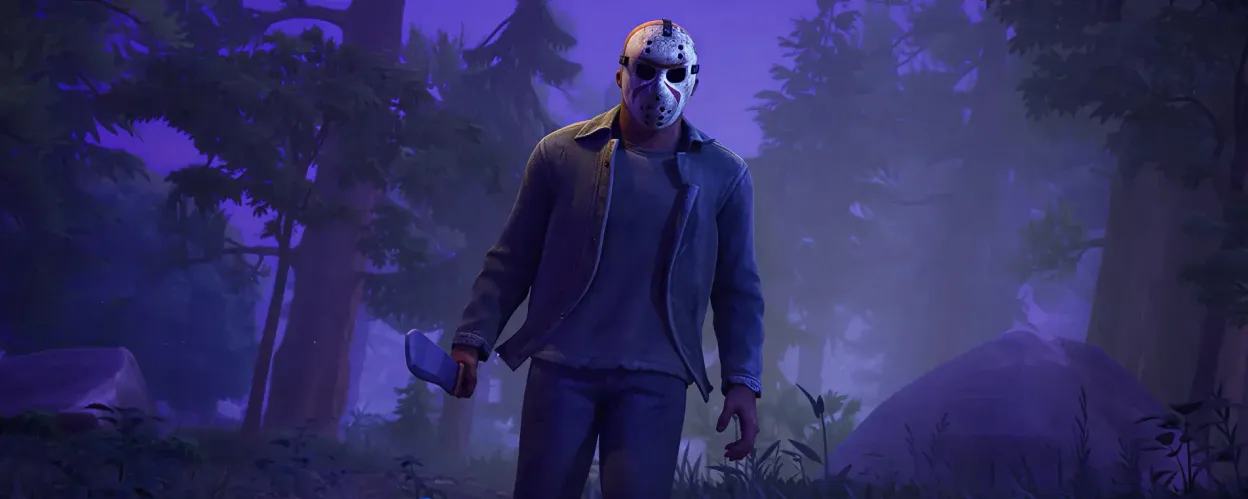
Jason in Fortnite Fortnitemares: Where to Find and How to Defeat the Camp Crystal Lake Terror
Simpsons in Fortnite: Leak reveals new map and skins
Fortnite Admin Panel Codes Unlock Free Items, Rare Sprites and Massive XP Bonus in the Lobby