Golden Kamuy: what the anime is and why it shows the Ainu
Published on · Updated on
Satoru Noda's series blends a gold rush at the end of the Meiji era with the daily life of Hokkaido's Ainu. Here is the premise and the history behind it
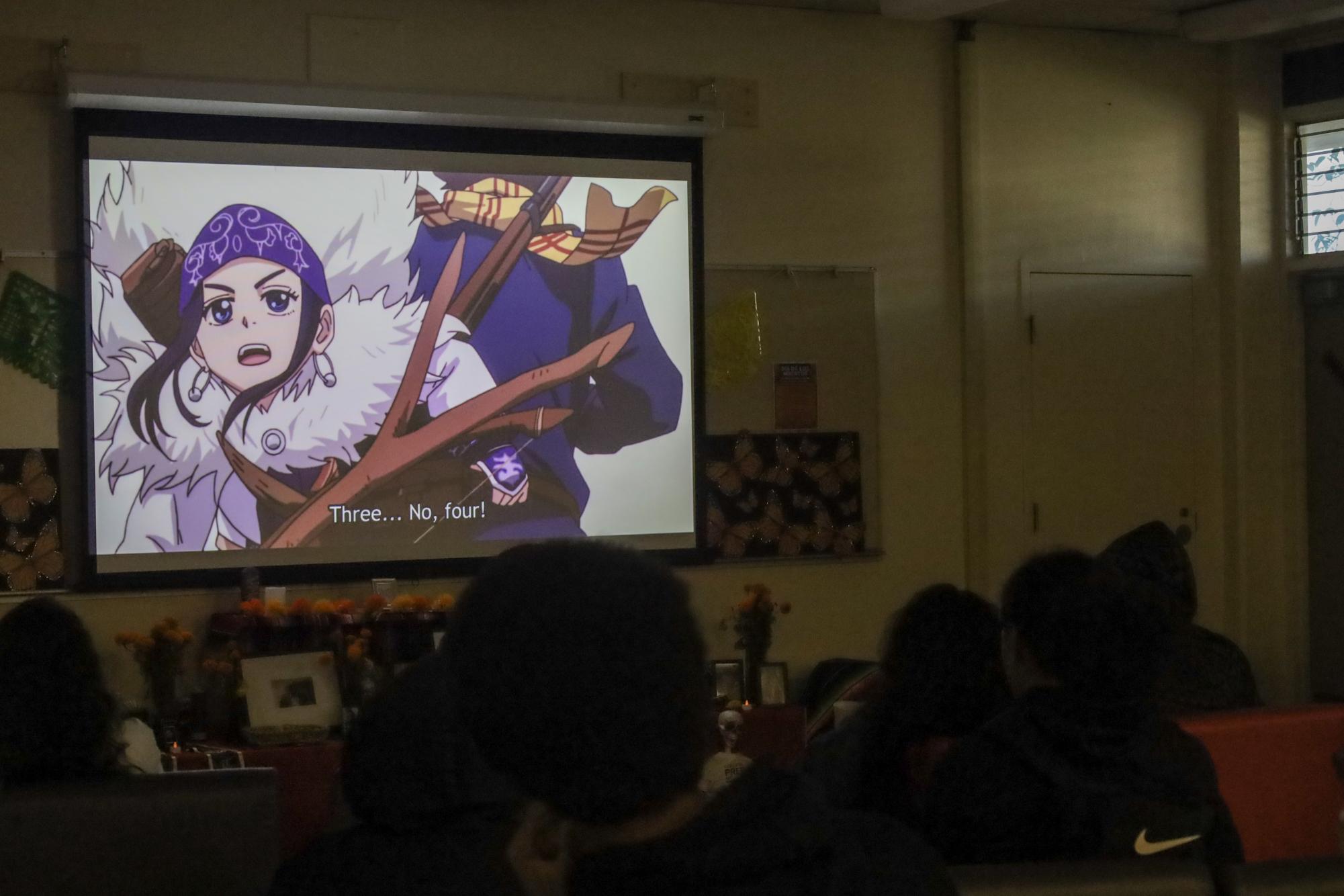
A class at El Camino College, in California, used an episode of Golden Kamuy to discuss Indigenous representation in pop culture. The event took place on Nov. 4 in the campus Communications Building and was part of the Native American Heritage Month program organized by the college's Social Justice Center. Ethnic studies professor Takahito Tanaka led the conversation with his Introduction to Ethnic Studies class, which watched the episode and then debated what the series shows — and what it leaves out — about the Ainu, the Indigenous people of northern Japan.
The choice was no accident. Golden Kamuy is one of the few popular Japanese titles in which Ainu characters appear as protagonists, speak their own language on screen and explain customs that much of the foreign audience has never seen. The series, however, is above all a survival adventure: gunfights, hunts, tattooed corpses and plenty of crude humor, which was exactly the tension the class wanted to discuss.
What Golden Kamuy is
Golden Kamuy is a manga written and drawn by Satoru Noda and serialized in Shueisha's weekly Young Jump from August 2014 to April 2022. The story was collected in 31 volumes and 314 chapters, and later adapted into an anime and a live-action film franchise. The title is a made-up word: it joins the English golden to the Ainu kamuy, which refers to the gods or spirits of Ainu cosmology — something like "golden god."
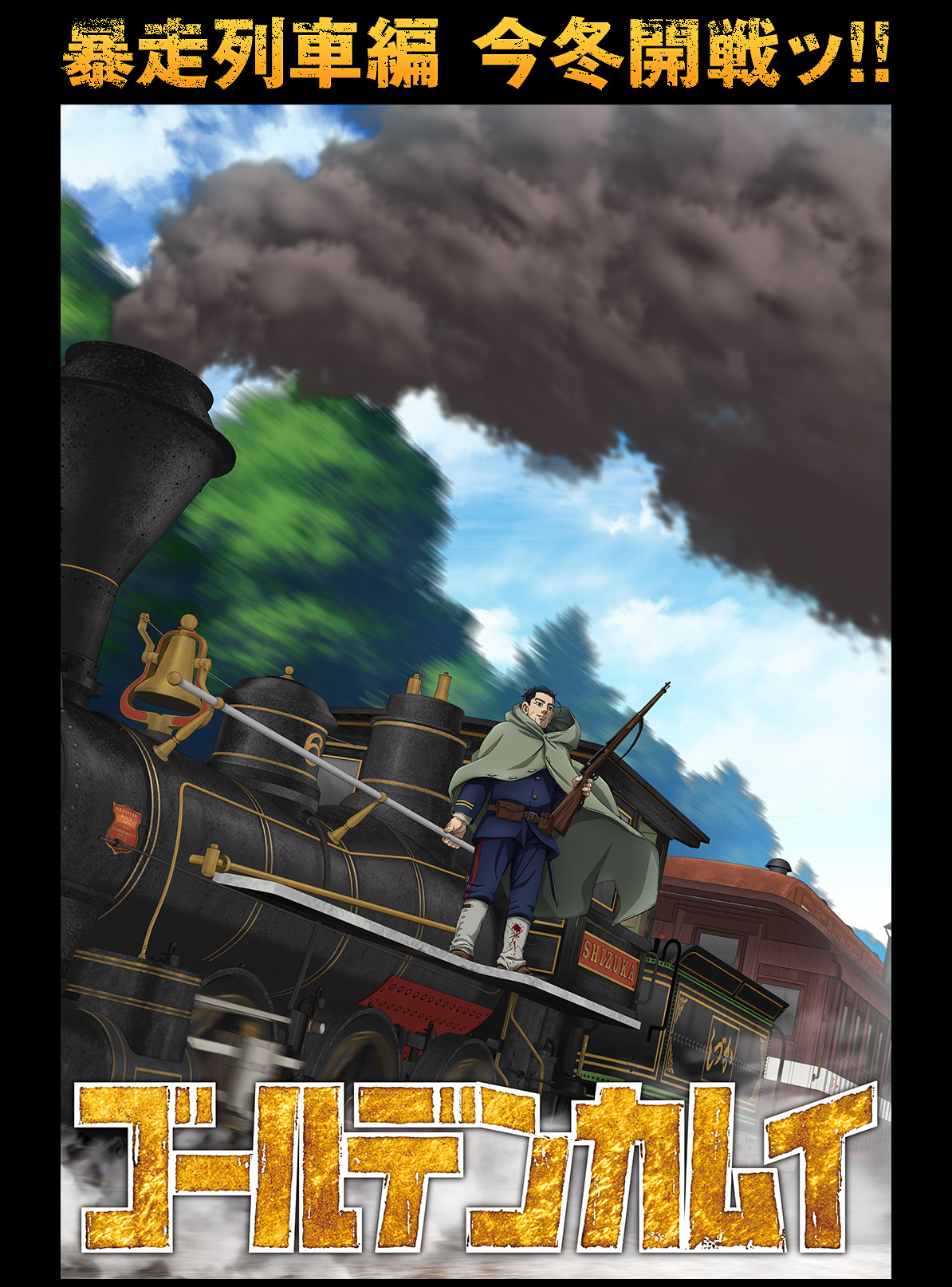
The plot begins shortly after the end of the Russo-Japanese War. Saichi Sugimoto, a former soldier nicknamed "Immortal Sugimoto" for surviving wounds that would have killed anyone else, is in Hokkaido looking for money to keep a promise made to a dead comrade. Along the way he hears about a treasure: a fortune in gold that the Ainu are said to have amassed and hidden before it could be seized. Its location is spread across tattoos carved into the backs of 24 inmates who escaped from Abashiri Prison.
That is where Asirpa comes in, a young Ainu hunter who saves Sugimoto from a bear and becomes his guide. She is no decorative sidekick: she reads the land, tracks animals, cooks, explains hunting rules and corrects the protagonist's clumsy manners. The relationship between the two — suspicion, partnership and affection — carries much of the series.
A gold rush with a map tattooed on skin
Like any good Western, the story has factions. Besides Sugimoto and Asirpa, the gold is hunted by First Lieutenant Tsurumi and the 7th Division, by the legendary Toshizo Hijikata — the last remnant of the Shinsengumi, the samurai corps that became a symbol of resistance to the Meiji government — and by a collection of violent criminals, each carrying a piece of the map on his back. One of them is Yoshitake Shiraishi, the "escape king," who joins Sugimoto's group as comic relief and as a source of information.
The plot alternates chases, ambushes and duels with long gastronomic pauses in which the characters eat what they hunt. That episodic structure — find a new convict, uncover a new clue, survive a new enemy — allowed the author to fit a block of everyday Ainu life into every arc: how houses are built, how hides are treated, how salmon is fished, how prayers are said before a hunt. Japanese critics often describe the work as a blend of history, survival and cooking wrapped in Western pacing.
The Meiji era in which the story takes place
To understand the stakes, it helps to go back to the Meiji period, which ran from 1868 to 1912 and marks Japan's transformation into a modern, industrialized state. In 1869 the government renamed Ezo — the northern territory — as Hokkaido and created an official colonization office. From then on, Japanese settlers known as wajin moved to the island en masse, with state support to clear forests, build roads and work mines.
In 1871 the Ainu were granted Japanese nationality, which in practice meant the loss of collective rights over land and rivers. In 1899 the government enacted the Hokkaido Former Aborigines Protection Act, a law that institutionalized forced assimilation and blocked traditional practices, including deer hunting and ritual salmon fishing. It was repealed only in 1997, nearly a century later.
The Russo-Japanese War, fought between 1904 and 1905, closed that cycle of expansion: Japan won, annexed southern Sakhalin — then called Karafuto — and took control of the region the series travels through. The Hokkaido portrayed by Noda is, in this sense, a frontier; the most common comparison is with the American Old West, except that the territory was already home to a people with its own language, religion and social organization.
Who the Ainu are
The Ainu are the Indigenous people of the northern Japanese archipelago, with a historical presence in Hokkaido, Sakhalin and the Kuril Islands. The Ainu language is a linguistic isolate, with no proven relation to Japanese, and UNESCO has classified it as critically endangered. Today the number of people who identify as Ainu in Hokkaido is around 13,000, according to a 2017 local government survey — a figure widely considered an undercount, because decades of prejudice led many families to hide their ancestry.
Ainu cosmology is populated by kamuy: spirits that manifest in animals, plants, natural phenomena and objects. The bear holds a central place, and the iyomante, a ceremony that sends the animal's spirit back to the world of the gods, is among the best-known rituals. Material life included houses of wood and thatch, clothes woven from elm-bark fiber, tools of bone and stone, and a diet based on salmon, game and gathered plants.
Official recognition came late. Only in 2019 did Japan pass a law recognizing the Ainu as an Indigenous people, and in 2020 the Upopoy national museum opened in Shiraoi. The law is criticized for not addressing territorial rights or offering a formal apology, but the legal framework changed the tone of public debate — and helped turn works of fiction into an entry point for the subject.
How the anime portrays that culture
The accuracy is not accidental. Noda is from Hokkaido and researched for about a year before publication began. Since 2014, linguist Hiroshi Nakagawa, professor emeritus at Chiba University and one of the country's leading specialists in the Ainu language, has served as supervisor, reviewing proper names, dialogue and technical terms. The connection to the community came through the Hokkaido Ainu Association, which introduced the author to the researcher. The manga also consulted the Center for Ainu and Indigenous Studies at Hokkaido University and regional museums.
In the anime, the result shows in scenes where Asirpa speaks Ainu and translates for Sugimoto — a didactic device that puts the viewer in the position of the foreigner who has to learn. An academic study of the first season identified 51 Ainu loanwords in the scripts, almost all of them introduced by Ainu characters with an explanation of their meaning. That includes food terms, such as the minced-meat dish Asirpa prepares, and expressions of approval used after meals.
The series also gets right what foreign productions about Indigenous peoples often miss: the Ainu are not shown as relics of the past or as passive victims. Asirpa hunts, negotiates, lies when she has to and argues with the protagonist. In interviews, Noda has said that during his research Ainu leaders gave him a direct instruction — "stop drawing Ainu who deserve pity; draw strong Ainu." That guidance shaped the character.
What the work teaches — and what it does not settle
The impact has been recognized institutionally. In 2021, Golden Kamuy received the Social Impact Award at the Japan Media Arts Festival, with a citation highlighting its contribution to knowledge about Ainu culture. In 2019, the British Museum used an illustration of Asirpa as the main visual for its "Manga" exhibition in London. Before that, the manga had won the Manga Taisho award in 2016 and the Tezuka Osamu Cultural Prize in 2018.
Not everyone sees the portrayal the same way. Ainu activists point out that the story remains centered on a wajin protagonist and that the culture often appears filtered through the Japanese character's gaze. Ryoko Tahara, leader of the group Menoko Mosmos, summed up the doubt in a line quoted in academic studies: "Who is mostly represented in this manga? The Japanese or the Ainu? I can't decide." Researchers also note that inventions of the author — such as the chant that accompanies the preparation of meat — have been absorbed into the work's own lore and do not exist as a traditional practice.
It is exactly that kind of tension that the El Camino College class set out to explore. For Tanaka, the exercise is about taking off the "fan hat" before watching:
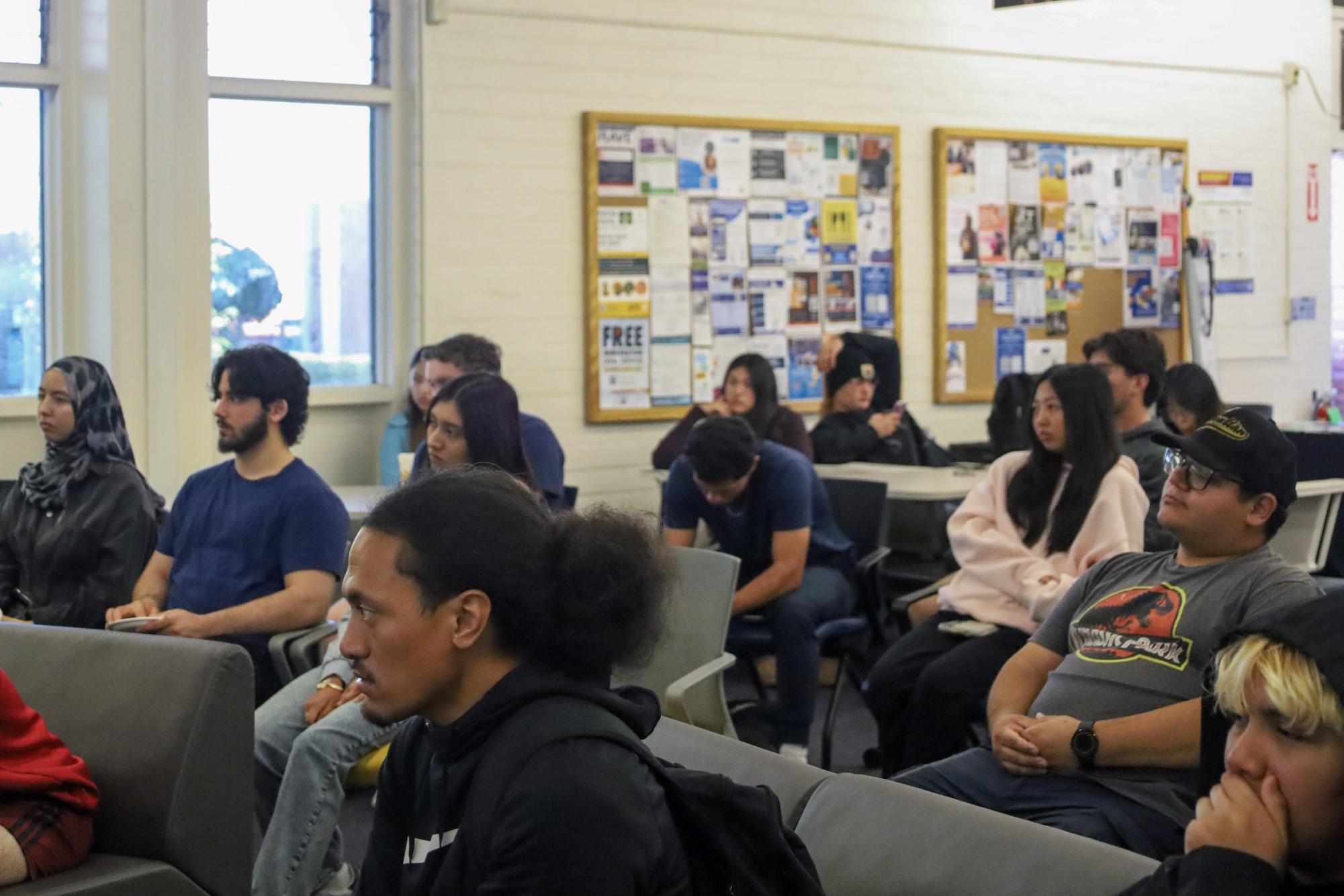
"We all have our favorite TV shows that we gravitate towards without realizing that maybe some of the messaging or portrayals might not be as authentic as we might think of them as."
Courtney Crocekett, group lead of the Asian Pacific Islander Cultural Collective (APICC) and a nurse at the Student Health Center, argued that the series works as a gateway to other cultures:
"Always just have an open mind. Anime is for the purpose of entertainment, learning about other cultures and seeing things through a different lens versus how you saw them before."
Among students, the reaction was less analytical and more spontaneous. Oscar Lopez, 30, a sign language and interpreted training major, said he watches a lot of anime and enjoys how stress-free it can be. Explaining the series to someone who has never seen an episode, he bet on its range of genres: "There is drama, thriller, comedy, and a Golden Town anime with historical events, but the characters are fictional."
Where the franchise stands now
Anyone hooked by the story has plenty of material ahead. The manga is complete, and the anime closed in March 2026 the season that adapts the final arc. Production moved between two studios: Geno Studio for the first three seasons and Brain's Base from the fourth onward. The series streams on Crunchyroll.
| Format | Details |
|---|---|
| Manga | 31 volumes and 314 chapters, published in Weekly Young Jump between 2014 and 2022 |
| Anime | Five seasons and 62 episodes, plus OVAs; the final season aired between January and March 2026 |
| Live action | Film in January 2024, TV series in October 2024 and a second film, about the Abashiri prison raid, in March 2026 |
| Circulation | More than 29 million manga copies in circulation as of July 2024 |
The franchise keeps expanding. WOWOW has announced for Jan. 24, 2027 the premiere of a new live-action series, Golden Kamuy: Karafuto Tsuiseki-hen, adapting the Sakhalin pursuit arc with the same cast as the films — another sign that interest in the story did not end with the manga.
Why this story matters
The case of Golden Kamuy helps explain a common phenomenon in Japanese entertainment: a popular work of fiction becomes, in practice, promotional material for a culture that the country's own education system treated for decades as a secondary subject. That is no small thing. Many readers and viewers say they first heard of the Ainu because of the series — the same kind of gateway cinema has offered for other Indigenous peoples.
At the same time, the work does not replace study. It is fiction, with declared creative liberties, and the dominant gaze is that of the Japanese protagonist. For teachers like Tanaka, the value lies less in "learning the culture" and more in learning to ask questions: who is telling the story, from which point of view, what was invented and what was researched. That was the lesson taken to the classroom in the Communications Building on a Wednesday in November, with a bear on the screen and a room full of students in silence.
Readers who want to keep the conversation going can follow our anime coverage, check the guide on where to watch One-Room TA and read about another Asian comic that became an anime.
With information from El Camino College The Union, the Japan Media Arts Festival, Nippon.com, the Library of Congress and the Hokkaido Ainu Association.
Suggested and related articles
Outsider Paradise Moves to Kadokawa and Goes Full Color

Are You a Landmine, Chihara-san? Sets January 7 Debut

Studio One Base: Kadokawa's new anime studio explained

How Japan protects anime copyright beyond its borders