Dragon Ball Super: Beerus ignores Daima, muddles canon
Published on · Updated on
The remake's second episode brings Kibitokai back and revives the contradiction with Dragon Ball Daima, which showed Shin and Kibito split after Majin Buu.
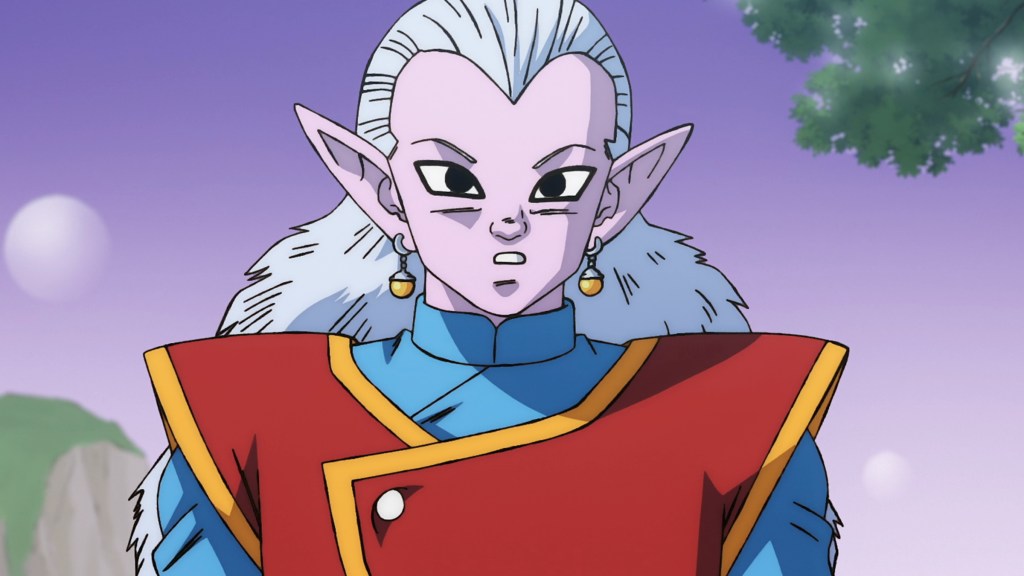
The Dragon Ball Super: Beerus remake has once again pushed Dragon Ball Daima into a gray area of the franchise's continuity. The second episode of the enhanced version of the 2015 anime, which aired in Japan on October 18, brought Kibitokai — the fusion of Supreme Kai Shin and Kibito — back to the screen, directly contradicting one of Daima's central outcomes, in which the two were shown separated after the Majin Buu saga. Produced by Toei Animation, the series premiered on October 11, 2026, and rebuilds the Beerus, Golden Frieza and Universe 6 sagas with redrawn scenes, new cuts and reworked effects.
The contradiction is not new, but it carries more weight now because the remake was announced precisely as a chance to tidy up the timeline. Fans expected the enhanced edition to use its new cuts to tie the loose ends left by Akira Toriyama's final project. What they got was the opposite: the series reinforced the 2015 status quo instead of updating it.
What the second episode showed
Titled “The God of Destruction Heads to the Planet of the Kai,” the episode follows Beerus as he searches for the “Super Saiyan God” he saw in a prophetic dream. With help from Whis and the Oracle Fish, the God of Destruction pinpoints Goku's location on King Kai's planet, and the fight begins. The battle was completely reanimated: the inconsistent animation of the 2015 episode 5 — one of the franchise's most enduring memes — gave way to more elaborate choreography, with Beerus dodging Goku's punches with his eyes closed and the character's body language recalibrated to project absolute superiority.

The pacing changed too. What the original anime took five episodes to tell, the remake condensed into three, cutting filler such as Pilaf's gang stranded on an island and the start of Bulma's birthday party. The choice pleased part of the specialized press, which saw the edit as a gain in narrative cohesion.
Kibitokai: a contradiction dating back to Dragon Ball Z
The sensitive point is a continuity detail. In Dragon Ball Z, Shin and Kibito fuse permanently with the Potara earrings during the Majin Buu saga, creating Kibitokai. In Dragon Ball Daima, set a few months after that arc, the two appear apart: the series explained that they found a way to undo the fusion, and it is the unattached Shin who joins Goku on the journey through the Demon Realm.
The remake, however, keeps Kibitokai on screen from its very first episodes. In continuity terms, that means the separation narrated in Daima simply did not happen in the animated version of Super. Because the remake presents itself as an “enhanced” retelling — not an alternate universe — the most direct reading is that the production chose to preserve the 2015 material and leave Daima out.
“Dragon Ball Daima had revealed that since the fight with Majin Buu, the Supreme Kai and Kibito had found a way to defuse from the Potara Earrings that led the Kai to going on a new adventure with Goku. Dragon Ball Super: Beerus' first couple of episodes debunk this immediately with Kibitokai's return to the anime.”
Daima, Toriyama's final project, and Super Saiyan 4
Dragon Ball Daima carries a weight no other recent spin-off has: it was Akira Toriyama's final work at the helm of story, script and character design before his death in March 2024. The series took Goku and company to the Demon Realm, introduced Super Saiyan 4 into the canonical continuity and also gave Vegeta Super Saiyan 3 — transformations that until then existed only in GT and in side products.

The chronological problem is obvious: Daima takes place after Majin Buu and before Battle of Gods. If Goku already commanded Super Saiyan 4 in that window, why doesn't he use it against Beerus? The 2015 anime answered that question quite explicitly — and that is where the remake rewrites the text.
The removed line that reopened the door
In the original episode 5, Beerus taunts Super Saiyan 2 Goku and asks him to show “everything.” Goku then turns Super Saiyan 3 and states that this is the most powerful form of a Super Saiyan. The line closed the door on any higher transformation and, as a consequence, pushed Daima out of the timeline.
In the 2026 version, those lines are gone. Beerus simply challenges Goku to convince him he is truly strong, and the Saiyan answers that he will show “the power of a Super Saiyan 3” — without the categorical claim that this was his limit. At one point Beerus himself asks whether Goku might be hiding more power, which could refer either to Super Saiyan God or to something dormant.
“In Dragon Ball Super: Beerus, Goku never tells Beerus SSJ3 is his strongest form, and Beerus never explicitly asks Goku to show him ‘everything.’ That, on its own, leaves room for Daima's Super Saiyan 4 to still exist in the background.”
It is a small script change in length and a huge one in consequence. Even so, it coexists with a problem the text does not solve: as long as Kibitokai is on screen, the separation of Shin and Kibito — shown and explained in Daima — remains ignored. In other words, the remake opened a door in dialogue and closed another in characterization.
Two possible readings (and no official confirmation)
So far, Toei Animation and Capsule Corp Tokyo have not publicly addressed how they intend to reconcile the two works. There are two defensible readings:
- Elastic continuity: the remake treats Daima as canonical material but does not commit to rewriting every visual detail inherited from 2015. In that case, Kibitokai would be a tolerated leftover, not a statement of intent.
- Closed retelling: the remake stands on its own and replaces the original anime as the definitive version of events. In that scenario, Daima remains canonical as Toriyama's work but disconnected from the animated Super line.
The first hypothesis is more comfortable for the studio, but it requires future episodes to deal with Kibitokai somehow — either by ignoring the elephant in the room or by rewriting the fusion later. The second is more internally coherent, but it empties out the stated effort to “reconstruct the story” with new cuts.
Timeline in dispute: what is at stake
For those who follow the franchise, the discussion is not merely bureaucratic. The order of events defines the weight of each transformation and how audiences read Goku and Vegeta's training. The table below sums up the impasse.
| Arc | Position in the timeline | What it introduces |
|---|---|---|
| Majin Buu Saga | End of Dragon Ball Z | Shin and Kibito fuse into Kibitokai |
| Dragon Ball Daima | A few months later, around Age 775 | Shin and Kibito split; Super Saiyan 4 and Vegeta's Super Saiyan 3 |
| Dragon Ball Super: Beerus | Years later, with Beerus' arrival | Kibitokai still fused; Super Saiyan 3 as the apparent ceiling |
It is worth remembering that the franchise has lived with this kind of inconsistency before. The difference is that there is now a remake on air with the stated mission of reorganizing the material — which turns every script choice into an editorial stance.
Where to watch and what comes next
Dragon Ball Super: Beerus airs in Japan on Sundays since October 11, 2026. In the West, episodes arrive the same day on Crunchyroll and Hulu, with a Netflix release the following Saturday. The opening theme is by MEGATERA・ZERO, and the ending theme is by VK Blanka.
The project is not limited to the Beerus saga. The first trailer, revealed in April 2026, already indicated the inclusion of the Golden Frieza saga, and material released in September confirmed the Universe 6 arc as well. According to producer Akio Iyoku, the goal is an “enhanced” version of the anime, with a reconstruction of the story and new, redrawn cuts.

Readers who want to get their bearings before following the remake should revisit the definitive guide to Dragon Ball Super's timeline, sagas and transformations and the Dragon Ball Daima explainer. Both pieces help clarify why the Shin and Kibito fusion became the main point of friction between the two works.
What to expect from the next episodes
The third episode should bring Beerus to Earth and pave the way for Bulma's birthday party, the moment when the God of Destruction finally meets the Z Fighters. That is where the remake will have a chance to show whether it intends to stitch Daima into the narrative or move on without looking back. Small choices — a line of dialogue, a flashback, a mention of a transformation — can completely change the reading.
For now, the verdict is ambiguous. The remake delivers what it promised on technical grounds: the fight against Beerus finally has the scale the franchise deserved, and removing the line about Super Saiyan 3's “limit” was a gesture of goodwill toward Daima fans. But Kibitokai's presence shows that the production has not yet decided what to do with Toriyama's most recent legacy — and until that decision comes, Dragon Ball's timeline will remain a puzzle with pieces left over.
For international viewers, the debate arrives within days thanks to simulcasting and should intensify as the remake moves into the following arcs. If the intention really is to reorganize the timeline, episode 3 is the first real test. If the intention is merely to repackage 2015 with a new look, Daima will remain the latest chapter of a story the anime insists on not telling.
With information from ComicBook.com, CBR and the official Dragon Ball Super: Beerus website.
Suggested and related articles

Burger King and Toei Animation Launch Dragon Ball Super Menu with 6 Mini Figures and Super Saiyan Sauce
Cyberpunk: Edgerunners 2 Hits Netflix, Update 2.5 Live
Gundam RG XARX-ZERO: New anime from legendary director promises to revolutionize the franchise in 2027