Harada slams Xbox Series S, fears a 'Helix S' next gen
Published on · Updated on
Former Tekken boss Katsuhiro Harada criticized the Xbox Series S at a Seoul panel and said he fears Microsoft may repeat the formula with a 'Helix S'.
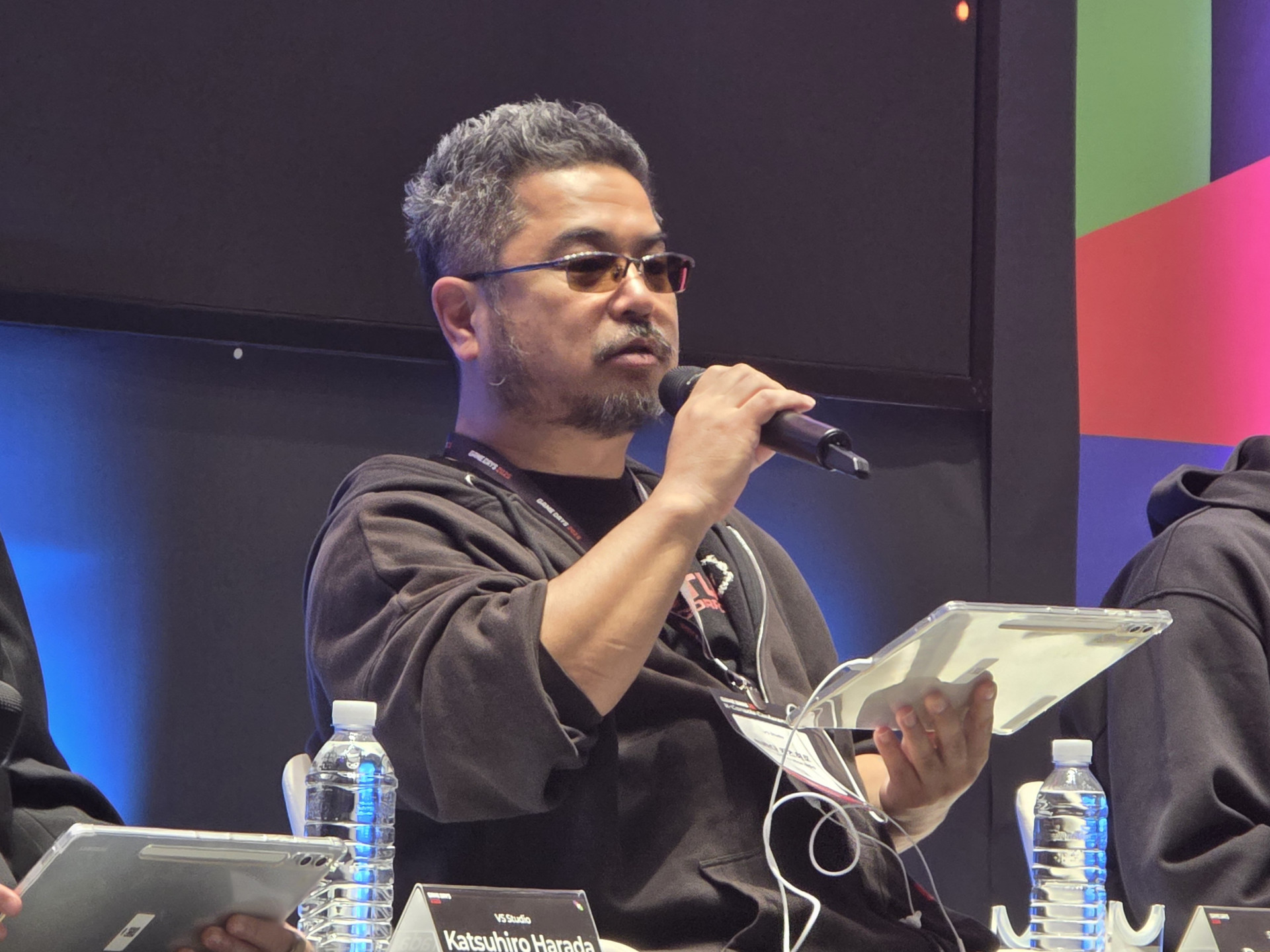
Former Tekken director Katsuhiro Harada used the stage of the Console Game Developers Conference (CGDC) 2026 in Seoul, South Korea, to openly criticize the Xbox Series S — right in front of a Microsoft executive who was watching the session. During the panel that closed the event's global track on Nov. 9, at the SKY31 Convention in Lotte World Tower, Harada said he wished "hardware like the Xbox Series S wouldn't be released" and that he worries Microsoft might repeat the formula with a so-called "Helix S" in the next generation. The line drew laughter from the audience, but it laid bare a long-running strain between developers and the cheapest console in the Xbox family.
Harada, now CEO of VS Studio, an SNK subsidiary, shared the stage with heavyweights of the industry: DongKi Lee (CTO of Shift Up, the studio behind Stellar Blade), Kazutaka Kodaka (Too Kyo Games, of Danganronpa), Paweł Sasko (associate game director on Cyberpunk 2077 at CD Projekt Red) and Tynan Sylvester (Ludeon Studios, of RimWorld). The moderator was Shuhei Yoshida, former head of Sony Interactive Entertainment's Indies Initiative. The official topic was multiplatform development. The subject that dominated the conversation, however, was the Series S.
What Harada said on the Seoul stage
Known for his candor since his days running Bandai Namco, Harada took a question about the pros and cons of developing for consoles. He started by praising the standardized console environment — cheaper and easier to run at fighting game tournaments than hundreds of PCs — and then changed his tone.
"There's something I really want to say while I have the floor. Since a senior Xbox official is actually in attendance here today, I wish hardware like the Xbox Series S wouldn't be released (laughs)."
He then turned to Paweł Sasko and asked, half-jokingly, whether the Cyberpunk 2077 developer wasn't upset "inside" because of the Series S. Sasko answered diplomatically: the console "constantly throws challenges at us and forces us to optimize our code very cleanly." Harada did not let it slide.
"You just used a very polite and elegant way to say the Xbox Series S sucks, right? Low memory is an issue, but the hardest part is that it's a device so similar to Series X while having awkwardly lower performance. When porting to Switch 2, developers can shift their mindset to 'Switch 2 is a distinct device for Nintendo fans!' But with Xbox, after delivering your absolute best output, it feels like having to do extra work for a slightly weaker child."
The veteran also pointed to a market side effect: in the United States, he said, there are more Series S owners than Series X owners. That stops studios from simply ignoring the weaker version. Worse, in his view, complaints about lower texture resolution or fewer characters on screen land on developers, not on Microsoft.
The math that doesn't add up: why the Series S annoys developers
The Xbox Series S arrived in November 2020 as the generation's entry point, priced at $299 — half the $499 Series X. To get there, Microsoft dropped the disc drive, cut the GPU and, above all, squeezed memory. The result is a console targeting 1440p while its bigger sibling chases 4K.
| Spec | Xbox Series X | Xbox Series S |
|---|---|---|
| GPU | 12.15 TFLOPS (52 CUs) | 4.0 TFLOPS (20 CUs) |
| Memory | 16 GB GDDR6 | 10 GB GDDR6 |
| Resolution target | 4K at 60 fps (up to 120 fps) | 1440p at 60 fps (up to 120 fps) |
| Launch price | $499 | $299 |
The sensitive point is memory: 10 GB in total, split into 8 GB on a 128-bit bus (224 GB/s) and 2 GB on a 32-bit bus (56 GB/s) — and part of that pool is reserved for the operating system. For a modern game, that means smaller textures, lower crowd density, reduced draw distance and cuts that have to be planned from the start of production. When the port happens at the end of the cycle, the studio pays the bill with crunch.
It is not the first time the topic has caused friction. In 2023, Baldur's Gate 3 was delayed on Xbox because split-screen co-op would not run on the Series S; the solution was to make an exception to the parity rule and release the feature only on the Series X. Cases like that feed the perception, common among developers, that the budget console sets a technical floor for the whole generation.
Paweł Sasko's defense: constraints also teach
Sasko did not push back directly, but offered the counterpoint CD Projekt Red learned the hard way. According to him, games designed with scalability in mind — pedestrian density, traffic, lighting quality — suffer less at the end of production. And optimizing for the weakest hardware ends up benefiting everyone.
"Intensely optimizing for lower-spec platforms definitely brings the benefit of making the game run significantly better across all platforms. [...] And the biggest advantage of Series S is that its affordable price makes it accessible. Not every gamer can buy expensive high-end hardware, so from a developer's perspective, even if the strict constraints are painful, there is a silver lining in expanding market penetration to deliver the game to more players."
He offered a concrete example: the optimization work done to bring Cyberpunk 2077 to Switch 2 — a team of 80 to 100 people for more than a year — was fed back into version 2.5 of the game across all platforms, including PS5, high-end PCs and handhelds such as the Steam Deck and the ROG Ally. In other words, the effort spent on weaker hardware turned into performance gains for the rest of the base.
The ghost of a 'Helix S'
Harada's concern has a name: Project Helix, the codename for the next Xbox. According to reporting published in October 2026, Microsoft is working on a next-gen console for late 2028, with an estimated cost of between $1,200 and $1,800 per unit — figures unthinkable for the console market until a few years ago. The reason is the combination of a slowing Moore's Law with the component crisis and the RAM shortage driven by the artificial intelligence race.
Against that backdrop, shipping only a very expensive machine would limit the Xbox's reach to a niche audience. That is exactly where the Series S logic comes back to the table: a cheaper, less powerful Helix variant would allow Microsoft to recover sales volume. Ironically, Harada thanked Sasko for packaging the Series S defense so gracefully that the Microsoft representative in the audience "keeps nodding along" — and then added:
"I'm worried they'll feel reassured and release a successor like 'Helix S' for the next-gen Xbox as well (laughs)."
The joke found an immediate echo. DongKi Lee, of Shift Up, said he is looking forward to "Helix" and made a direct request: for Microsoft to send development kits to Korea as early as possible so local studios can prepare. The comment sums up the industry's double feeling — irritation with the constraints and genuine interest in a new hardware generation.
- Nov. 10, 2020: Xbox Series S ($299) and Series X ($499) launch.
- 2023: Baldur's Gate 3 is delayed on Xbox over split-screen co-op on the Series S; Microsoft makes an exception to parity.
- Oct. 20, 2026: reports point to Project Helix in late 2028, at an estimated $1,200 to $1,800.
- Nov. 9, 2026: Harada criticizes the Series S on the CGDC 2026 stage in Seoul.
- Late 2027 (expected): possible launch of a next-gen Microsoft handheld.
What it means for players outside the US
For gamers in markets like Brazil, the debate is less abstract than it sounds. The Series S is by far the most affordable way into the Game Pass library — and it is precisely that price bracket that sustains the service's popularity there. If the next generation follows the path of a $1,200 console, the existence of a budget version stops being a detail and becomes the only way for much of the public to keep playing on console.
At the same time, Harada's remarks explain why some releases arrive with worse textures, fewer NPCs on the streets or cut modes. It is not laziness: it is compromise engineering under a tight memory ceiling. Consumers who understand that context can demand better — from the platform holder, not just from the studio.
It is worth remembering that the Xbox ecosystem is thriving on other fronts: the service recently brought the acclaimed horror game Mouthwashing to Game Pass, a sign that Microsoft keeps investing in content while it defines the future of its hardware.
Who Harada is today — and what comes next
Katsuhiro Harada was, for nearly two decades, the face of Tekken. He directed or produced every mainline entry, from Tekken 3 to Tekken 8, before leaving Bandai Namco in late 2025 and founding VS Studio, an SNK subsidiary. Candor has always been his trademark — and his willingness to say in public what many developers only mention behind closed doors is part of what made him one of the industry's most listened-to voices.
The Seoul panel showed he is still willing to pick fights. It also showed that the relationship between studios and platform holders remains a tug of war: every generation promises more power, but the technical floor set by entry-level models effectively defines the ceiling of what millions of players will experience.
Microsoft has not commented officially on the remarks — the executive in the audience, incidentally, became part of the joke. What matters now is what the company does with Project Helix: a single, very expensive machine, or a family with an affordable variant that repeats the Series S strategy? The answer should emerge in the coming months, as the first development kits reach studios.
Until then, the industry will be watching closely. After all, if Harada is right, the next "Helix S" may be born with the same memory problem — and with the same stack of complaints addressed to those who are, in fact, only trying to make the game run.
With information from Inven Global, Polygon and Ars Technica. Official specs: Xbox.com.
Read more: the latest gaming news on O Santuário Geek.
Suggested and related articles
Xbox Disc-to-Digital: Ubisoft, Square Enix and Sega Are Blocking Disc Game Conversion
Xbox Game Pass: Microsoft plans à la carte plan with add-ons
Xbox Tests Free Ad-Supported Game Streaming; Here's How It Works
Bethesda: Devs Denounce Frequent Layoffs Under Xbox
The Elder Scrolls 6: Sentinel Subtitle Points to Launch