Clair Obscur: Expedition 33: Is It Worth Playing?
Published on · Updated on
Nineteen months after launch, Expedition 33 remains the benchmark turn-based RPG. See the story, combat, playtime and whether it is worth your time.
Is Clair Obscur: Expedition 33 worth playing in 2026? Released on April 24, 2025 for PlayStation 5, Xbox Series X|S and PC, the debut RPG from France's Sandfall Interactive paired classic turn-based combat with real-time reflexes — and became the most awarded title in The Game Awards history, with nine wins from thirteen nominations, including Game of the Year. Nineteen months later, it is still the easiest recommendation for anyone who wants to understand how a studio of roughly 40 people in Montpellier competed with billion-dollar productions. This guide covers the premise, how combat works, how long it takes and who should actually play it.
The report draws on official material from Sandfall and publisher Kepler Interactive, public playtime data from HowLongToBeat and recent reporting on the studio's plans. It avoids endgame spoilers: you will understand what drives the story without losing the twists that hold the script together.
What is Clair Obscur: Expedition 33?
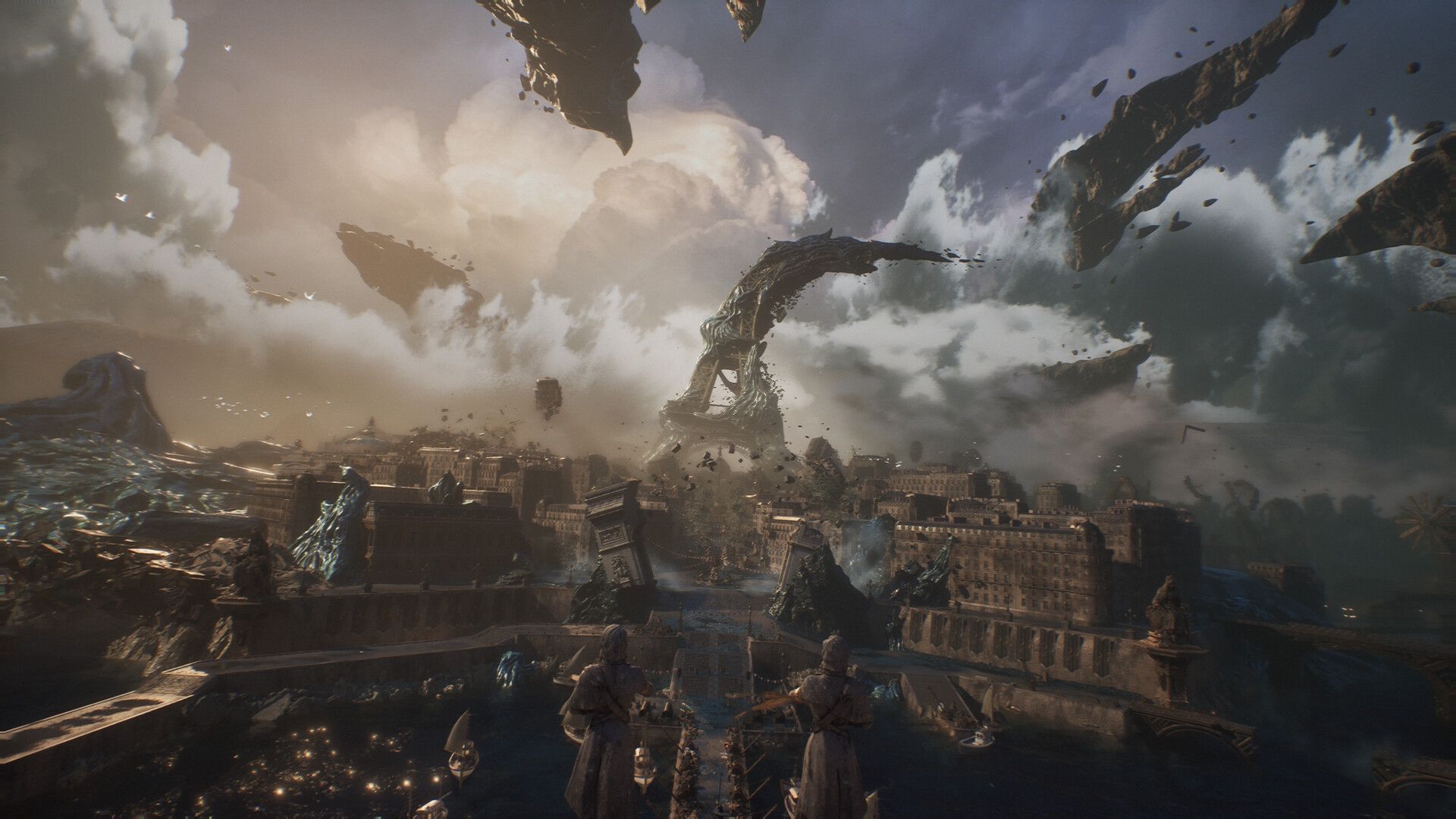
Clair Obscur: Expedition 33 is a single-player RPG set in a dark fantasy world inspired by Belle Époque France. In the city of Lumière, cut off from the continent since a cataclysm known as the Fracture, life follows a grim calendar: once a year, an entity called the Paintress awakens and paints a number on the Monolith. Everyone aged that number or older turns to smoke and vanishes. The event is called the Gommage.
The number started at 100 and drops by one every year. When the story begins, it is about to become 33 — meaning everyone aged 33 or older will be erased. That is why Lumière sends a volunteer expedition to the mainland every year in an attempt to kill the Paintress. Expedition 33 is the latest and the city's last hope. You follow a group of survivors crossing a fractured continent full of hostile creatures called Nevrons, along with the Gestrals and the Grandis, peoples you can talk and trade with.
The game was built in Unreal Engine 5 and is the studio's first project. Creative director Guillaume Broche started the prototype in 2019 while working at Ubisoft, inspired by Final Fantasy and Persona. The stated ambition was a high-fidelity turn-based RPG — the kind of game the team felt major publishers had stopped making.
The story: why the script became the game's main talking point
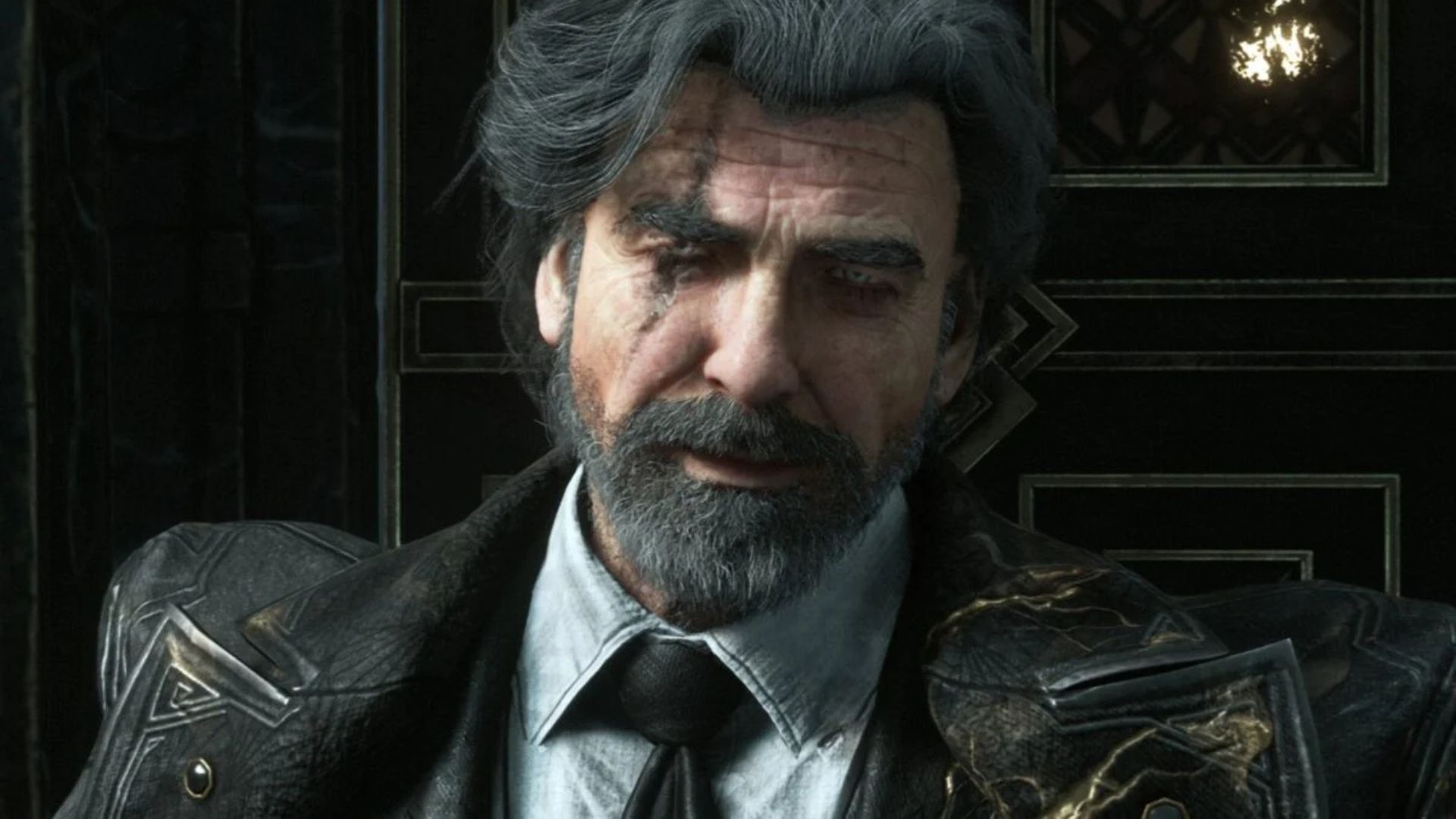
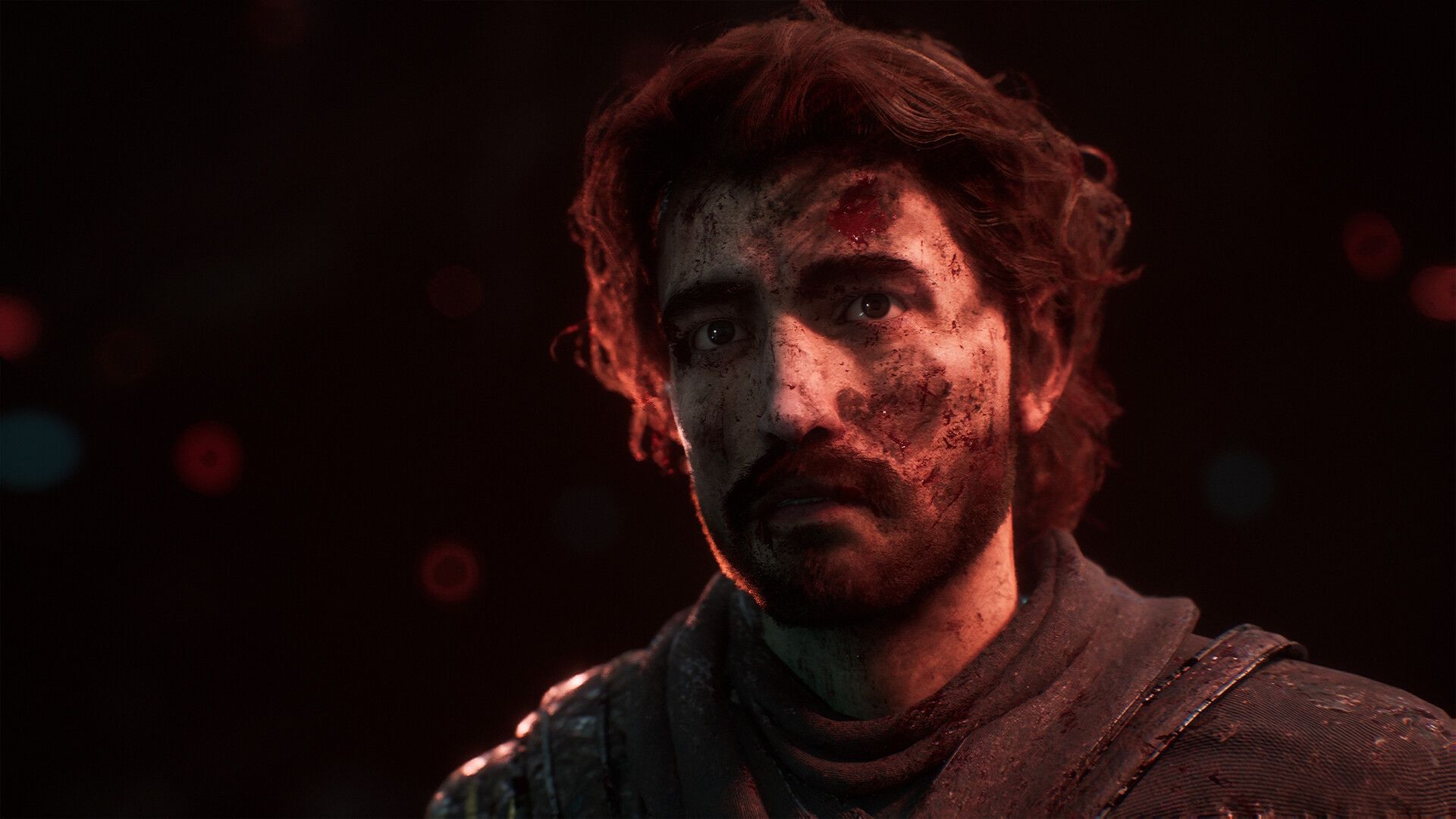
The premise is easy to explain and hard to execute: a group of doomed volunteers sets out on a mission that has always ended in failure. The script uses that structure to explore grief, memory and inheritance, and it does so with a small, well-defined cast. The main expedition brings together Gustave (Charlie Cox), an engineer with a mechanical arm; Maelle (Jennifer English), the youngest member and Gustave's foster sister; Lune (Kirsty Rider), a scholar and mage; and Sciel (Shala Nyx), a farmer turned teacher. Along the way you meet characters such as Verso (Ben Starr), Renoir (Andy Serkis), Monoco (Rich Keeble) and the creature Esquie (Maxence Cazorla), who carries the party across the continent.
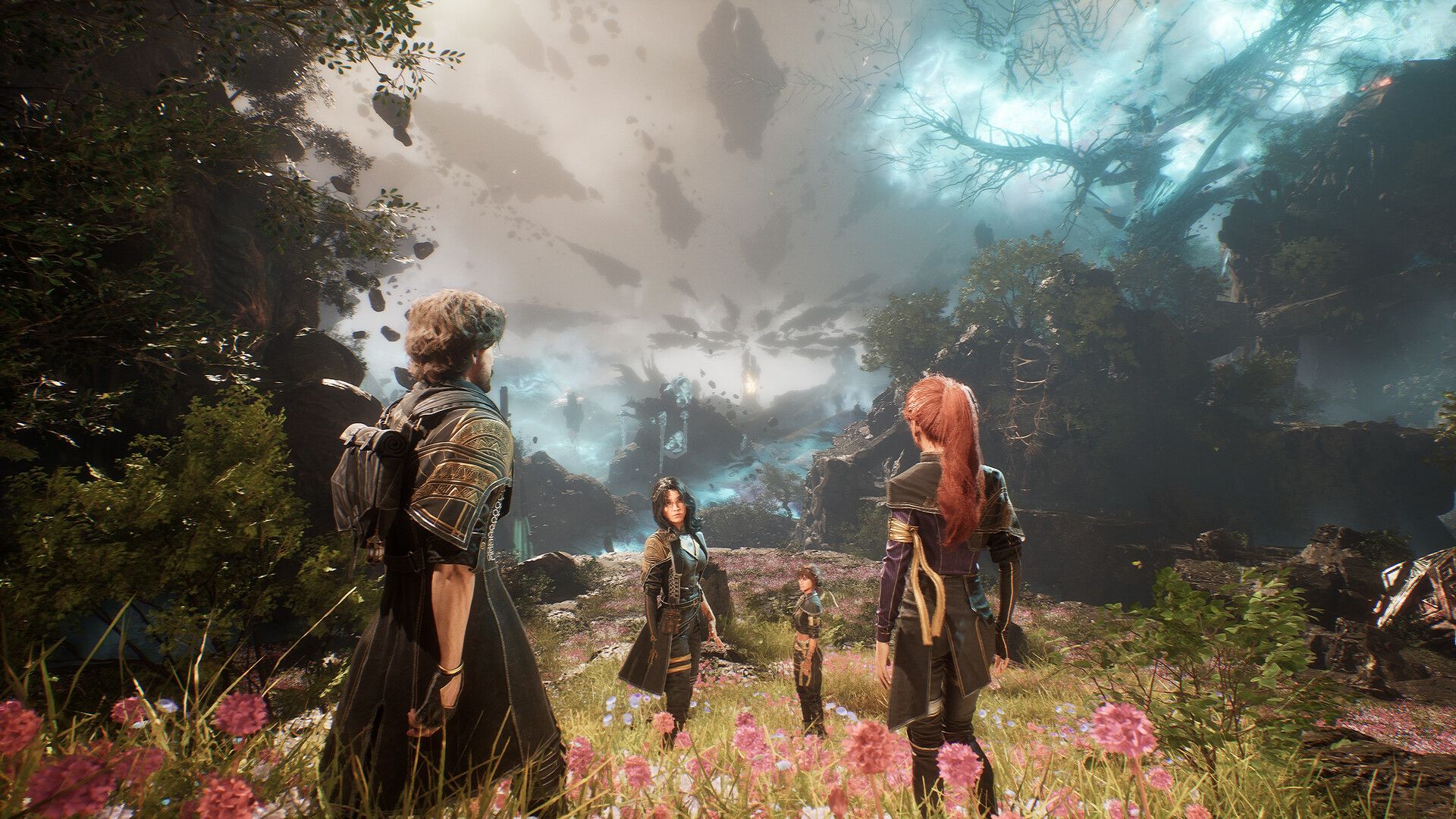
The script is split into a prologue and three acts, with a turning point at the end of the first act that is regularly cited as one of the year's most memorable moments — and which, for that exact reason, we do not detail here. The art direction is part of the argument too: each region has its own palette, architecture and lighting, and the contrast between flowered fields and suspended ruins reinforces the melancholic tone.
Voice work matters: cast and score
The voice cast is one of the highlights. Charlie Cox, Jennifer English, Ben Starr and Andy Serkis give weight to characters who, in another game, would be mere archetypes. Lorien Testard's score, with vocals by Alice Duport-Percier, blends jazz, rock, neoclassical and electronic music, shifting intensity as a battle develops — a detail that becomes obvious in boss fights. If you play with headphones, pay attention: the music is part of the staging, not background noise.
Turn-based combat with real-time input: how it works
This is the main break from classic turn-based RPGs. On your turn you choose between a melee attack that builds Ability Points, an item, a skill that spends those points, or a freely aimed firearm shot in third person. Skills have timing windows (quick-time events): hitting the right moment improves the effect, adding an execution layer to what is nominally a decision system.
On the enemy's turn, things get tougher. Instead of simply watching, you must react in real time: dodge, parry or jump over attacks. Parrying demands tighter timing than dodging but refunds Ability Points and opens up counters. There is also a Break system that stuns enemies, plus Gradient attacks and counters tied to a shared gauge. Misreading an attack can be costly, and that is exactly where the game separates itself from a comfortable RPG.
Six characters, six different systems
Each of the six playable characters has a unique skill tree, weapon and mechanic. Lune generates elemental "Stains" and spends them to empower spells; Maelle switches between stances that change damage and defence; Sciel stacks "Foretell" with cards and consumes it for maximum damage; Gustave builds charge as he attacks and releases it in heavier blows; Verso earns "Perfection" ranks by landing hits and parries; and Monoco, the Gestral, transforms into enemies to use their abilities. In practice, swapping party members changes the rhythm of a fight, not just the numbers.
Outside combat, progression runs through "Pictos", accessories that grant perks and can be mastered after four separate fights to become Luminas, passive bonuses shared across characters. There are 210 Pictos in total, and each character has a Lumina Point cap that grows with level. Weapons are upgraded at camp with Chroma Catalysts. Camp also hosts conversations: playing as Verso, you can raise relationship levels with companions and unlock cutscenes, skills and quests.
Exploration happens in linear levels with generous detours: hidden chests, Gestral shops, outfits, side quests and optional bosses. Areas are connected by the Continent, an overworld map that gains new traversal options as Esquie learns to swim, fly and dive. Expedition Flags work as rest points, healing, fast travel and attribute respec — and, importantly, resting there respawns most enemies.
How long is Clair Obscur: Expedition 33?
The answer depends heavily on your style. Before launch, Sandfall said the game would offer "30+ hours of main game, and as much side content for our completionist Expeditioners". Aggregated player data confirms that range, with wide variation between rushers and explorers.
| Play style | Average (HowLongToBeat) | What it includes |
|---|---|---|
| Main story only | about 29h30 | Prologue, three acts and credits |
| Main + extras | about 47h30 | Side quests, optional bosses and exploration |
| 100% / platinum | about 69h | Collectibles, every boss and challenge |
It is a long RPG, but not a bloated one: the main campaign fits in about 30 hours, and optional content is concentrated in the second act and early third act. Players who want both endings do not need to start over — the game creates an autosave before the final choice. After the credits you can keep exploring, take on post-game content and start New Game+, keeping levels, weapons, Pictos and Luminas.
Reception, awards and sales: the scale of the phenomenon
The game was met with near-unanimous acclaim. On OpenCritic, the critic average sits at 92/100 with 98% recommendations. At The Game Awards 2025 it received thirteen nominations and won nine, including Game of the Year — a record for wins in the show's history. It also took the top prize at the D.I.C.E. Awards, the GDC Awards, the Golden Joystick Awards and the BAFTA Games Awards, becoming the first debut game to win Game of the Year at all five major ceremonies.
On sales, Sandfall confirmed more than 8 million copies by April 2026, one year after launch. Post-launch support continued: in December 2025 the studio released the free "Thank You" update, and in February 2026 Photo Mode arrived. For newcomers, that means a more stable, feature-complete version than the one reviewed at launch.
What about a sequel? What the writer's departure changes
The franchise's future is the uncertain part. Sandfall has said it is working on a new game and that it will not be a repeat of the first. In November 2026 came confirmation that Jennifer Svedberg-Yen, Expedition 33's narrative lead, had left the studio. According to her, the departure happened back in July, "after wrapping up some final stuff for Expedition".
"I left in July, after wrapping up some final stuff for Expedition."
The writer said she wants to work on "my own projects, my own stories" and to create a fund supporting up-and-coming narrative designers, aiming to "bridge the gap between the seed stage and going to publishers". The concrete impact on the follow-up is still unknown: the studio has announced neither writing-team names nor a date for its next project. The full story is in our report on the writer's exit and what changes next.
Is it worth it? Who should play it (and who should not)
The short answer is yes, with clear caveats. Expedition 33 is one of the most complete RPGs of the generation: a story with a defined theme, combat that demands attention, a memorable score and respect for the player's time. The long answer depends on what you are looking for.
- Worth it if you love JRPGs and want AAA production values. If you come from Final Fantasy, Persona or Baldur's Gate 3, you will find a familiar system with a real-time execution layer that refreshes the formula.
- Worth it if you play for the story. Story mode and difficulty options reduce the execution burden, and the script sustains a 30-hour run.
- Maybe not if you hate parrying. Defence depends on reading timing. If you do not want reflexes in a turn-based game, you will feel the friction even on lower difficulties.
- Maybe not if you want an open world. The structure is linear with detours, not an Elden Ring-style open map. Exploration is rewarding, but guided.
- Maybe not at full price if money is tight. The game has been on Game Pass since launch and regularly appears in PC and console store sales; for subscribers, the entry cost is essentially zero.
Quick tips for your first run
Three habits save hours. First, rest at Expedition Flags before every boss — that is where the game saves. Second, keep weapon levels and Lumina Points roughly even across the party, because the story forces specific characters into the group at certain points. Third, do side content in Act II and early Act III, since the final areas assume a party that has already explored a little.
Where to play and what to check before buying
The game is available on PlayStation 5, Xbox Series X|S and PC, via Steam and the Epic Games Store. On Xbox it joined Game Pass on day one. The official site at expedition33.com collects trailers, a gallery and store links. If you want to compare it with other titles in the genre, browse our Games section and the game's page on the site.
For planning purposes, the playtime figures used here come from HowLongToBeat, and the critic average can be checked on OpenCritic. The reporting on the narrative lead's departure was originally published by TheGamer, based on Eurogamer's reporting.
Verdict
Clair Obscur: Expedition 33 is the kind of game that justifies the hype: a turn-based RPG with a strong visual identity, combat that demands attention and a story that handles grief without easy sentimentality. It is not perfect — the reliance on timing will push some players away, and the linear structure will not satisfy everyone. Still, for anyone who wants to see the best the industry produced in 2025 and 2026, it is essential, whether through Game Pass or a sale. If you have already finished it and want to know what comes next, follow our coverage of the franchise's future after the writer's departure.