What is Chronicles: Medieval and why everyone wants to play
Published on · Updated on
A medieval sandbox with thousand-soldier battles, Chronicles: Medieval nearly closed with Raw Power's bankruptcy; Coffee Stain Group now owns the IP.
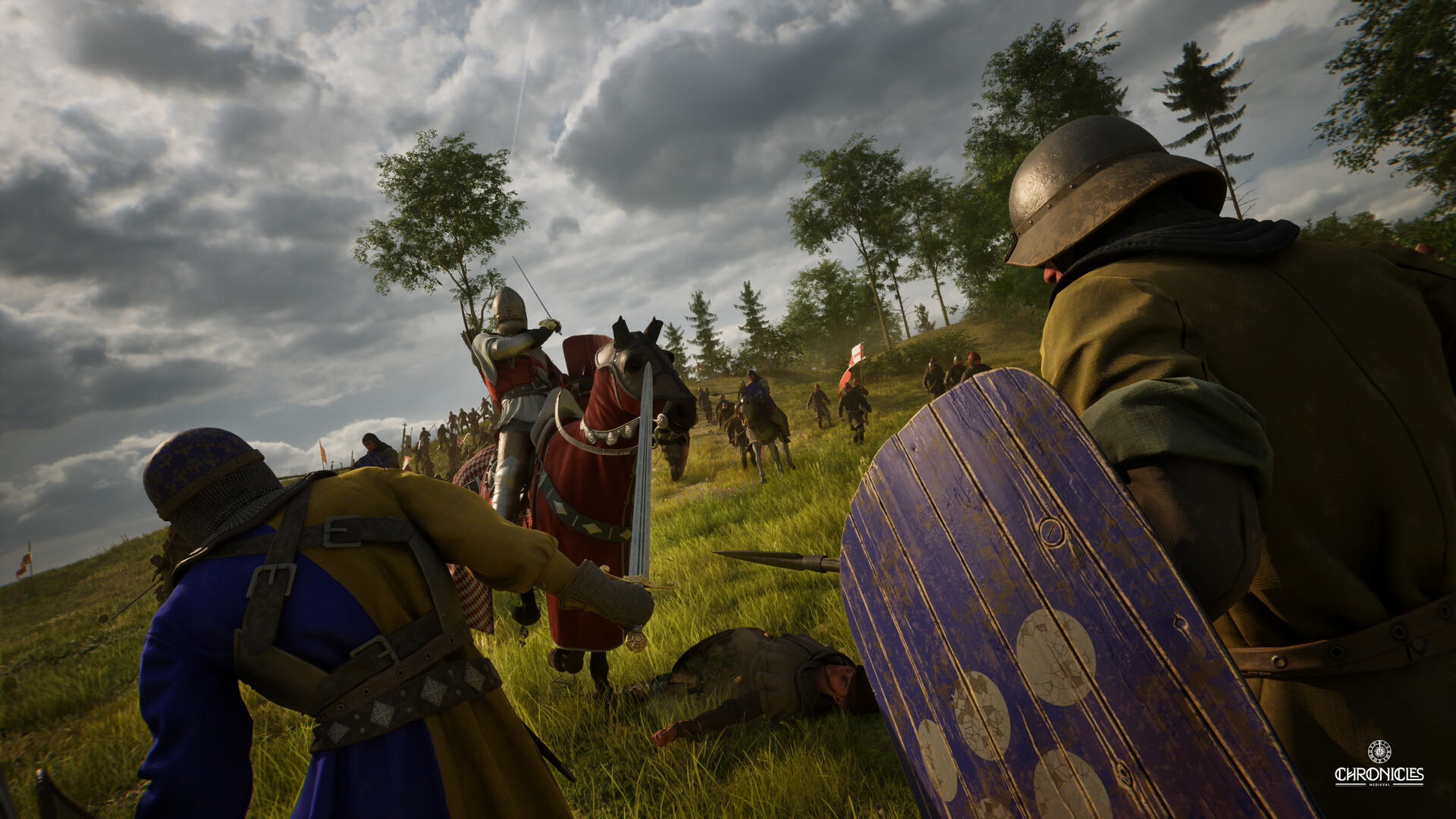
Chronicles: Medieval is an open-world action-strategy RPG that turns 14th-century Europe into a historical sandbox: players create their own character, build an army and try to make a name during the Hundred Years' War. The game sits among Steam's 26 most-wishlisted titles, had development halted when Raw Power Games went bankrupt on October 30, 2026, and was rescued on November 14, when Coffee Stain Group announced a deal worth DKK 36.75 million (about $5.42 million) to acquire the intellectual property. The release is still expected in 2027, in PC Early Access.
What is Chronicles: Medieval
Chronicles: Medieval is the debut project from Raw Power Games, a Copenhagen-based Danish studio formed by more than 100 professionals who worked on franchises such as The Witcher 3, Cyberpunk 2077, Grand Theft Auto, Red Dead Redemption 2, Hitman and Assassin's Creed. The game runs on Unreal Engine 5 with Asgard, the studio's proprietary technology built to simulate crowds and battles with hundreds of soldiers at once.
The goal is not to reenact history but to deliver a historically grounded world where players write their own path. The campaign is set in 14th and 15th-century Europe, focused on the Hundred Years' War, and starts at the bottom of the social ladder: the character begins with no land, no army and no name. Rising depends on combat, alliances, trade and political decisions, as the game's official FAQ summarizes.
In practice, players pick a historical chapter and develop their story inside it — each playthrough lasts up to 35 in-game years and can end in very different ways. The map uses a top-down view while travelling, but battles switch to third person, putting the commander on the front line. Character creation covers appearance, background and occupation, with talent and skill trees that define whether the path runs through force, diplomacy or money.
How the historical strategy sandbox works
The word "sandbox" is often used loosely, so it is worth separating the layers. Chronicles: Medieval is not a turn-based strategy game like Total War, nor a dynasty simulator like Crusader Kings. Its structure is closer to an action RPG with a built-in strategy system: you manage an army in real time, but you also fight personally on the battlefield in third person, alongside the troops you recruited.
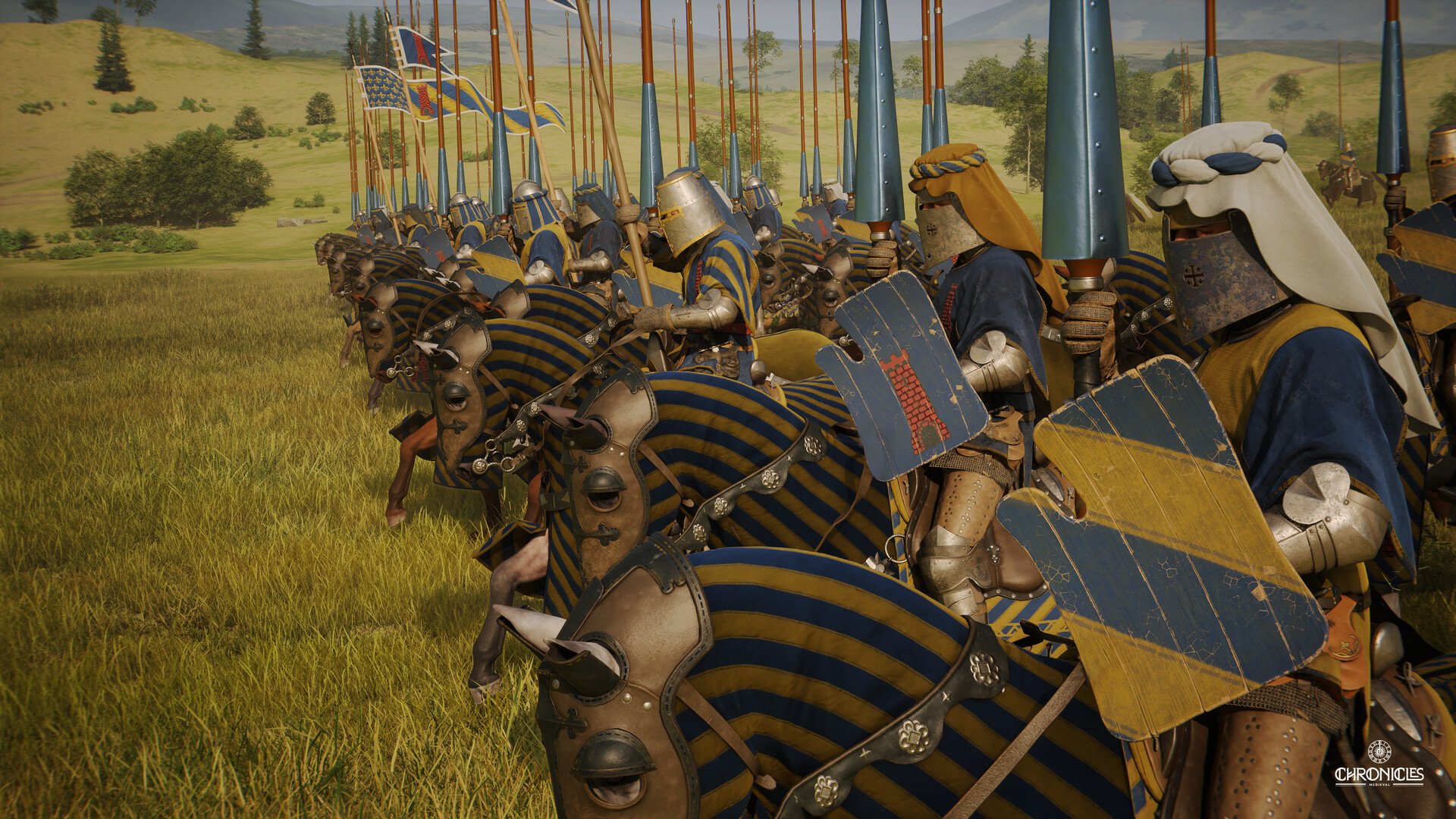
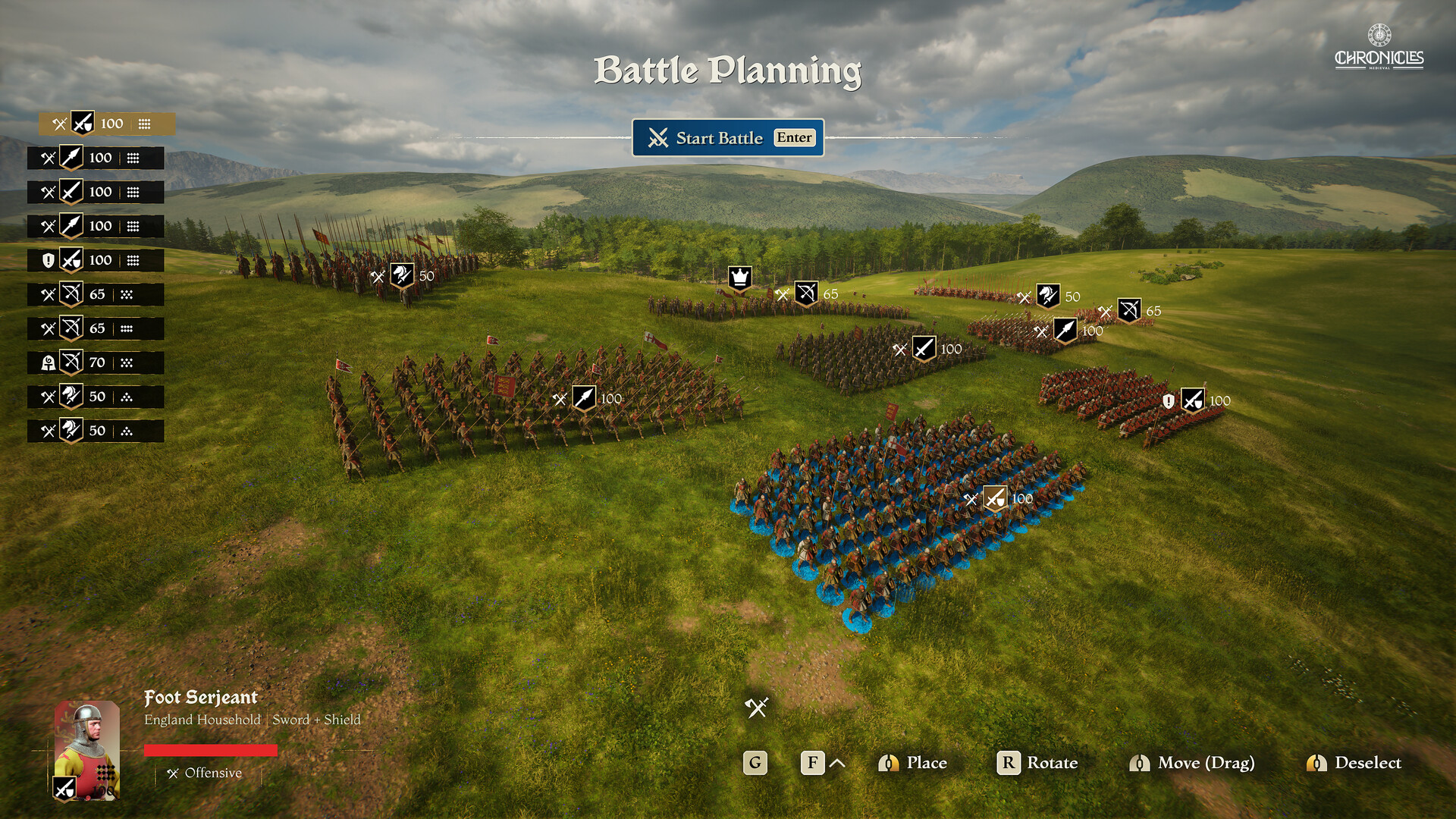
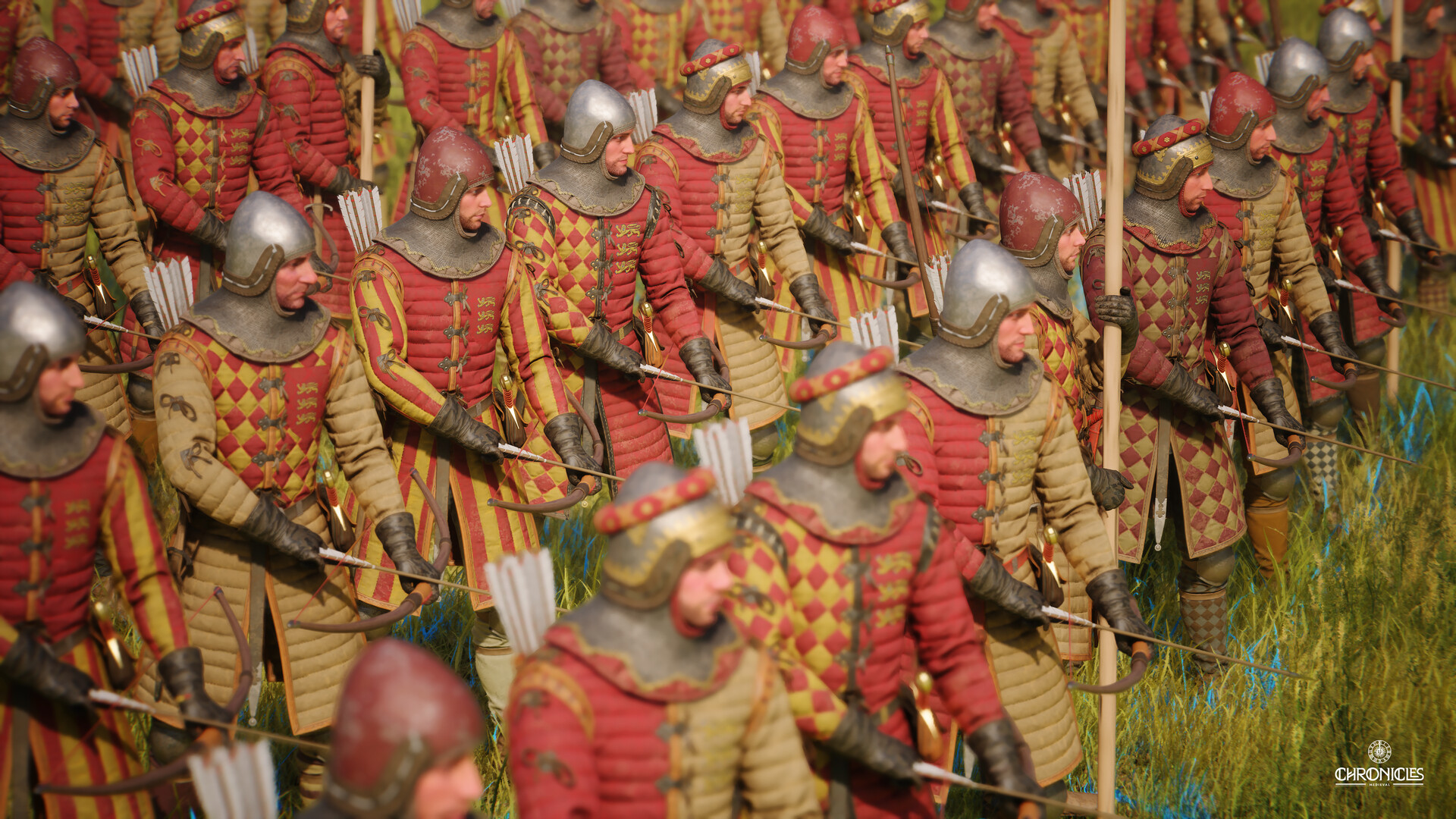
Before each clash there is a planning stage. Players place units inside the staging area, set routes and assign roles. During combat, they can order units to advance, hold, engage, charge or fall back while the commander joins the fray. Units have distinct roles — English longbowmen, crossbowmen, French cavalry, polearm infantry — and respond to orders in real time.
Management matters too. Soldiers need food and pay; low morale leads to desertion. The map is covered by fog of war and demands exploration to reveal camps, settlements and opportunities. Alliances and trade routes expand influence and unlock better resources. Players who prefer to avoid direct combat can use an auto-resolve system designed for diplomacy and trade routes.
The team says decisions should matter more than raw numbers. "It's very important for us that there is room for sandbox and very expressive gameplay," lead producer Sam Millen said in a presentation to journalists. "The world and the troops within it give player expression, so you can make combinations and tactical choices."
- Genre: action-strategy RPG in a historical sandbox
- Setting: 14th and 15th-century Europe, with Hundred Years' War chapters
- Combat: real-time battles with hundreds of soldiers and a third-person view
- Management: morale, wages, food, trade, alliances and castle building
- Progression: from commoner to commander, through paths of power, adventure or fortune
- Extras: planned modding, co-op custom battles and auto-resolve
Why the game reached Steam's top 26
The first reason is the noise around its reveal. Chronicles: Medieval was shown on June 6, 2025, during Summer Game Fest, with a trailer narrated by actor Tom Hardy. The video passed 2 million views on IGN's channel alone and put the title on the radar of anyone following historical strategy and RPGs. The promise of large-scale battles with third-person combat was the commercial hook.
The second is consistent communication. Even without a firm date, the studio kept publishing dev diaries and technical showcases, including a battle presentation at Gamescom 2026 and videos about heraldry, music and combat systems. That steady flow kept the game visible in a genre with few major releases in recent years.
The third is the wishlist effect. Steam ranks most-wishlisted titles by a number only Valve knows, but the chart works as a public gauge of expectation. When the crisis was announced, outlets such as PCGamesN placed Chronicles: Medieval at number 26; Coffee Stain's official release says "top 30". For a debut studio, that is a valuable asset: it signals demand and helps in talks with publishers and investors. On this site, coverage of games and indie productions follows this kind of market movement.
It is worth noting what the game is not. The Steam page has no user reviews yet because the title has not launched; it is listed as "coming soon" with a 2027 window. There is no publicly announced price either. Expectations, therefore, rest on demos and marketing material, not on a finished product.
The Raw Power Games bankruptcy
On October 30, 2026, Raw Power Games said the funding needed to keep the studio alive had been pulled. "Due to circumstances outside our control, the necessary funding behind Raw Power Games is no longer in place. Without it we can't keep building Chronicles: Medieval, and right now the studio is at real risk of closing," the statement posted on social media and Steam read. The company did not say who the backer was or why the money was withdrawn.
The same day, a Danish court declared Raw Power Games ApS, headquartered in Copenhagen, bankrupt. The process opened the way for a sale of the studio's assets, including the game's intellectual property. The team's message already said talks were underway with "everyone who might help us find a way forward." It also acknowledged how close Early Access was: "What makes it hurt is how close we are. Early Access is within reach."
"We don't know yet how this ends. But in the spirit of our game we're not going down without a fight!"
— Raw Power Games statement, October 30, 2026
The bankruptcy was not an isolated case. That same month, other studios announced layoffs and cuts after failing to secure new investment — a reminder that funding large independent games remains fragile even when the product attracts public interest.
Coffee Stain buys the IP: the deal numbers
Coffee Stain Group AB (publ), owner of Satisfactory and Goat Simulator and publisher of titles such as Deep Rock Galactic and Songs of Conquest, announced on November 14, 2026, an agreement to acquire the intellectual property rights and related assets of Chronicles: Medieval from Raw Power Games' bankruptcy estate. The announcement was filed as regulated inside information under European market rules.
| Item | Detail |
|---|---|
| Buyer | Coffee Stain Group AB (publ) |
| Seller | Raw Power Games bankruptcy estate |
| Price | DKK 36.75 million in cash (about $5.42 million) |
| Structure | New company owned 75% by Coffee Stain and 25% by key members of the original team |
| Funding | Coffee Stain funds the price and continued development |
| Completion | When the price is paid to the estate, expected in the coming weeks, with no other conditions |
The ownership design is unusual and deserves attention. Coffee Stain controls the new company but reserves a quarter of the capital for people who helped create the game. It is a way to keep part of the technical and creative knowledge involved without taking on the entire old team. It also limits initial costs: the new company starts with a lean cost base that is expected to grow as the studio takes shape.
"Chronicles: Medieval made a strong impression at its reveal at Summer Game Fest last year. We're happy to step in and help bring it to the players after the recent developments in Copenhagen. Chronicles: Medieval ticks many of the boxes that we believe to be fundamental for a great game, and we think it has a good chance of becoming a strong long-term IP for the group."
— Anton Westbergh, CEO of Coffee Stain
Westbergh added that things have been moving fast and that the short-term focus will be on working out how best to complete the game with the new company's management team. The acquisition, therefore, is not only financial: it involves production decisions that have not yet been detailed publicly.
What changes in the calendar — and what to watch
For now, the official date stands: 2027, in PC Early Access. The Steam page keeps the window, and the game's website says Early Access begins in early 2027, with console versions planned for later without an announced date. Coffee Stain said information about the plans, including the release timeline, will be communicated through the game's own channels "in due course".
That leaves two scenarios open. In the first, the new company keeps the scope and delivers Early Access in the expected window with staffing adjustments. In the second, the schedule slips to accommodate the reorganisation, something common in asset acquisitions after bankruptcy. Closing the deal depends only on paying the estate, but production is another matter: it involves hiring or reassigning people, rebuilding processes and deciding what ships in the first version.
There is also the question of the original studio. Raw Power Games was declared bankrupt, and the acquisition covers assets, not the company. Employment contracts, debts and the previous corporate structure do not automatically follow the deal. The new company may invite part of the team, but there is no guarantee of continuity for every employee — a sensitive point for those following the case.
The first signal to follow is official word on the schedule. So far, Coffee Stain has avoided promising a date and says only that the focus is finishing the game. A new trailer or a dev diary with an Early Access date would be the most concrete confirmation that production is back on pace.
The second is the size and makeup of the new team. The 75%-25% structure suggests key members of the original team will stay involved, but headcount and open roles will say a lot about the project's ambition. Coffee Stain has experience publishing games from external studios, which can speed up the commercial side, but it does not replace the knowledge of the people who built the game's systems.
The third is scope. Chronicles: Medieval was conceived as a long-term sandbox with modding, co-op and post-Early Access updates. If the new company opts for a smaller first version, some of those features will likely come later — and that needs to be communicated clearly so it does not frustrate the audience that pushed the game into Steam's top 26.
For readers who want to follow closely, the Steam page and the official website hold the verifiable material: screenshots, videos and the language list, which includes a Brazilian Portuguese interface. The recommendation is to treat dates as provisional until Coffee Stain makes a formal announcement. The good news is that the project was not cancelled: it came out of a bankruptcy with a defined buyer, a corporate structure and funding to continue — a rare outcome in the games market. The recent track record of indie Steam launches, such as REKA, shows the road to Early Access is usually longer than planned.
Suggested and related articles
Guild Saga: Vanished Worlds hits PS5 in May 2027
Dungeon Inn leaves Early Access with full 1.0 release
Developer Shuts Down The Midnight Walkers Servers and Turns Game Into PvE With P2P Connection
Intergalactic enters final stage, gameplay due in 2027

Romancing SaGa 3: Destinies United moves up to Feb. 4