Worlds 2027 final set for Seoul Arena in Chang-dong
Published on · Updated on
Riot confirms Seoul will host the 2027 League of Legends Worlds final at Seoul Arena: where the venue sits, its capacity and the tournament calendar.
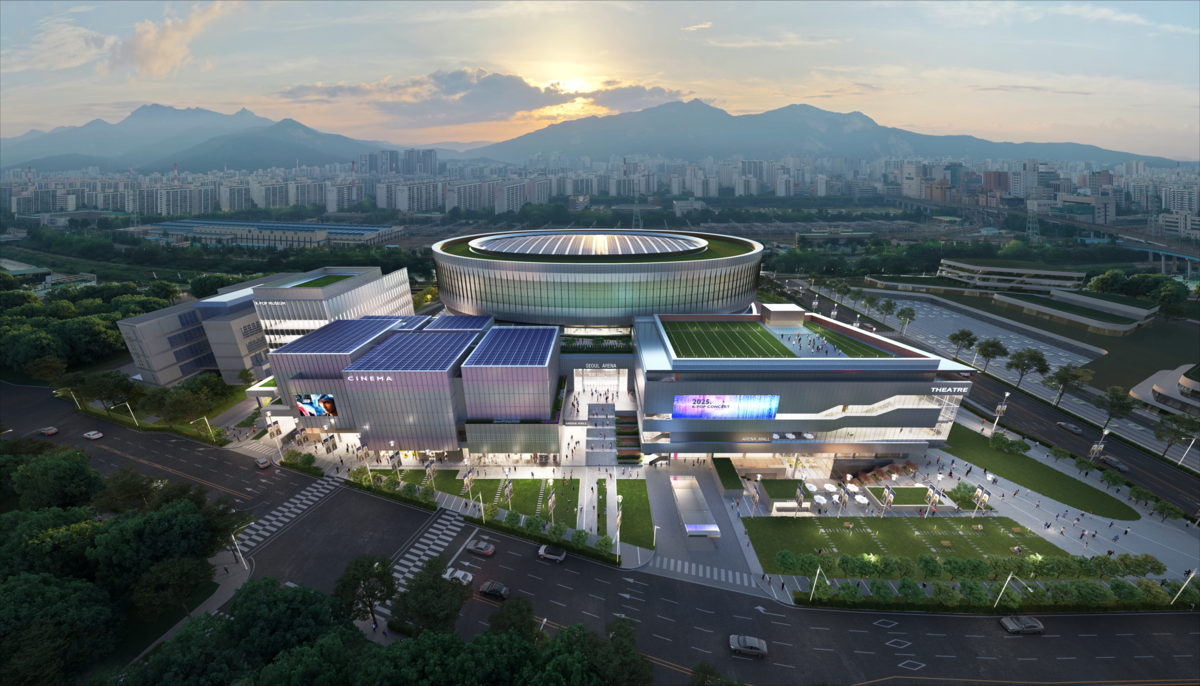
Riot Games confirmed on Saturday (14) that the 2027 League of Legends World Championship final will be played at Seoul Arena, a venue under construction in Chang-dong, Dobong-gu, in northern Seoul. The announcement came at the LoL Showcase, held in New York shortly before the 2026 final, which Bilibili Gaming won 3-1 over Gen.G at Barclays Center.
It will be the first Worlds final in the South Korean capital since 2023, when Gocheok Sky Dome hosted T1's fourth title. This time the change is not only about the city: the 2027 tournament will be split between South Korea and Japan, with the Swiss Stage in Nagoya and the entire knockout bracket on Korean soil — quarterfinals and semifinals at Suwon Convention Center and the final at Seoul Arena.
The choice answers the immediate question readers had after the announcement: where exactly is this arena, and why did Riot decide to close the tournament there? The answer involves a building designed for music, a multi-city bid that took months and a ledger Seoul's city government already knows by heart.
Where Seoul Arena is located
The address is Chang-dong, Dobong-gu, in the northern half of Seoul — a residential and commercial district that grew far from the postcard views of Gangnam and the Han River. Main access will be through Chang-dong Station, which connects Lines 1 and 4 of the Seoul metro, a few blocks from the construction site.
Location is part of the plan. In April 2026 the city government presented the "K-Entertainment Town, Chang-dong" project, which treats the arena as the anchor of a new culture and tourism hub in northeastern Seoul. The package includes a pedestrian deck along the Jungnangcheon stream, the conversion of the area under the Chang-dong Station overpass into a walkable space and the creation of the "Seoul Moonlight Night Market", a Korean food street with night lighting and music programming running alongside events.
According to the city, the area expects about 2.7 million visitors a year after opening — a figure that helps explain the political interest in turning the arena into a showcase. The municipality also plans to improve the route between the complex and Nowon Station, widening pedestrian paths used by fans arriving by subway.
An arena built for music, not baseball
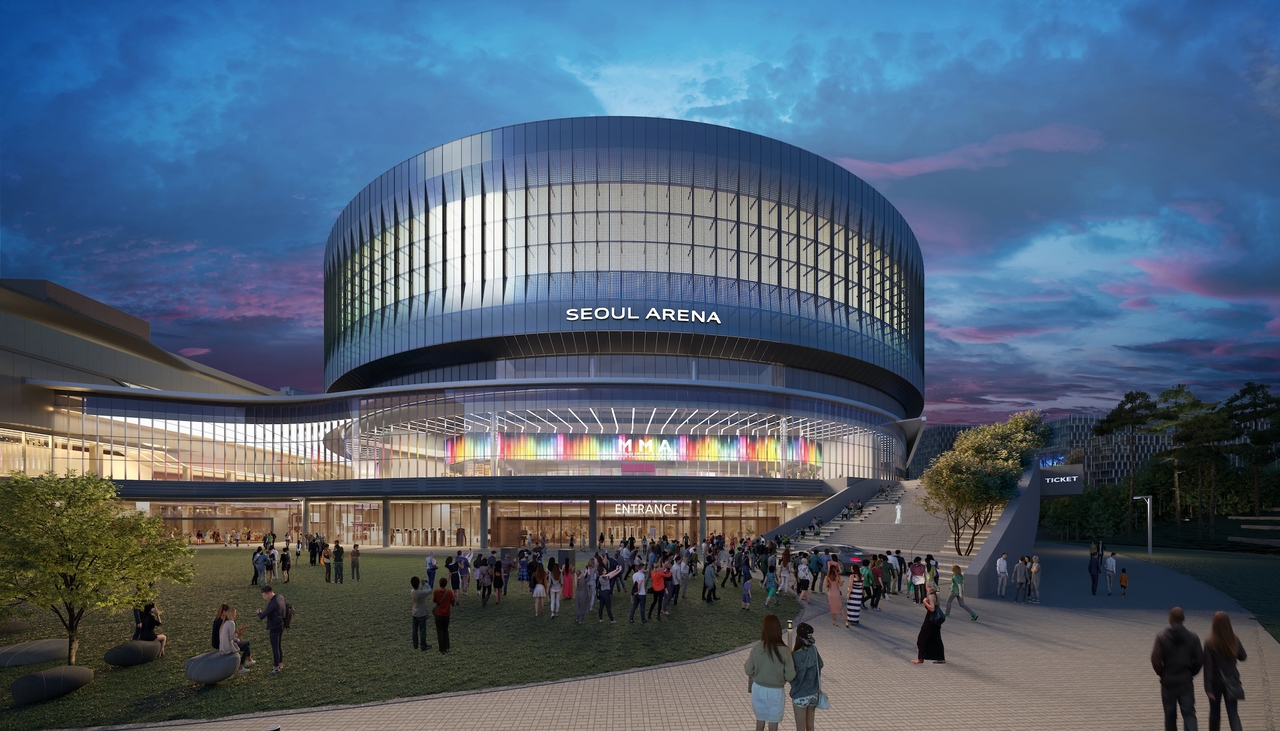
The city presents Seoul Arena as the country's largest arena: the main hall holds up to 28,000 people, and a mid-sized hall takes up to 7,000. The complex will also include commercial space and facilities supporting the popular music industry, from planning to production.
By Korean standards, the difference is in the design. For years, major K-pop concerts and the biggest esports events were staged in baseball stadiums and multi-purpose gyms, which drew recurring complaints about acoustics and obstructed views. The project calls for retractable seating that changes configuration depending on the event, dedicated sound and stage infrastructure and access for production trucks to drive into the building — details that sound technical but decide the cost of an international tour.
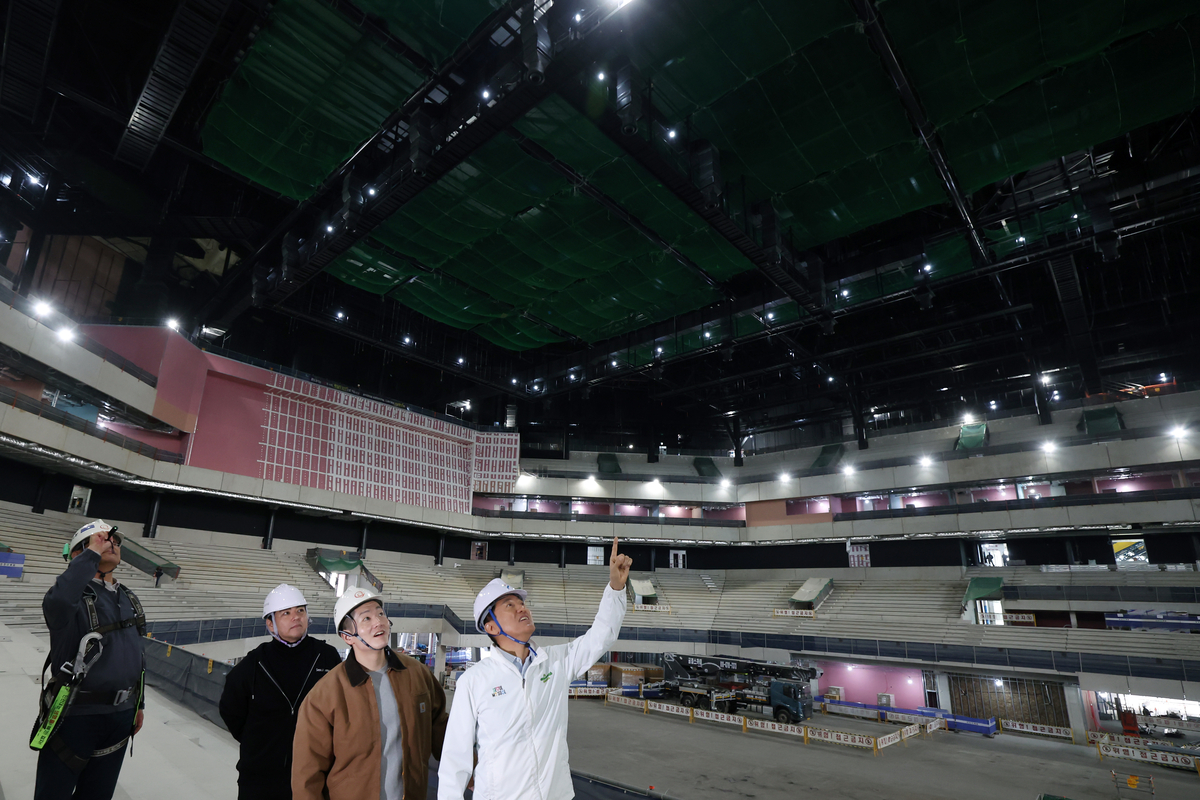
The construction timeline matters directly to Riot. On October 23, 2026, Mayor Oh Se-hoon visited the site and found the building 81 percent complete. The target is to deliver it in May 2027 and open to the public in June. In other words: the Worlds final, traditionally held between October and November, should take place only a few months after the first show — an accelerated operational test.
"Seoul Arena, which can host its first performance by mid-June, is more than a completed concert hall. It is a symbolic space that opens a new golden age for the area north of the Han River."
The booking calendar already shows market appetite. According to the city, the first regular booking round for the second half of 2027 drew up to four applicants per date, and nearly every week after opening — except the Chuseok holiday — was taken. Seoul Arena Co., Ltd., the company created to develop and operate the venue, has Kakao Group as lead investor and a 30-year operating concession.
What the 2027 Worlds calendar looks like
Riot outlined the next international circuit during the Showcase. Besides Worlds, the company confirmed an expanded First Stand — branded "First Stand: All In" in 2027 and moved to China — and MSI in Valencia, Spain. Southeast Asia, originally slated to host First Stand in 2027, will now stage it in 2028.
| Stage | City | Venue |
|---|---|---|
| Swiss Stage | Nagoya (Japan) | To be announced |
| Quarterfinals | Suwon (South Korea) | Suwon Convention Center |
| Semifinals | Suwon (South Korea) | Suwon Convention Center |
| Final | Seoul (South Korea) | Seoul Arena, Chang-dong |
The bigger shift, however, is geographic: for the first time an international stage of Worlds will be played in Japan. Nagoya hosts the Swiss Stage, which concentrates the largest number of matches and teams in the tournament. The entire knockout bracket then stays in South Korea, keeping the country as main host — an arrangement that drew a bittersweet reaction from Korean fans, since the stage with the most in-person matches sits abroad.
Riot has not confirmed the Play-In. The company said it is reviewing changes to the qualification path and studying whether the Demacia Cup could replace the entry stage in 2027, a decision that still depends on community reception. Detailed schedule, format and qualification criteria will be revealed in January.
Why Seoul — and what the city has already proven
The choice was not automatic. Seoul submitted a bid, went through on-site evaluations and was named in August 2026 as the preferred city for negotiation. Confirmation came after detailed talks with Riot; the official contract is still to be signed, and the city says it will coordinate all support needed for the event with the company.
History helps explain the enthusiasm. The city hosted the 2014 final at Seoul World Cup Stadium and the 2023 final at Gocheok Sky Dome — on that occasion, 18,000 tickets sold out in ten minutes and T1 swept Weibo Gaming 3-0 in front of a full house. It was the organization's fourth title and its first in seven years.
The 2023 economic impact is the argument the city repeats most. According to research by the Korea e-Sports Association cited by the municipal government, that year's Worlds generated an estimated impact of US$555 million, about 740 billion won. Around 200,000 people visited Seoul during the event; tourist spending was estimated at US$142.95 million, media effects — including city brand promotion through global broadcasts — at US$150 million, and the organizer's direct domestic spending at US$15.75 million.
"Korea has played an indispensable role in the history of LoL Esports. We are thrilled to bring the defining moments of the 2027 World Championship back to Korea."
For Riot, the return carries symbolic weight. Korea is the market where professional League of Legends established itself as a sport and where the discipline built part of its broadcast grammar. For Seoul, the final is a test for an arena that must prove, in its first year, that it can attract large international events.
Why an indoor arena instead of a stadium
The decision also has a climate and operational logic. A Worlds final in November in Seoul means low temperatures and a risk of rain — factors that, in open stadiums, raise production costs and reduce the audience experience. An indoor venue allows control of light, sound and temperature, which is decisive for an event broadcast to dozens of countries and featuring an opening ceremony that usually includes musical numbers.
There is a counterpoint: capacity. Seoul Arena is smaller than stadiums used for finals of other global events, and the esports configuration — with stage, screens and technical area — tends to reduce the number of seats compared with the 28,000 of a concert setup. Riot has not said how many tickets will go on sale.
What is still undefined
- Exact final date and the full tournament window, expected to be announced in January.
- Tickets: prices, volume and sales system have not been disclosed. The 28,000 capacity is the venue's maximum; with an esports stage and production, the seat count is usually lower.
- Play-In format and the possible adoption of the Demacia Cup as an entry stage.
- Signing of the official contract between the Seoul city government and Riot Games, including event support terms.
- Nagoya venue names: the city hosting the Swiss Stage has not had its arena confirmed.
What it means for international fans
Following the 2027 final from the Americas will require adjusting to the time zone: Seoul is UTC+9, twelve hours ahead of Brasília and thirteen ahead of New York. Matches starting in the evening in Korea fall in the early morning hours in the Americas — the same pattern as 2023, when the final became a breakfast ritual for part of the audience.
In person, the math is different: flights, lodging, tickets and transport to Chang-dong, a district outside the traditional tourist circuit. The city's promise is to ease the route with the stream-side pedestrian deck, improvements around the stations and parallel programming in the area, including the night market and street performances.
The competitive context is worth remembering. Bilibili Gaming's 2026 title ended a run of Korean championships and brought the trophy back to China for the first time since 2021. The 2027 final in Seoul will therefore be the host country's first chance to answer at home — and the size of that answer depends on who reaches the decider.
A bet by a city and a company
Seoul Arena has an owner, an operator and a deadline. The consortium led by Kakao Group will run the venue for three decades, earning from rentals, commercial areas and sponsorships. The company has signaled it intends to connect the arena to content produced by its affiliates, including Kakao Entertainment and SM Entertainment — a business logic that depends on constant occupancy, not only marquee events.
The complex was also chosen to host Fanomenon, an 11-day Korean culture festival planned for 2027 that should combine K-pop concerts with gaming, webtoon, film and beauty attractions. For the local industry, the full calendar proves the arena is born with demand; for esports organizers, it signals that competition for dates will be fierce.
That is why the 2027 Worlds works as a double showcase: for Riot, which needs a final worthy of the biggest esports tournament in the world; for Seoul and Kakao, which need to show the arena is more than a new building on the map.
The next chapter is bureaucratic. Contract, calendar and tickets arrive in the coming months — and with them, the answer to the question every fan is already asking: how much it costs to watch the Summoner's Cup lifted in Chang-dong up close. Readers who want to revisit what came before can check our coverage of the Worlds 2026 final at Barclays Center and follow esports and games coverage on the site.
With information from Kyunghyang Shinmun, LoL Esports, The Korea Herald, Seoul Economic Daily and Inven Global. Official venue page: seoularena.net.
Suggested and related articles
What is the Nedbank Mastercard Summoner Tournament?

Riot delays private LoL replays to patch 26.21
Where to watch the Worlds 2026 final: Gen.G vs BLG
Toyz deported from Taiwan after serving drug sentence
Sudden Attack Championship S2 main stage opens Saturday