Who Is Jean Chalopin, the Creator of Inspector Gadget?
Published on · Updated on
The French producer founded DIC in 1971, exported Ulysses 31 and Inspector Gadget worldwide, then became a Bahamas banker. Canal+ now tells his story.
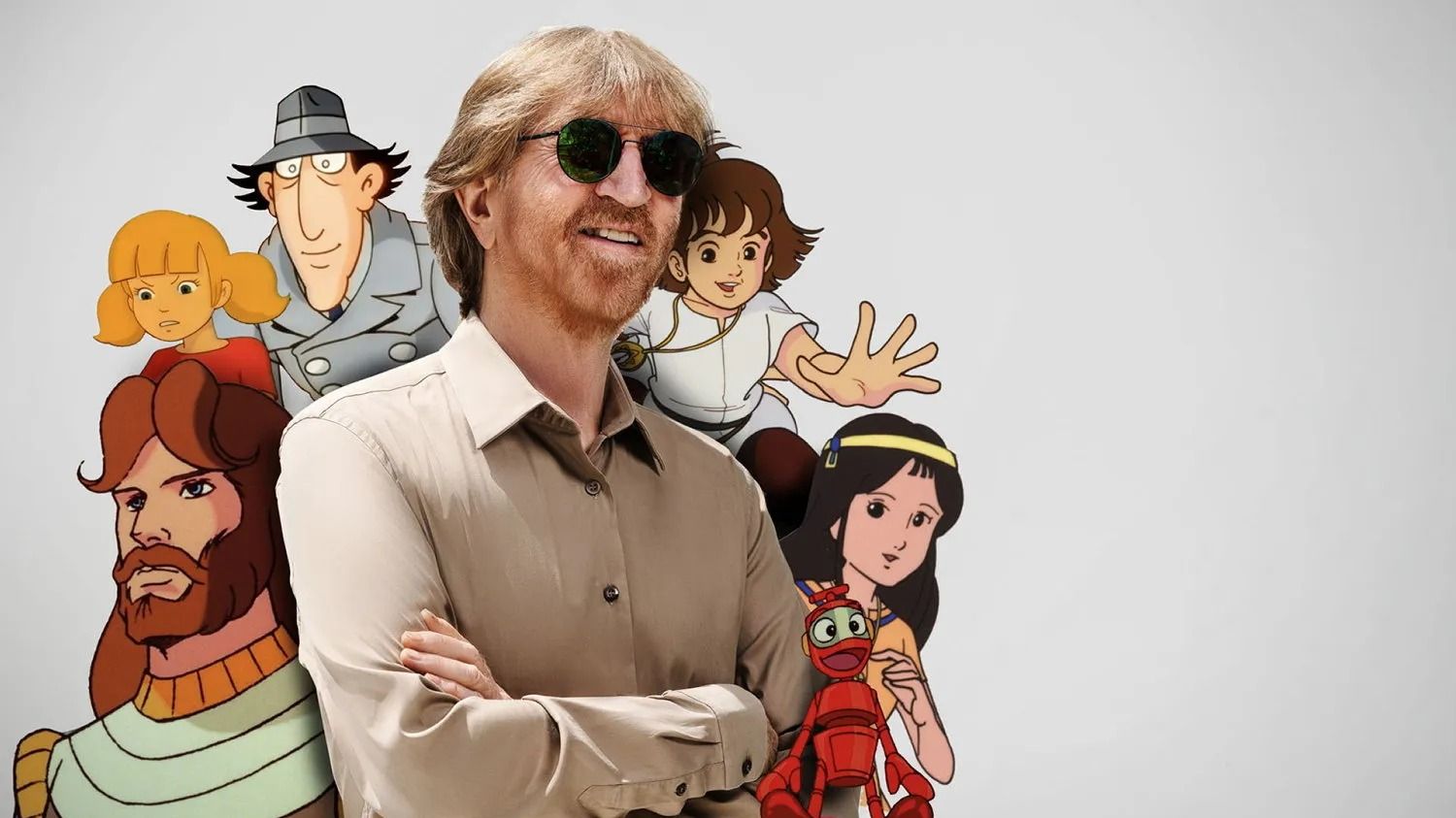
Jean Chalopin is the French producer who founded DIC in 1971 and delivered some of Europe's most widely exported cartoons, including Inspector Gadget, Ulysses 31 and The Mysterious Cities of Gold. Born on 31 May 1950, he is the subject of the documentary series Inventeur Gadget, les 1000 vies de Jean Chalopin, directed by Pierre-Philippe Berson and Fabien Constant and produced by Federation Studio France and So In Love. It premieres on 17 November 2026 at 9 pm on Canal+ in France (8 pm on the channel's overseas feeds), with all three 30-minute episodes also available on the broadcaster's app.
The documentary arrives days after French public radio franceinfo devoted a programme to the creator, in which he sums up his own trajectory: in the 1980s he invented the exportable "French-style" cartoon, later became a banker, moved into cryptocurrencies and now invests in biotechnology. It is a biography that cuts across the history of children's television, the industrialisation of European animation and the financial merry-go-round of the Bahamas.

From Tours to Hollywood: how DIC was born
Before he created characters, Chalopin created a leaflet-distribution business. In 1968 he founded OGAP (Office de Gestion et d'Action Publicitaire) in Tours, selling small advertisements for local shops and, a year later, buying an advertising-film studio. It was in that world of regional advertising that he met animator Bernard Deyriès, who would become his main creative partner and the director of much of what DIC produced.
In 1971 OGAP became DIC — Diffusion Information Communication — and moved into animated fiction on an industrial scale. Chalopin set up studios in Tours and later in Paris, and structured the company not as a craft workshop but as an assembly line of programmes for broadcasters in several countries. A self-taught writer and producer, he developed the projects while Deyriès handled the art direction.
"We had about 500 people between Boulogne and Tours, and we were able to deliver maybe two episodes a year. So we needed production capacity. We had heard there was production capacity in Asia, without really knowing where. I set off with my bundle. I looked in India, Thailand, Hong Kong, Taiwan, until finally I was told the real production capacity was in Japan. So I went to Japan!"
The bridge to Japan and the "French-style" cartoon
Chalopin's solution was a subsidiary in Tokyo, KKDIC, which allowed DIC to work directly with Japanese studios and cut production costs. That partnership produced Ulysses 31 (1981), which transposes Homer's Odyssey to the 31st century, and The Mysterious Cities of Gold (1982), an adventure about the search for the golden cities of pre-Columbian America. Both combined scripts written for Western audiences with the fluidity of Japanese animation.
The model worked because Chalopin understood the business at both ends: he conceived serialised stories with long narrative arcs and negotiated physical production with Asian studios capable of delivering dozens of episodes per season. In doing so, he anticipated by a decade what would become standard in the global animation industry: creation in the West, execution in the East and worldwide distribution.
The result is often described as the invention of a "French-style" cartoon — a school that neither copied the American closed-episode model nor depended exclusively on the domestic market. DIC series were being sold to dozens of countries before France had even consolidated an audiovisual export policy.
Inspector Gadget: the detective who missed the obvious
In 1983 DIC launched Inspector Gadget, co-created by Chalopin, Andy Heyward and Bruno Bianchi. The detective stuffed with prosthetics and contraptions — always clumsy, always rescued by his niece Penny and his dog Brain — was born from a declared blend of two television series: The Six Million Dollar Man and Get Smart.
"It was a mix between The Six Million Dollar Man and Get Smart. When we talked among ourselves, I would say: look, it would be wonderful to have a watch in which you could see and hear, and so on. So we imagined plenty of gadgets."
The series ran for 86 episodes between 1983 and 1986 and was exported around the world. In Brazil it aired as Inspetor Bugiganga and became one of the most fondly remembered cartoons of the 1980s and 1990s, with dubs that passed through different broadcasters over the decades. The franchise outlived the original show: it generated new episodes, video games such as Inspector Gadget: Gadget's Crazy Maze for the Game Boy Color, and two live-action films produced by Disney, on which Chalopin worked as a producer.
The character also explains part of the producer's method. Instead of betting on a competent hero, DIC built a comedy of errors in which authority is incompetent and the children solve the case — a simple inversion, cheap to produce and universal enough to cross borders without relying on complex dialogue.
Conquering the US market and the end of a cycle
In 1982 Chalopin moved to Los Angeles and set up DIC Enterprises with Andy Heyward to produce directly for American networks and the syndication market. The success of Inspector Gadget and The Littles took the company, by 1984, to the position of the world's largest independent producer of children's animation, challenging established studios such as Hanna-Barbera in the lucrative Saturday-morning slot.
Expansion also depended on toys. DIC produced series commissioned by manufacturers, such as M.A.S.K. and Jayce and the Wheeled Warriors, turning lines of transforming vehicles into serialised narratives. Chalopin became known for giving dramatic coherence to commercial briefs — a skill that sustained the animation business model throughout the 1980s.
In 1987 internal disagreements led the producer to sell his stake in DIC. He immediately founded C&D (Créativité et Développement), bought back the international distribution rights to part of the catalogue and kept producing titles such as The Twins of Destiny, Michel Vaillant and King Arthur and the Knights of Justice. C&D was sold to Fox Kids Worldwide in 1996.
The period also accumulated failures. The most emblematic was the indoor theme park Planète Magique, which opened in Paris in 1989 inside the former Gaîté theatre, with touch screens and technological attractions that were ahead of their time. The project opened late, suffered breakdowns and queues, and closed in 1991 without even covering its payroll.
From producer to banker: Bahamas, crypto and biotech
It was also in 1987 that Chalopin moved to the Bahamas. There he began investing in Deltec Bank and Trust, eventually becoming its largest shareholder and, in 2010, chairman of the board — a role he also held at the parent company, Deltec International Group. The close relationship with the cryptocurrency sector came in 2018, when the bank began working with Tether and Bitfinex at a time when both companies had lost their banking relationships in Taiwan.
The financial venture had consequences in the United States. In 2020 Chalopin's holding company FBH Corporation bought Farmington State Bank, a single-branch community bank in Washington state, for $3.1 million; it later operated as Moonstone Bank, serving blockchain and cannabis companies. In 2022 FBH accepted an $11.5 million investment from Alameda Research, an arm of FTX. After FTX's collapse, nearly $50 million in deposits at the bank were seized and, in August 2023, the Federal Reserve ordered it to wind down for changing its business plan without notifying regulators.
Deltec was also dragged into the case. In October 2021 the group signed a $50 million promissory note with Norton Hall Ltd., an Antigua-based entity that, according to its corporate services provider, was beneficially owned by Sam Bankman-Fried. The bank said it was unaware of the origin of the funds and, in March 2023, agreed to repay principal and interest to the FTX bankruptcy estate.
Over the past fifteen years, Chalopin has channelled part of his resources into biotechnology. That interest produced one of his most quoted lines in the documentary and in the franceinfo interview:
"I love science, especially science that touches the medical field. I would say that someone born today will be able to live in good health and enjoy old age until, perhaps, 120. That will become the norm."
What the documentary reveals and why the name matters
Inventeur Gadget, les 1000 vies de Jean Chalopin is a three-part documentary creation produced by Myriam Weil (Federation Studio France) and Brieux Férot (So In Love), directed by Pierre-Philippe Berson and Fabien Constant. In press interviews the two directors present themselves as children of the programming Chalopin helped create: one calls himself a "Ulysses 31 baby", the other an "Inspector Gadget baby".
It is the first time the producer has agreed to tell his story in depth on camera. The documentary travels through France, Japan, the United States and the Bahamas, and deals with both his international successes and the projects that failed, such as the Planète Magique park and financial ventures that ended in regulatory investigation.
"The world is divided into two categories: those who know Chalopin the banker and those who know Jean the cartoon creator."
For Brazilian readers, the interest goes beyond one executive's biography. Much of the children's programming that reached the country in the 1980s went through the industrial model Chalopin helped consolidate: international co-production, long seasons, characters designed to become toys and memorable theme songs. Ulysses 31, The Mysterious Cities of Gold and Inspector Gadget are examples of the same production logic that survives today in streaming catalogues — and that still feeds our anime coverage and our pop culture agenda.
A career in numbers and series
| Series | Debut | Episodes | Chalopin's role |
|---|---|---|---|
| Ulysses 31 | 1981 | 26 | Producer and writer |
| The Mysterious Cities of Gold | 1982 | 39 | Producer and writer |
| Inspector Gadget | 1983 | 86 | Co-creator and producer |
| M.A.S.K. | 1985 | 75 | Executive producer |
| The Twins of Destiny | 1991 | 52 | Producer (C&D) |
How to watch and what to expect
The documentary series airs on 17 November 2026 at 9 pm on Canal+ in France, and at 8 pm on the channel's overseas feeds. All three 30-minute episodes will also be available on the Canal+ app. The production is an original creation by the group, made with Federation Studio France and So In Love.
For animation followers, its value lies in direct access to one of the last producers from the generation that built the European children's series industry. For those who follow financial news, the interest is the other side of the biography: the same man who imagined a detective with a helicopter arm became chairman of a bank in the Bahamas and lived through the most turbulent episode in the cryptocurrency market. The documentary deliberately bets on that unlikely coexistence between two careers that, at first glance, have nothing in common.
In Brazil, the legacy is easier to measure: just ask anyone who grew up in the 1980s whether they remember Inspector Gadget. The answer is probably yes — and that is why the story of the man behind the character keeps generating coverage.
With information from franceinfo, L'Humanité, Megazap and Wikipedia.
Suggested and related articles

How Japan protects anime copyright beyond its borders

Crunchyroll reveals CCXP26 lineup led by Kagurabachi

Girls Band Cry: New Film Opens May 21, 2027

Magical Girl Raising Project restart: the killer among them
Trigun Manuscript Reveals New Novel for Winter