What is LitRPG and why the genre is booming in anime
Published on · Updated on
Learn what LitRPG is, how levels, stats and classes shape the genre, and why anime like Solo Leveling and Overgeared top Crunchyroll in 2026.
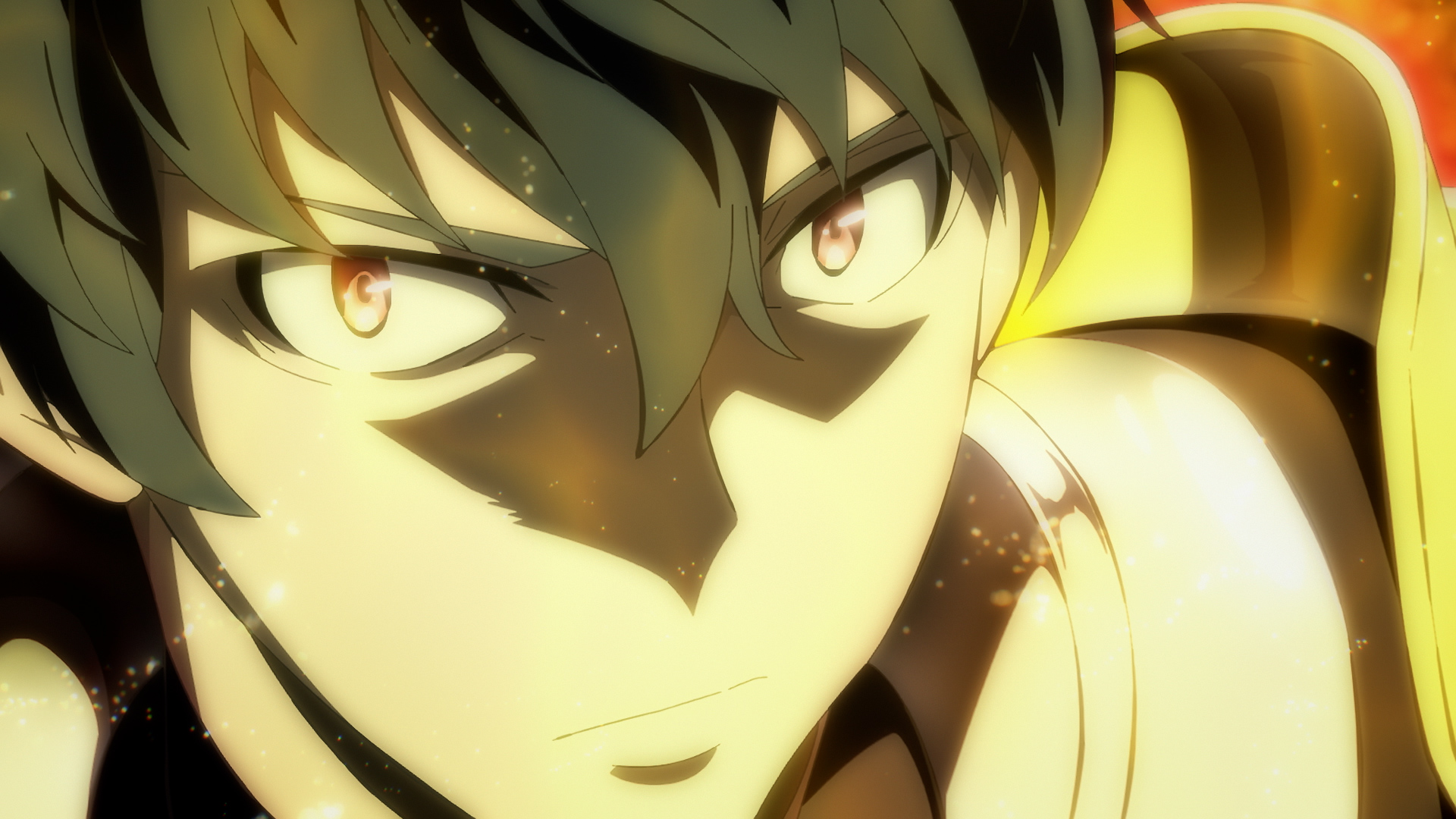
Overgeared, the new J.C. Staff adaptation of the webtoon by Saenal, Monohumbug and Team Argo, leads Crunchyroll’s worldwide top 10 in FlixPatrol’s November 18, 2026 ranking with 75 points — seven ahead of runner-up Black Clover. The number alone would be news. The context is bigger: four other shows built around levels, stats and game skills also appear among the platform’s ten most-watched titles. The name of that phenomenon is LitRPG.
Short for literary role-playing game, the term describes stories in which RPG rules are part of the plot’s machinery. It is not just a world of swords and magic, nor a story set inside a game: characters must deal with experience, classes, attributes, inventories and the real consequences of every build choice. That blend of fiction and character sheet has won readers in Russia, South Korea and the United States — and now finds its most natural form in anime.
What LitRPG actually means
LitRPG is the strand of speculative fiction in which the mechanics of a role-playing game are integral to the narrative. Readers and viewers follow a character’s growth through numbers, levels, unlocked skills and class choices. The rules are not decoration: they create obstacles, set the pace and often decide who survives.
The most widely accepted definition comes from The Encyclopedia of Science Fiction: what sets LitRPG apart is the importance of game rules to the events, not the mere presence of a fictional game. A character may gain skills by earning experience, pick among abilities when leveling up or manipulate numerical attributes. Stories with that level of detail are called “crunchy”; those that use the system more lightly are “creamy”. Neither approach is mandatory.
LitRPG should also not be confused with a gamebook. In series such as Fighting Fantasy, the reader makes decisions and applies the rules. In LitRPG, the story is read as conventional prose: the system exists inside the world, not in the reader’s hands. Likewise, a novel licensed from Dungeons & Dragons is not automatically LitRPG — only if the RPG mechanics matter to the plot.
LitRPG, GameLit and isekai: who’s who
| Term | Definition | Examples |
|---|---|---|
| LitRPG | RPG mechanics woven into the plot, with measurable progression. | Solo Leveling, Overgeared, Dungeon Crawler Carl |
| GameLit | An umbrella for fiction where games matter, without requiring levels or stats. | Ready Player One, No Game No Life |
| Isekai | A character transported or reborn into another world; may or may not include a game system. | Re:Zero, Overlord, That Time I Got Reincarnated as a Slime |
The categories overlap constantly. Overlord, for instance, is an isekai in which the protagonist is trapped inside an MMORPG and carries its rules into a new world. Solo Leveling takes place on contemporary Earth, yet its hero develops the ability to level up like an RPG character. In both cases the system drives the story — which is what matters to LitRPG.
From Russian forums to streaming phenomenon
The name LitRPG was adopted in Russia in 2013, when publisher Eksmo launched a book line under the label. Editor Dmitry Malkin, literary agent Alex Bobl and author Vasily Mahanenko were involved in the process. Russian writers had already been publishing similar stories online, including Dem Mikhailov (The Sleepless Ones), Dmitry Rus (Play to Live) and Mahanenko himself, whose The Way of the Shaman follows a prisoner serving his sentence inside a virtual world.
The roots, however, are older and multinational. Andre Norton’s Quag Keep (1978) already placed players inside a world derived from Dungeons & Dragons. Larry Niven and Steven Barnes’s Dream Park (1981) imagined a high-tech LARP park. In Japan, .hack and Sword Art Online brought the MMORPG into fiction in the 2000s. In South Korea, The Legendary Moonlight Sculptor, serialized from 2007, gave unusual weight to crafting, the economy and the financial value of in-game achievements — and influenced the first Russian LitRPG authors.
English-language expansion came in the second half of the 2010s through translations, self-published authors and serial fiction platforms. Aleron Kong’s The Land, Travis Bagwell’s Awaken Online and Cosimo Yap’s The Gam3 helped build an audience. The model mirrored the one that had popularized Asian web novels: weekly chapters, an active community and collected e-book and audiobook editions. Royal Road, which began as a hub for translations of The Legendary Moonlight Sculptor, became a showcase for originals; Kindle Unlimited and Audible provided commercial scale.
The mainstream breakthrough came with Matt Dinniman’s Dungeon Crawler Carl, launched in 2020. Originally self-published, the series was picked up by Ace Books and became a bookstore phenomenon. Publishers Weekly described the movement as “LitRPG goes mainstream”; USA Today called the genre one of the literary sensations of 2026 and noted that a crowdfunding campaign for a Dungeon Crawler Carl tabletop game aimed at $250,000 and was approaching $10 million.
“LitRPG titles share an explicit attention to the game mechanics of their respective worlds. Seeing the workings of the game — the amount of damage done, the experience gained, the choices after leveling up — all proves very entertaining. What is LitRPG? Well, it’s often the reading equivalent of watching someone playing a game on Twitch or YouTube.”
— Conor Kostick, editor of Level Up, to Publishers Weekly
That comparison helps explain why the format works so well in serial form. Every chapter delivers a reward: an item, a level, a new skill. It is the same intermittent-reward logic used by games and streaming platforms, applied to reading.
Why anime is the perfect medium for LitRPG
If LitRPG was already visual on the page, anime gives it the most direct expression. Status windows, health bars, level-up notifications and skill trees can be shown on screen without mediation. Viewers see exactly what the character sees. For a genre built on numbers and choices, that closes the gap between rule and image.
Japanese television had flirted with that grammar for more than a decade. Sword Art Online (2012) popularized the VRMMORPG; Log Horizon (2013) turned a game’s politics and economy into plot; Overlord (2015) dropped a powerful player into a world that obeyed MMO rules. DanMachi and Hai to Gensou no Grimgar showed that progression could be cruel; Bofuri (2020) proved the system also works as light comedy.
But it was Solo Leveling that changed the scale. A-1 Pictures’ adaptation premiered in January 2024 and became one of Crunchyroll’s biggest global hits, piling up audience and ratings records on the platform. It proved that a progression story — from the weakest hunter to the strongest — could sustain seasons, licensed merchandise and a loud international community. The door was open for a wave of game-system adaptations.
“More ambitious works use the same conventions to explore social inequality, economic exploitation and the consequences of living within systems whose rules are transparent but not necessarily fair.”
— The Encyclopedia of Science Fiction, “LitRPG” entry
There is also a structural reason. Anime is produced in short seasons with hooks at the end of every episode. LitRPG offers ready-made hooks: the next dungeon, the next boss, the next evolution. Progression works as both narrative arc and release calendar. For streamers that need subscribers engaged week after week, it is an almost ideal format.
The result shows at the top of the charts. In the worldwide Crunchyroll list published by FlixPatrol on November 18, 2026, Overgeared is joined by So What’s Wrong with Getting Reborn as a Goblin? (5th, 45 points), The Laid-Off Cheat-Granting Mage Enjoys a Second Lease on Life (7th, 25), Full Clearing Another World Under a Goddess with Zero Believers (8th, 25) and Reborn as a Space Mercenary: I Woke Up Piloting the Strongest Starship! (9th, 17). Not all are strictly LitRPG, but they share the same fantasy of progression, skills and systems.
Overgeared and J.C. Staff’s shot at redemption
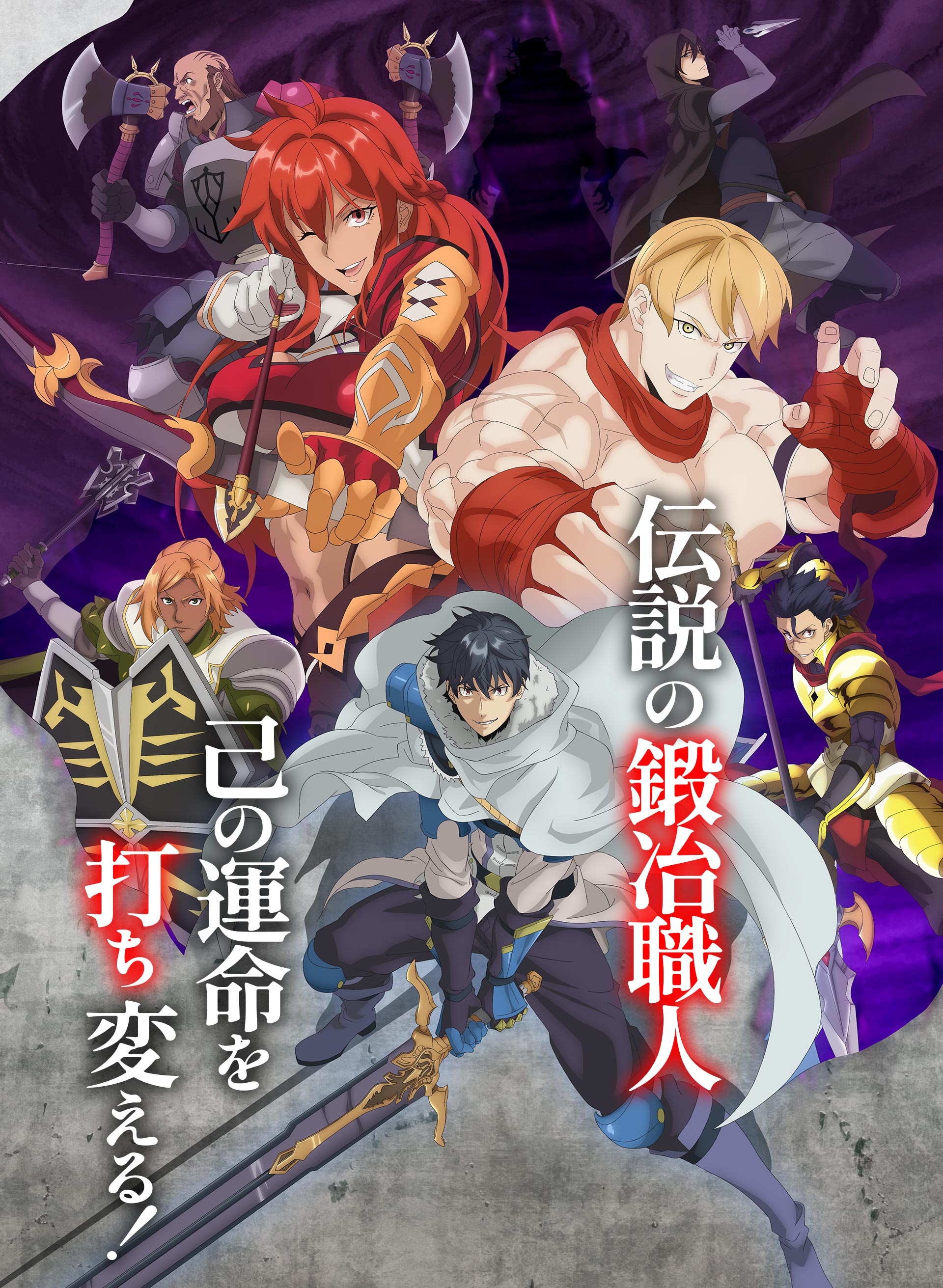
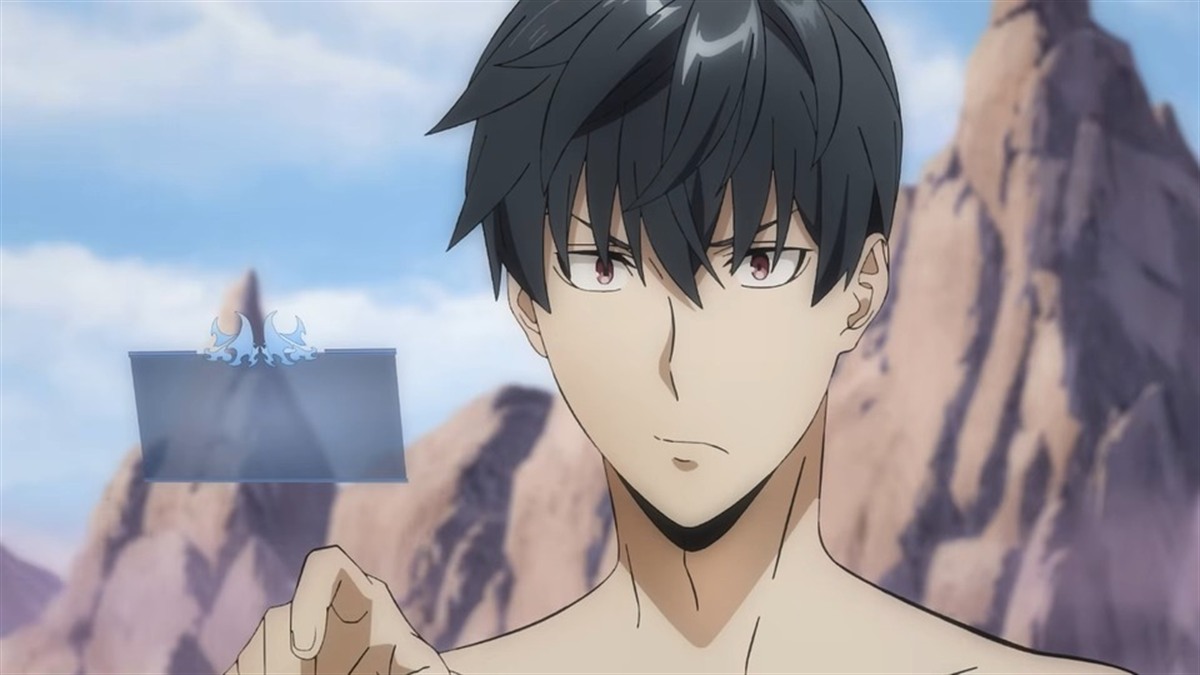
Overgeared is the clearest example of that convergence in 2026. The story follows Shin Youngwoo, a young man buried in debt who spends his days inside the virtual-reality game Satisfy under the alias Grid. His life changes when he obtains a legendary blacksmith class — but the price is steep: his levels are reset to zero, and he must rebuild the character from scratch by crafting equipment and building relationships with other players.
It is a premise that avoids the omnipotent hero. Instead of winning through brute force, Grid has to manage resources, negotiate, craft items and understand the game’s market. Progression stops being only combat and starts including craft, reputation and strategy — exactly the kind of mechanic LitRPG explores best.
The adaptation is directed by Ayako Kono (Sword Art Online the Movie: Progressive), with series composition by Kenta Ihara (Sentenced to Be a Hero), character designs by Ryosuke Tanigawa (Demon Lord 2099) and music by Yoshiaki Fujisawa (Mushoku Tensei). Tatsumaru Tachibana voices Grid, and Asami Seto plays Yura. The anime’s official Japanese site is tempal-anime.net. It premiered first on Prime Video in Japan on September 27, 2026, ahead of its October 2 TV broadcast; Crunchyroll streams the series worldwide.
The platform performance also answers a difficult year for the studio. One-Punch Man Season 3, released in October 2025 after a six-year wait, was criticized for limited animation, excessive still frames and fights that fell short of expectations. The online backlash was harsh enough that director Shinpei Nagai left X/Twitter, an episode reported by outlets such as Polygon and Screen Rant. Overgeared does not erase that history, but it gives J.C. Staff a new hit to be discussed for the right reasons.
| Rank | Title | Points |
|---|---|---|
| 1st | Overgeared | 75 |
| 2nd | Black Clover | 68 |
| 3rd | The Apothecary Diaries | 57 |
| 5th | So What’s Wrong with Getting Reborn as a Goblin? | 45 |
| 7th | The Laid-Off Cheat-Granting Mage Enjoys a Second Lease on Life | 25 |
| 8th | Full Clearing Another World Under a Goddess with Zero Believers | 25 |
| 9th | Reborn as a Space Mercenary: I Woke Up Piloting the Strongest Starship! | 17 |
Excerpt from Crunchyroll’s worldwide top 10 on FlixPatrol, November 18, 2026, as reported by FandomWire. Ranks 4, 6 and 10 were not listed in the source.
Eight works to get into the genre
The list below mixes different entry points: easy-to-binge anime, books that shaped the market and web novels that helped build the audience. It is not a definitive ranking, but a map for anyone trying to understand where the boom comes from.
| Work | Format and year | Why it matters |
|---|---|---|
| Sword Art Online | Web novel (2002), anime (2012) | Popularized the VRMMORPG and the idea of living inside a game with rigid rules. |
| Log Horizon | Light novel (2010), anime (2013) | Moved the focus from combat to politics, economics and running a game world. |
| Overlord | Light novel (2012), anime (2015) | Shows the dark side of absolute power inside a game system. |
| DanMachi | Light novel (2014), anime (2015) | Turns stats, levels and a bond with a goddess into the engine of progression. |
| Solo Leveling | Web novel (2016), webtoon (2018), anime (2024) | Proved that progression can sustain a global hit beyond the isekai lane. |
| Shangri-La Frontier | Web novel (2017), anime (2023) | Takes builds, exploits and MMO community seriously — and has fun with them. |
| Overgeared | Web novel (2014), webtoon (2020), anime (2026) | Puts crafting, trade and character rebuilding at the center of the journey. |
| Dungeon Crawler Carl | Books (2020–) | The bridge between indie LitRPG and the traditional English-language market. |
If you would rather start with anime, our list of underrated isekai anime of 2026 helps map the neighboring territory. And our analysis of why Solo Leveling became the isekai genre’s biggest problem explains how progression became a market standard — and a creative risk.
The risk of saturation and what to watch next
With so many releases using the same grammar, the obvious question is how long the boom can last. The answer depends on a simple distinction: there is a difference between a story with a system and a story about a system. In the first case, status windows are decoration; in the second, rules create dilemmas, costs and consequences. LitRPG that survives the trend treats the game as a power structure, not a visual filter.
That is where works such as Overgeared have an edge. By resetting its protagonist’s levels and forcing him to rebuild his strength through blacksmithing, the series turns the character sheet into drama. Every crafted item has value; every class choice closes doors. Progression is not just a string of power-ups, but a process with a price.
The publishing market has already learned that lesson. Publishers Weekly describes LitRPG as a genre that won readers through serialization, community and audio, while also warning about stories that boil down to grinding enemies and stacking resources. Critics use the terms grinding and farming precisely to name that wear. In anime, the equivalent is the season where nothing changes except the number on screen.
For 2027, the LitRPG label is likely to appear more and more in marketing, even when a show is just a fantasy world with attributes. That may dilute the term — and, at the same time, help audiences find what they like. Readers and viewers win when they learn to recognize the signs: clear rules, progression with consequences and a protagonist who has to make decisions rather than wait for the next level up.
How to spot a LitRPG in 30 seconds
- There is a visible system: stats, levels, classes, skills or experience appear regularly.
- Rules have weight: leveling up costs time, resources or missed opportunities.
- The protagonist plans: build, inventory, economy and skill choices matter to the outcome.
- The world reacts to the system: other characters are also shaped by classes, guilds, rankings or markets.
- Progression drives the plot: without the system, the story would not work the same way.
If the answer is yes to most of those points, you are looking at a LitRPG — or something very close. And if your entry point is Overgeared, keep an eye on the rest of the season: J.C. Staff’s performance and the audience response will tell whether the genre keeps its grip on Crunchyroll’s top spot or whether the next cycle demands reinvention. For more on the fight at the top, see how Frieren dethroned Solo Leveling in 2026 and follow the latest in anime.
With information from FandomWire, Crunchyroll, Publishers Weekly, The Verge, USA Today and The Encyclopedia of Science Fiction.
Suggested and related articles

How Japan protects anime copyright beyond its borders
Re:Zero Season 4 Episode 12 Redefines Subaru and Reveals a New Hidden Threat
Where to Watch Winter 2027 Anime: Crunchyroll, Netflix
Where to Watch Frieren in Brazil: Dubs and Subtitles
Kaiju No. 8: No Season 3, Finale Becomes 2027 Film