Release the Villains: What Is Crunchyroll's Campaign?
Published on · Updated on
Crunchyroll turns November into a month of anime villains, with six antagonists, themed collections and street activations across six cities worldwide.
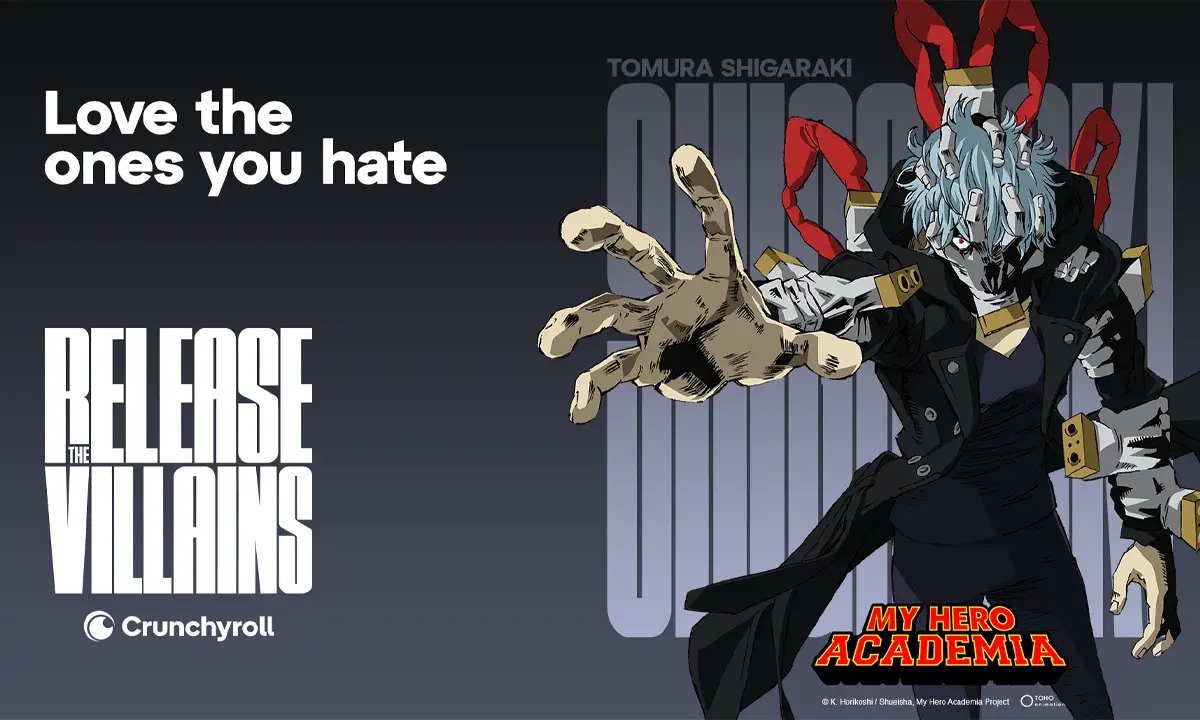
Crunchyroll has turned November 2026 into anime's month of villains. The global “Release the Villains” campaign takes over the streaming platform, its social channels and the streets of six cities between November 2 and November 30, under the tagline “Love the Ones You Hate.” Six antagonists from Attack on Titan, My Hero Academia, Tokyo Ghoul, Vinland Saga, PSYCHO-PASS and Overlord headline the push through themed collections, original content and out-of-home advertising. The stated goal is to celebrate the moral complexity that makes anime villains so memorable — and, along the way, to hand audiences a new entry point into the catalog.
What the “Release the Villains” campaign actually is
“Release the Villains” is not a new series or a single release: it is a month-long global promotional campaign. The premise is straightforward — give the antagonists the same shelf space usually reserved for heroes. In practice, that means prominent placement on the service's home page, curated collections built for the occasion, coordinated social media posts and a physical presence in major urban centers.
The rollout was organized in blocks. The first, billed as “Villain Week,” carried the opening wave and set the template for what followed: a run of character-specific features published over the following weeks on Crunchyroll's news site and official channels.
The target is not only the fan who knows every arc by heart, but the viewer who saw an ad somewhere — on a billboard, on a social feed, on the commute to work — and wants to know what it is about. It is a discovery play built around figures who are already recognizable even to people who have never watched the shows they come from.
The six villains on the roster
Crunchyroll picked six names to represent what it calls anime's greatest antagonists. The lineup mixes long-running shonen villains, strategists from historical drama and figures that work almost as case studies on power.
| Villain | Anime | What they represent |
|---|---|---|
| Tomura Shigaraki | My Hero Academia | Destruction, grievance and the urge to tear down the world that rejected him. |
| Askeladd | Vinland Saga | A charismatic strategist whose loyalties and motives resist easy definition. |
| Rize Kamishiro | Tokyo Ghoul | Allure, appetite and danger — the spark that sets the whole tragedy in motion. |
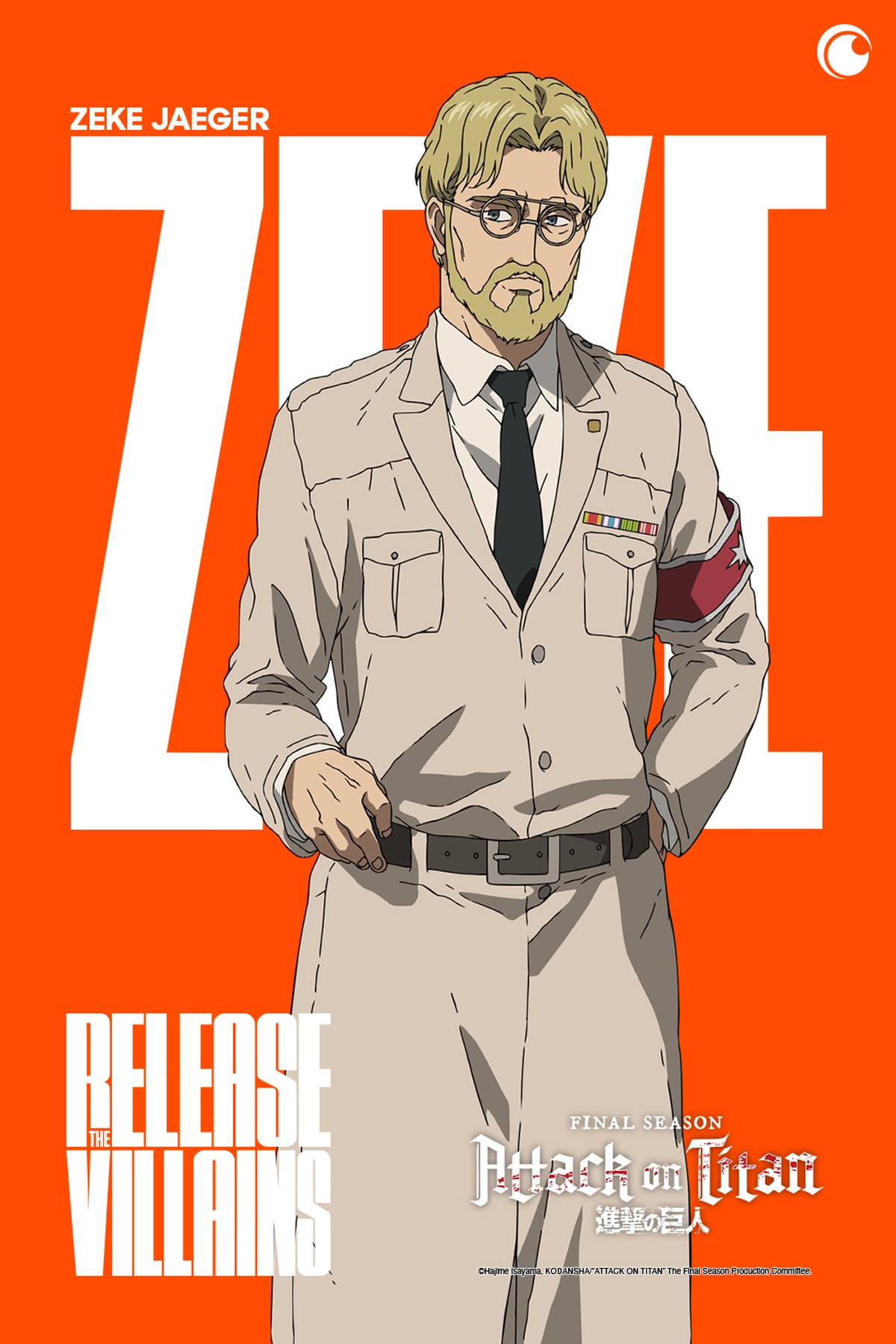
| Zeke Jaeger | Attack on Titan | Extreme convictions shaped by inherited trauma and distorted ideals. |
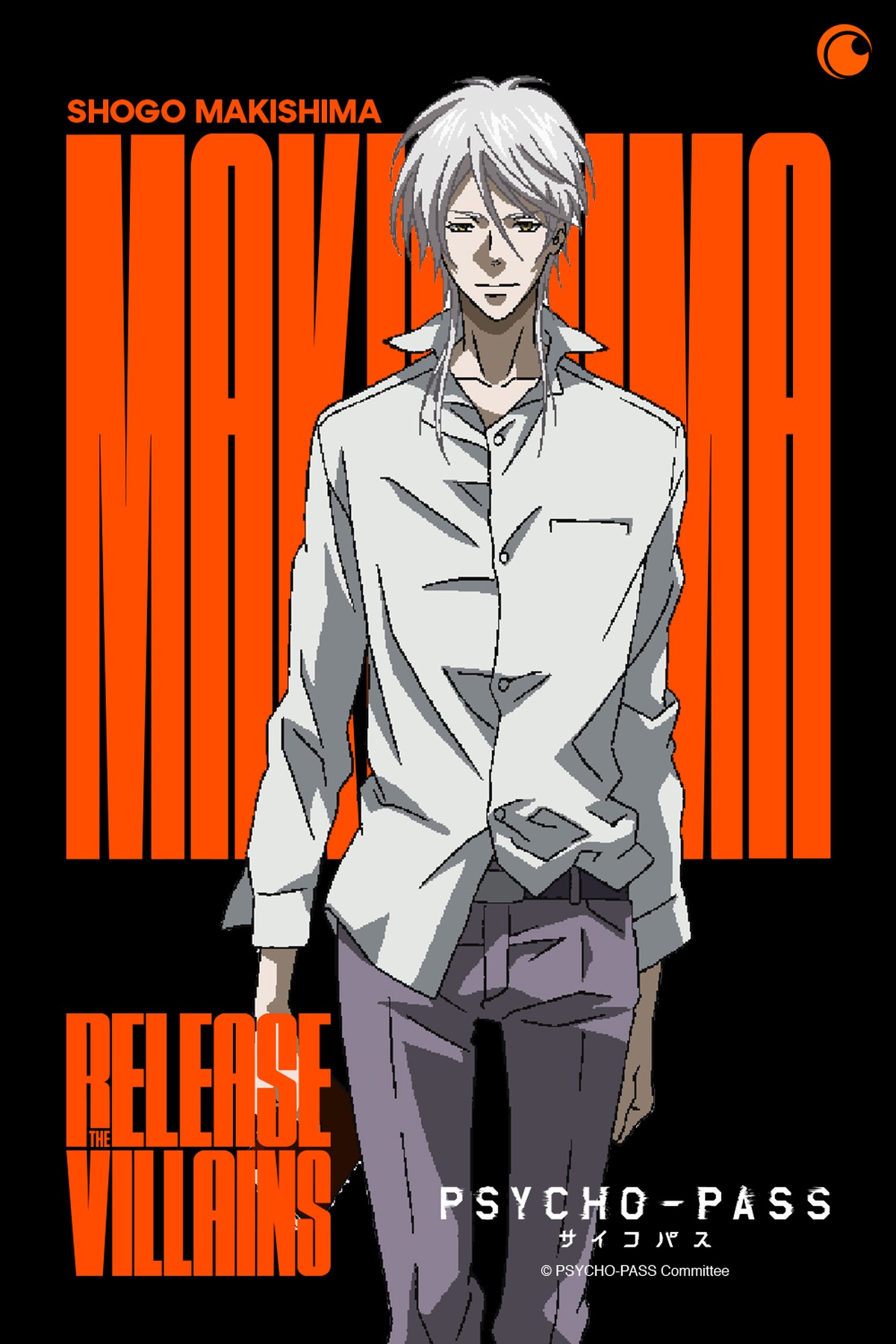
| Shogo Makishima | PSYCHO-PASS | An intellectual antagonist who exposes the flaws of a society that believes itself perfect. |
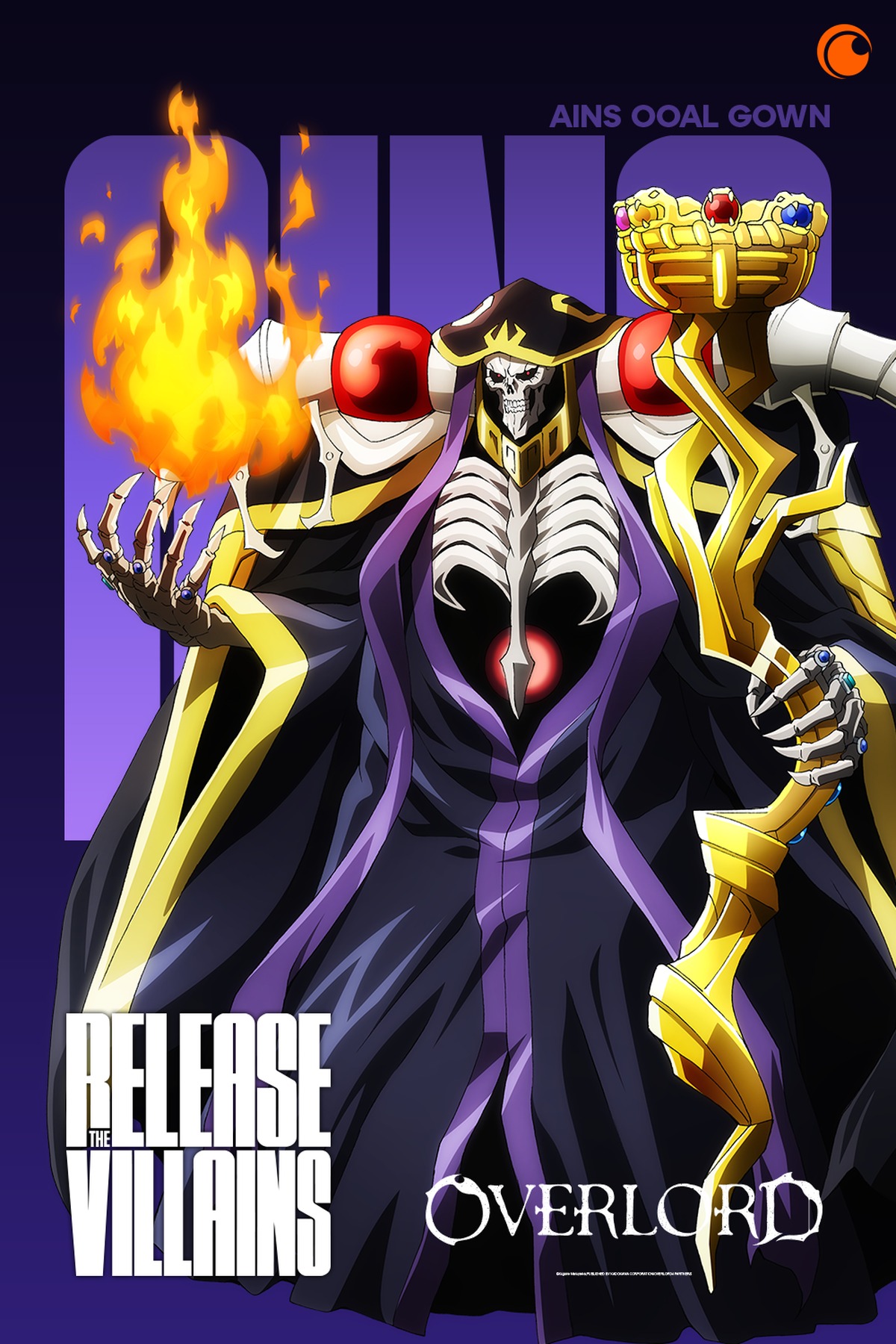
| Ainz Ooal Gown | Overlord | An imposing ruler whose grandeur borders on absurdity and charms through sheer scale. |
The selection is not random. Each name maps to a different kind of threat: Shigaraki's pure chaos, the calculated intelligence of Makishima and Askeladd, Ainz's institutional power, Rize's intimate violence and Zeke's inherited fanaticism. Together they cover much of the vocabulary anime built to talk about conflict without reducing the world to heroes and villains.
“Love the Ones You Hate”: the idea behind the campaign
The tagline sums up the pitch, but the official explanation goes further than provocation. Crunchyroll argues that anime's best villains are rarely defined by evil for its own sake. They work as dark mirrors to the protagonists: challenging their convictions, exposing uncomfortable truths about the worlds they inhabit and blurring the line between right and wrong.
“Crunchyroll's Release the Villains is about more than giving anime's bad guys their moment. It's about celebrating the extraordinary storytelling that makes anime unique, recognizing the complex relationships fans develop with its characters, and creating new ways for those stories to be discovered.”
The statement came during the campaign announcement and helps explain the positioning. Crunchyroll is not selling cheap nostalgia: it is betting that moral ambiguity is one of the main reasons adult audiences gravitated toward anime over the past two decades. Characters like Askeladd, simultaneously a ruthless antagonist and an unlikely mentor, or Makishima, who articulates political arguments while committing crimes, belong to a narrative tradition the streamer wants to turn into a brand argument.
From the app to the streets: where the campaign lives
The campaign did not stay on screen. Crunchyroll built an out-of-home and experiential operation across six cities, plus specific activations in Latin America.
- On the platform: themed villain collections, home page takeovers and curation designed to revisit classic arcs or discover new titles.
- On social media: the antagonists take over the official profiles in what the company calls a “social coup,” with posts written in the characters' voices.
- On the street: large-format digital displays and out-of-home ads in Berlin, Los Angeles, New York, Miami, Toronto and Mexico City.
- In Mexico: an invasion of Arena México, the temple of lucha libre, with anime villains crashing the world of the rudos.
- In Brazil: the campaign reached public transit, with creative placed in high-traffic spaces.
- In content: voice actor interviews, social surprises and original material produced for the campaign, plus a free trial experience.
It is a strategy of calculated saturation. While the app pushes the catalog toward existing subscribers, out-of-home and street activations try to capture people who are not customers yet. The city list is no accident: these are markets with strong anime communities, large Latin audiences, or both.
Why Crunchyroll is betting on villains now
The campaign arrives at a moment when anime is no longer a niche. Crunchyroll, run as a joint venture between Sony Pictures Entertainment and Aniplex, has consolidated its position as the main legal gateway for Western audiences and keeps expanding into original production, theatrical releases and live events. In that context, promoting iconic characters is a way to keep the catalog relevant without relying solely on the seasonal premiere cycle.
Villains are also versatile brand assets. They work in a poster, a meme, a short video and licensed merchandise. A Shigaraki plastered on a billboard catches the eye of someone who has never watched My Hero Academia; a Makishima on an airport panel invites intellectual curiosity. The campaign exploits exactly that mix of visual seduction and narrative pull.
The villain as the hero's mirror
There is a storytelling reason too. Anime has built a tradition of antagonists who carry understandable — sometimes more coherent — motives than the heroes. By putting them front and center, Crunchyroll aligns itself with an adult readership that watches anime not only for action but for moral argument. The company itself describes villains as “dark mirrors” to protagonists, a formula that sums up much of what audiences look for in shows like Attack on Titan and Vinland Saga.
What to watch during the campaign
Every anime represented in the campaign is available on Crunchyroll, alongside hundreds of other titles. For viewers who want to join in without starting from zero, some entry points work better than others:
- My Hero Academia: the most direct route to understanding Shigaraki and the logic of destruction he embodies.
- Attack on Titan: essential for Zeke and the debate over genocide and loyalty that dominates the final stretch.
- PSYCHO-PASS: a sci-fi police thriller that uses Makishima to interrogate systems of social control.
- Vinland Saga: historical drama where Askeladd steals the show and complicates any simple moral judgment.
- Tokyo Ghoul: urban horror in which Rize appears briefly and changes everything.
- Overlord: a fantasy of absolute power whose protagonist is himself a villain.
Readers who want to widen the net can browse our anime coverage, which tracks premieres, seasons and industry moves. It is also worth revisiting our list of shonen anime villains who went beyond TV limits and Crunchyroll's CCXP26 lineup announcement.
What to expect through November 30
The campaign runs through the last day of the month, with new content drops and the themed collections staying in place on the app. There is no indication that the villains are getting spinoffs or exclusive paid events: the pitch is celebration and discovery, not a product announcement.
For Brazilian audiences, the most concrete legacy is likely the curation itself. By organizing the catalog around villain affinities, Crunchyroll makes it easier for viewers to move from a show they know to another with the same narrative tension. It is a quiet but efficient way to increase time spent on the platform — and to turn a seasonal campaign into a viewing habit.
Until then, the question the campaign planted remains open: why do we like the characters we are supposed to hate so much? The answer, like the villains themselves, is rarely simple.
More details on the campaign and the catalog are available on Crunchyroll's official site. The original report was published by Get Your Comic On, with further details from Nerdist.