Lucky Luke: The Lonesome Cowboy Collection release date
Published on · Updated on
Infogrames brings six Lucky Luke classics to PS5, PS4, Xbox, Switch, Switch 2 and PC on January 13, 2027, plus an interactive frontier museum and a trailer.

Lucky Luke: The Lonesome Cowboy Collection will launch on January 13, 2027 for PlayStation 5, PlayStation 4, Xbox Series X|S, Xbox One, Nintendo Switch 2, Nintendo Switch and PC via Steam. The announcement came on November 13, 2026, from Infogrames, Atari’s publishing label, which is bundling six games starring the cowboy created by Morris in 1946 and adding a first-person interactive museum called Frontier Experience.
The package is being developed by Graphite Lab with support from Implicit Conversions, a studio known for bringing older-generation titles to current hardware. The pitch is straightforward: rescue games from the 8-, 16- and 32-bit eras that were stranded on cartridges and discs, then add modern conveniences such as save states, rewind, achievements and visual filters. In the United States, several of these titles were never sold legally, which gives the collection a preservation angle beyond simple nostalgia.
Lucky Luke: The Lonesome Cowboy Collection arrives January 13, 2027
The January 13, 2027 date was confirmed in the press release distributed by Atari and also appears on the official product page. It is a simultaneous launch across all announced platforms, with no exclusivity window and no mention of early access. Pre-orders are not yet open at every store, but listing pages are already live for players who want to add the game to a wishlist.
On Atari’s website, the digital edition is listed at $17.99, which places the collection in catalog re-release territory rather than premium-priced territory. The company has not announced pricing in other currencies, and direct conversion is not a reliable guide because local taxes and each storefront’s regional policy change the final amount.
Anyone who follows the re-release market knows these projects usually move in two steps: a date announcement, then a pre-order campaign months later with reservation bonuses. So far, Infogrames has not mentioned pre-order exclusives, a digital soundtrack or an artbook. The only confirmed extra layer is Frontier Experience, included in every version.
Which platforms will get the collection?
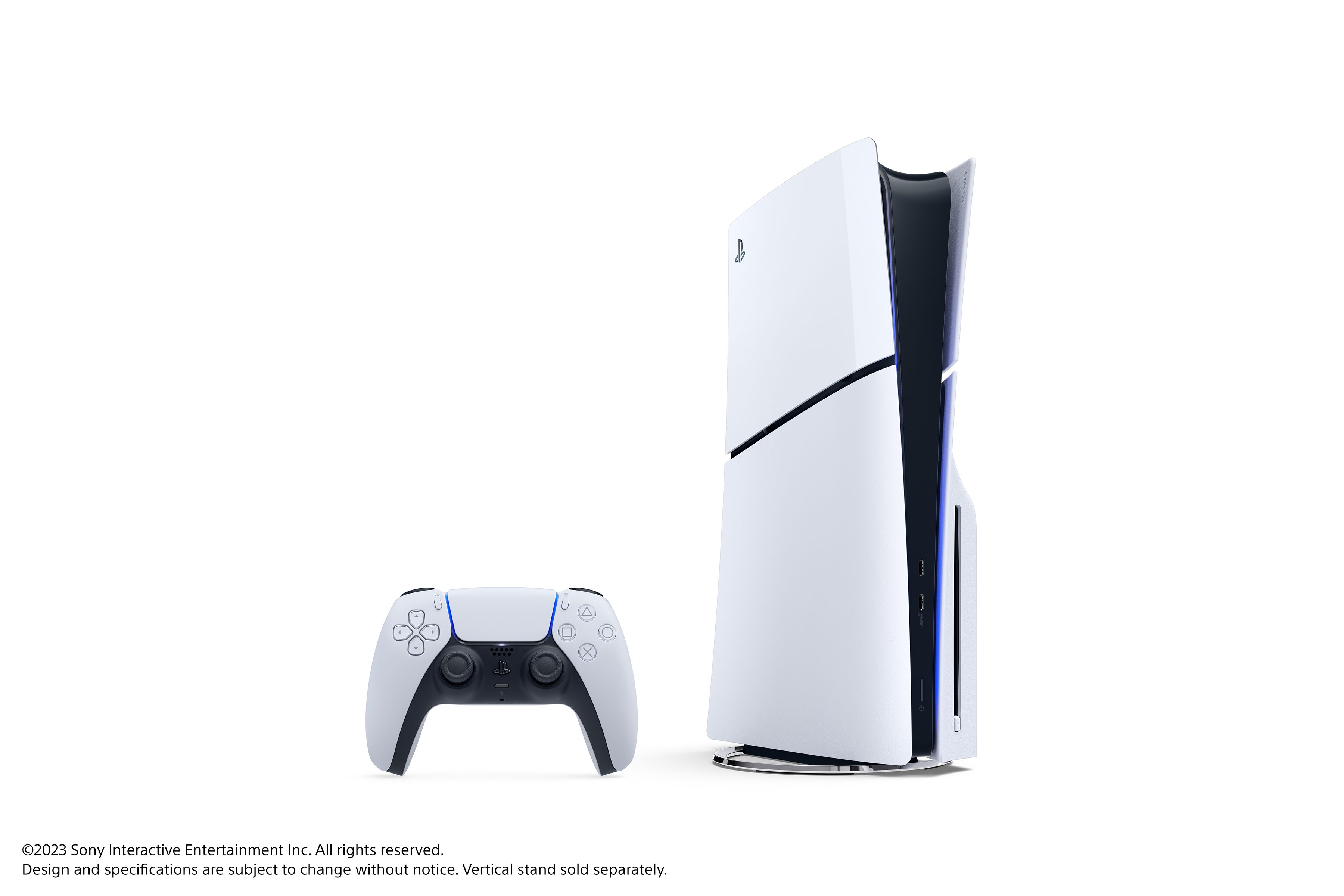
The platform list is one of the broadest among recent Atari re-releases. The company covers both current and previous Sony and Microsoft consoles, both Switch families and PC. In practice, that means the game will be available digitally through each system’s storefront, including the Switch 2 eShop, marking the collection’s debut on Nintendo’s new console.
| Platform | Status |
|---|---|
| PlayStation 5 | Confirmed |
| PlayStation 4 | Confirmed |
| Xbox Series X|S | Confirmed |
| Xbox One | Confirmed |
| Nintendo Switch 2 | Confirmed |
| Nintendo Switch | Confirmed |
| PC (Steam) | Confirmed |
Atari has not detailed technical differences between versions. There is no information on resolution, frame rate or use of features specific to Switch 2 and the more powerful consoles. Because these are 2D games from older generations, stable performance across all platforms is a reasonable expectation, but any promise along those lines still depends on official material.
Which six games are included?
The official lineup lists six titles spanning Game Boy Color, Super Nintendo, PlayStation 1 and Game Boy Advance. The press release refers to “seven titles” in one passage, but the list that follows, the product page and the official trailer all show six games. Six is therefore the count that appears consistently in the publisher’s own materials.
| Game | Original platform | Year |
|---|---|---|
| Lucky Luke | Game Boy Color | 1996 |
| Lucky Luke | Super Nintendo | 1997 |
| Lucky Luke: On the Daltons Trail | PlayStation | 1998 |
| Lucky Luke: Desperado Train | Game Boy Color | 2000 |
| Lucky Luke: Western Fever | PlayStation | 2001 |
| Lucky Luke: Wanted! | Game Boy Advance | 2001 |
Two games share the same name: the 1996 Game Boy Color cartridge and the 1997 Super Nintendo release are different adaptations, built by different teams on different graphics engines. The first is a portable platformer with short stages; the second uses 16-bit hardware for wider scenery and more elaborate animation. In the collection, they appear as separate entries with their own profiles.
Western Fever and Wanted! are the names most remembered by players in Europe. The former arrived at the tail end of the PlayStation 1 cycle and received a Platinum edition that is now a collector’s item; the latter was one of the last licensed Game Boy Advance games. The games section of O Santuário Geek keeps a database of the original releases, including the European versions that never crossed the Atlantic.
Four of the six games were never released in the United States: the 1997 Super Nintendo version, Desperado Train (Game Boy Color, 2000), Western Fever (PlayStation, 2001) and Wanted! (Game Boy Advance, 2001). Until now, players who wanted to experience them legally had to import European copies, often at high prices and with the risk of degraded media.
What changes in the 8-, 16- and 32-bit classics?
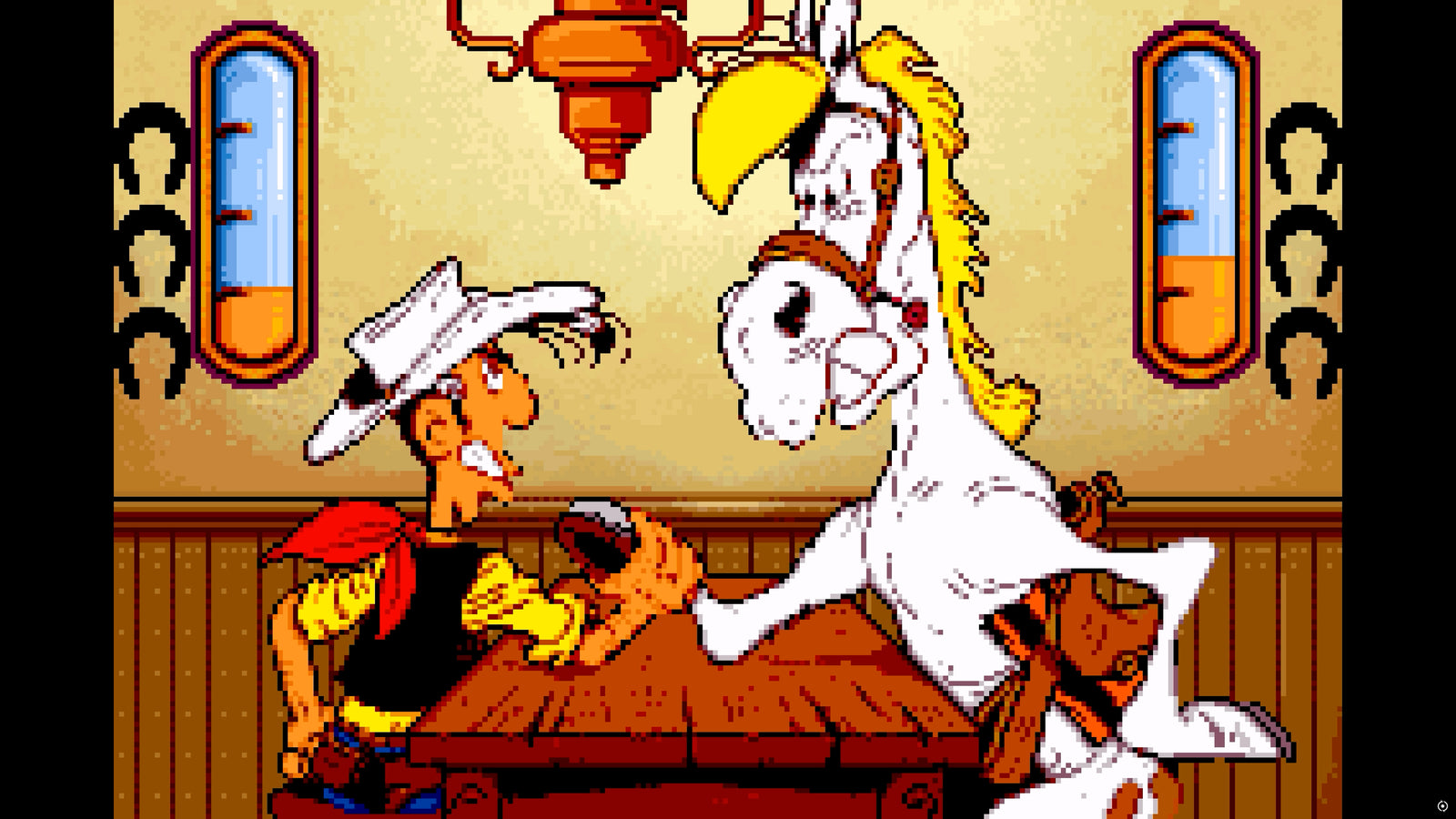
Graphite Lab is not rebuilding the games from scratch. The work is emulation with a convenience layer: the original code runs in an environment prepared to support features that did not exist at the time. Confirmed improvements include enhanced graphics, save states, rewind, achievements, visual filters, custom screen bezels and rebindable controls.
PlayStation 1 games get extra treatment: they have been up-rendered for HD screens, according to the official product description. That does not mean new models or redrawn textures, but a cleaner video output without the analog noise of the era. Anyone who has seen similar re-releases knows the difference is subtle but noticeable on large televisions.
“All the games in the collection feature modern quality of life updates, including save states, achievements, visual filters, custom screen bezels, ‘How to Play’ guides, and rebindable controls. The PlayStation era games have also been up-rendered for HD screens.”
The “How to Play” guides deserve attention because they solve an old problem with this type of re-release. Many 1990s games explained their controls only in the printed manual, which has long been lost. By embedding instructions in the game itself, the collection lowers the barrier for players who never picked up a cartridge in the series.
Achievements should also appeal to trophy and gamerscore hunters. Atari has not disclosed the full list or the total number of achievements per platform. Because each system has its own rules, the count may vary between PlayStation, Xbox and Steam, but that has not been detailed.
Frontier Experience: the interactive museum bonus
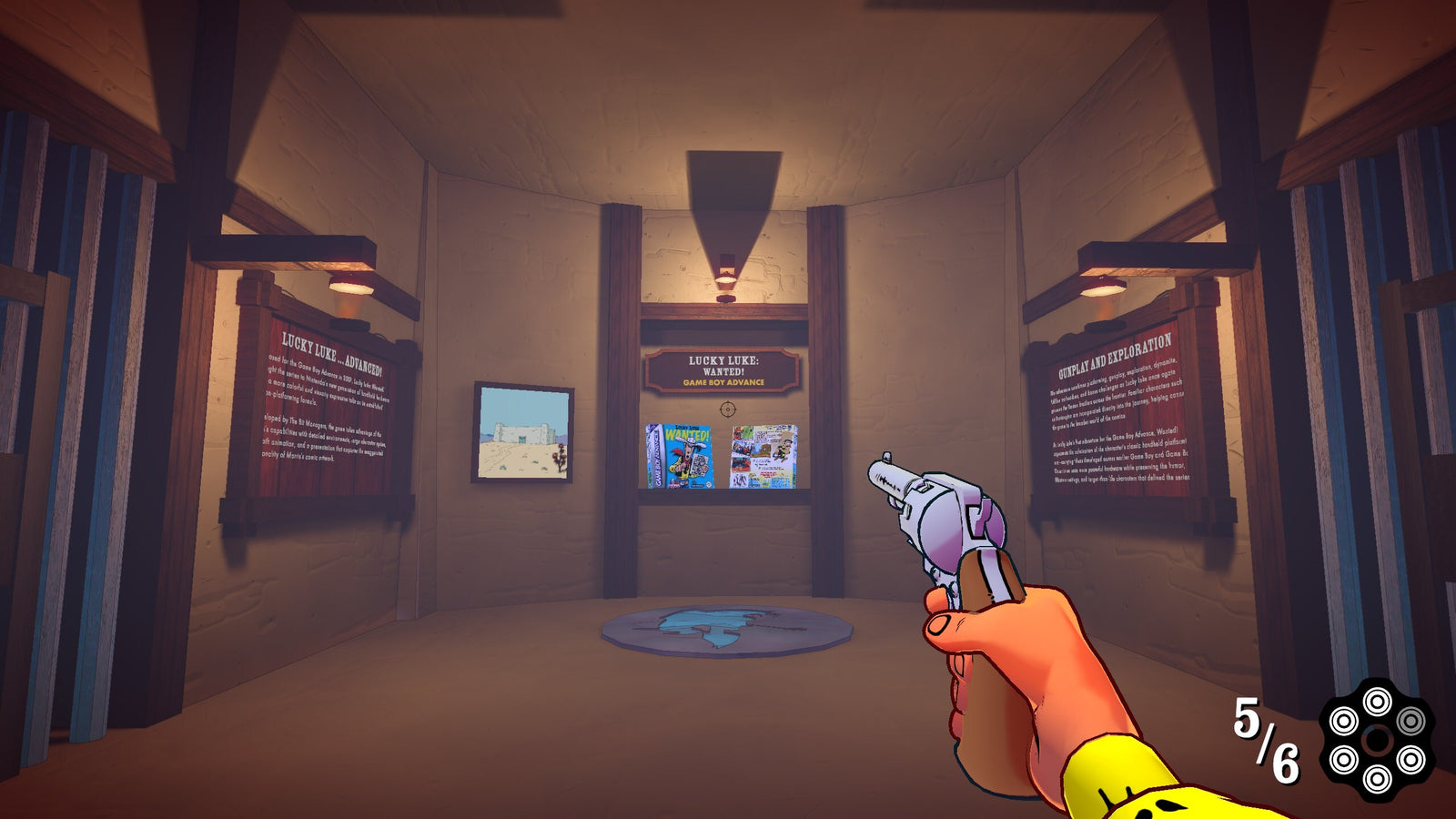
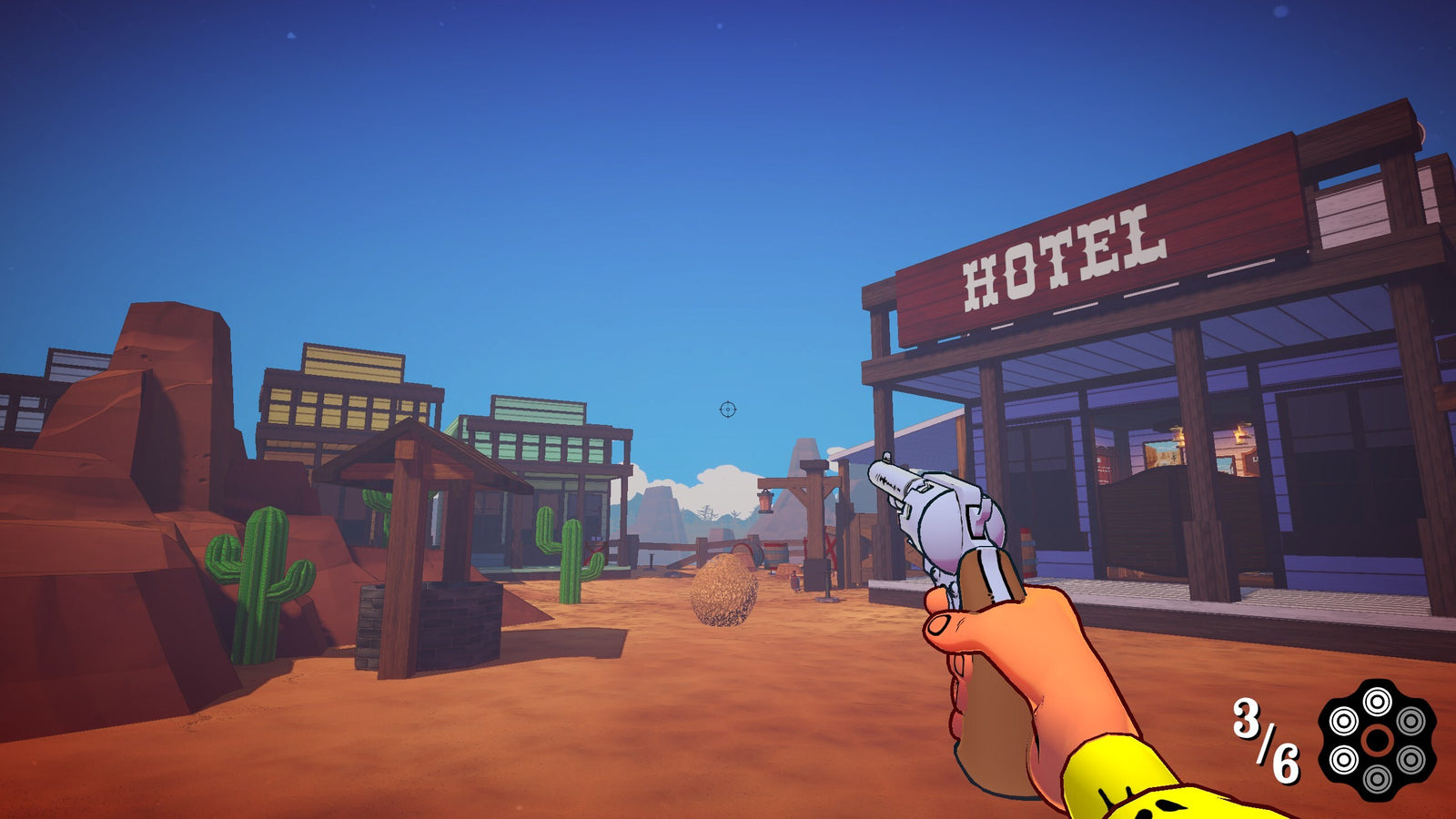
Beyond the six games, the collection includes Frontier Experience, described by the publisher as a first-person interactive museum and shooting gallery. Players walk through western locations, take part in target-shooting minigames, use dynamite to clear obstacles and search for wanted posters and other collectibles scattered around the map.
The unlockable content is the real draw: archival comic book covers, character bios and original artwork from the series. It resembles the virtual museums some recent re-releases have adopted to justify a collection’s value beyond the games themselves. The difference here is that the space also works as a game, with progression and rewards.
Released screenshots show rooms with explanatory panels, cartridges and covers on display. In one of them, a counter reads “5/6”, signaling that there is one profile for each game in the collection. It is a small detail, but it reveals the mode’s logic: explore to complete the archive and unlock trivia about how the titles were made.
Why the collection matters for game preservation
The collection’s historical value comes from what it recovers. Infogrames has a long relationship with the franchise: the publisher released several Lucky Luke titles in the late 1990s and early 2000s, including the extremely rare PlayStation Platinum edition of Western Fever. Bringing that catalog together under one label is both a commercial move and an archival rescue.
“The Lonesome Cowboy Collection reunites Infogrames with the popular western franchise. Infogrames published several Lucky Luke titles in the late 90s and early 2000’s, including the incredibly rare Playstation Platinum edition of Lucky Luke: Western Fever.”
The character is also having a moment. Created by Morris in 1946, Lucky Luke was born in Franco-Belgian comics and became one of Europe’s most recognizable cowboys, with animated series, feature films and a 2026 live-action television series. The collection arrives to capitalize on that exposure and introduce the games to an audience that may only know the character from a screen.
For readers interested in game history, the extras are the main attraction. The comic covers and character profiles work as period documents and show how the franchise was adapted to different hardware. That is the kind of content that tends to disappear once a game stops being sold.
What is still unconfirmed
Despite the volume of information, some questions remain open. Atari has not confirmed a physical edition, either in North America or elsewhere. The product page lists only “Digital Editions” and wishlist buttons for Steam, PlayStation, Xbox and Nintendo. There is also no confirmation of Brazilian Portuguese localization for menus or for Frontier Experience.
Language support for the original games is another open point. European releases of the era shipped in English, French, German, Spanish and Italian, but each version had its own quirks. The publisher has not disclosed the language matrix per platform, so it is impossible to say exactly which text will be available in each region.
Finally, there is no information on screen modes, 4:3 versus 16:9 aspect ratios, or whether filters can be turned off. The description mentions visual filters and custom bezels but does not say whether they are mandatory or optional. Those details usually surface closer to launch, alongside pre-orders.
Is it worth watching?
Yes, especially for fans of 2D platformers and preservation. Six titles for $17.99 is a competitive price, and including four games that never reached the American market gives the collection a historical-rescue appeal. Frontier Experience adds an exploration layer that goes beyond the traditional collection menu.
The release is set for January 13, 2027, on PS5, PS4, Xbox Series X|S, Xbox One, Nintendo Switch 2, Nintendo Switch and PC. Until then, keep an eye on the official pages and on our games coverage for local pricing, language support and a possible physical edition. For more news from the portal, visit the news section.
The official trailer, published on Atari’s channel on November 13, 2026, shows footage from all six games and from Frontier Experience. The full product page and store links are available at atari.com, and the PC version already has a Steam page.
Suggested and related articles

Xbox Game Pass Adds 10 New Games in August and September: Is It Worth It?
What Is a PS5 Jailbreak and What Are the Risks?

Stranger Than Heaven: release date and platforms
Genshin 7.2: Rowdy Beast Host guide and 3 medals
Genshin Impact 7.2: all 11 Snezhnaya Viewpoint locations