Roblox and Snapchat: how predators groom minors online
Published on · Updated on
Jailed for 30 years in the UK, Bilal Kazi used fake profiles on games and social apps to blackmail girls. Here is the pattern and the warning signs.
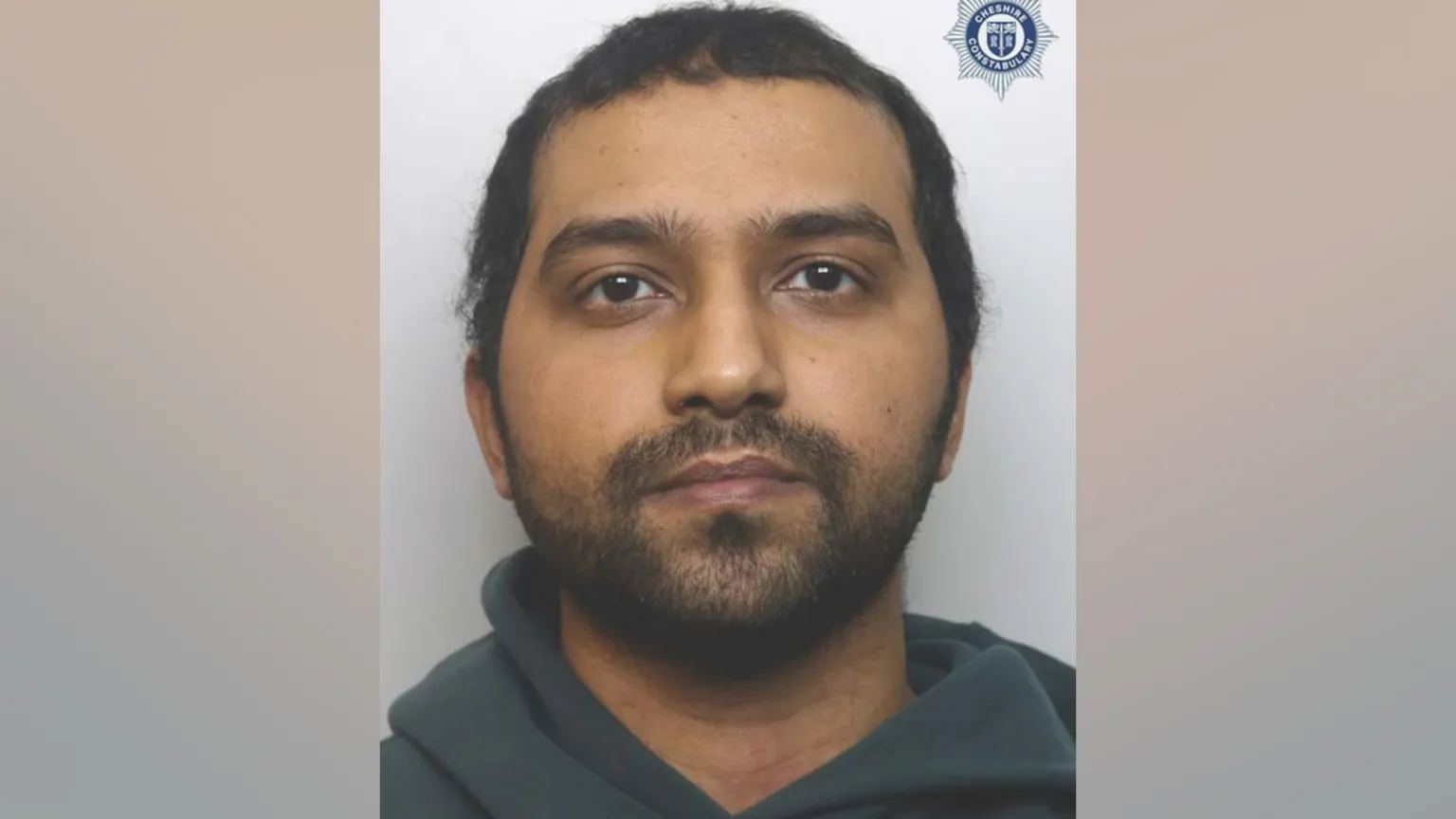
A 27-year-old Indian student has been sentenced to 30 years in prison in the UK for using fake identities on platforms including Snapchat, Roblox and Wink to approach girls aged 10 to 17, win their trust and then blackmail them with intimate images. Bilal Kazi, who was studying at the University of Chester, was sentenced on Friday, 13 November 2026, at Chester Crown Court after pleading guilty to 37 child sexual offences.
Cheshire Constabulary describes the case as the largest online child sexual abuse investigation the force has ever carried out. More than a single conviction, it exposes a playbook that repeats itself across games and social networks — and that almost always begins with a conversation that looks harmless.
What the investigation found
Kazi was born in India, moved to the UK to study and lived in Hubert Croft, Birmingham, when he was detained. According to police, he posed as “Reece”, a 14-year-old white British boy, and used photographs of an unidentified boy to make the fake profile believable. Conversations started in a friendly way, with ordinary small talk, and escalated into requests for sexual images and videos.
The investigation began in November 2021, when a teenager who had met Kazi on Snapchat at the age of 13 approached Derbyshire Police. In May 2022 the case was transferred to Cheshire Constabulary after officers established that his last known address was in Chester. Kazi left the country during the investigation and was arrested when he landed at Heathrow Airport on 21 July 2023. He was detained again in August 2025.
Using usernames and data recovered from his devices, officers identified 180 potential victims. Victim identification work established 70 girls across 28 of the UK’s 45 police forces, aged between 11 and 17 at the time of the offences, according to police. The Crown Prosecution Service (CPS) says he approached girls as young as 10. On the seized phone, investigators found more than 400 indecent images and videos; another 500 were found on devices linked to him in Birmingham, many in the most serious category. In one recovered exchange, Kazi sent around 9,000 messages to a single girl in three weeks.
He pleaded guilty to 37 charges — he had been charged with 39, with two left on file. The CPS lists 24 counts of causing a child to engage in sexual activity, six counts of blackmail and three counts of making indecent photographs. The sentence is 30 years in prison, plus eight years on extended licence. He will only be eligible for parole after 20 years and will remain on the sex offenders register for life. He was also given a Sexual Harm Prevention Order and a Restraining Order.
Victims are entitled to lifelong anonymity under UK law. For that reason, none of them is identified in this report.
| Sentence | 30 years in prison + 8 years on extended licence |
| Minimum before parole | 20 years |
| Charges admitted | 37 (of 39 charges) |
| Victims identified | 70 |
| Potential victims | 180 |
| Police forces involved | 28 of the UK’s 45 |
| Platforms cited | Snapchat, Roblox and Wink (Wizz also appears in accounts of the case) |
The grooming playbook, step by step
The investigation describes a consistent method, repeated with dozens of girls over four years. Child protection specialists say recognising this playbook is the main defence for families who cannot follow every conversation their children have.
1. A believable fake profile
The first step is building a credible persona: an age close to the victim’s, an ordinary appearance, someone else’s photos and an easy-to-remember name. In Kazi’s case, the character “Reece” claimed to be a 14-year-old British teenager. The detail matters: the offender does not introduce himself as an adult or make explicit proposals at first. He disguises himself as a peer.
2. The approach inside a game
Games such as Roblox work as a gateway because they bring children together in text and voice chat spaces. Contact starts in a match, a server or a public chat, with ordinary small talk: an in-game item, a question about a level, an invitation to play again. The platform is the pretext, not the goal.
3. The fake relationship
The conversation moves to messaging apps — in this case Snapchat and Wink, with Wizz also mentioned in accounts of the case. The relationship is built with compliments, constant attention and affectionate language. Many victims believed they were in their first romantic relationship, which makes them less likely to become suspicious or tell their parents.
4. The escalating requests for images
The next step is turning emotional intimacy into content. Requests for photos “to prove love” or “because every couple does it” grow in frequency and in degree of exposure. The child is persuaded that the behaviour is normal, rather than that she is being manipulated.
5. The blackmail
When the victim tries to step back, extortion begins. Kazi threatened to share the material with friends and family and, in some cases, hacked accounts and published the content. One victim reported that a video was viewed by 93 people, according to the CPS.
6. Isolation and shame
The threat of exposure produces silence. Children fear their family’s reaction, losing their phone and being judged by classmates, so they comply to avoid the worst. That is what happened in several of the investigated cases: the crime only came to light because one teenager’s mother found the messages on her phone and called the police.
Why games and social apps became a risk zone
Roblox, Snapchat, Discord and similar apps are not unsafe in themselves. The problem lies in a combination of three factors: easy access to private conversations with strangers, features that make tracing harder — such as disappearing messages and disposable accounts — and the mistaken belief that games are pure entertainment, with no contact from strangers.
Movement between platforms is central to the method. First contact may happen inside the game; the serious conversation, however, is moved to a messaging app, where there is less supervision and more tools for ephemeral sharing. To an outsider, each app looks isolated; to an offender, it is a single funnel.
Age verification is another weak point. Many services rely on users declaring their own age, and accounts with false ages keep circulating. That does not mean all platforms are the same or that they lack safety tools: it means privacy settings need to be reviewed regularly, not only on the day an app is installed.
Warning signs families can watch for
No single sign proves that a child is being groomed. What should draw attention is a change in behaviour and several indications appearing at the same time.
- Hiding the screen when an adult approaches, or deleting chats frequently.
- Becoming anxious, irritable or frightened after using the phone.
- Receiving messages late at night or from contacts they do not know.
- Using headphones and speaking quietly during voice-chat matches.
- Fearing the loss of the device, or reacting disproportionately to questions about online friends.
- Mentioning an online “boyfriend” or “girlfriend” who never appears on a video call.
- Receiving gifts, virtual currency or in-game items from strangers.
- Installing apps that promise “private” or “secret” conversations outside their usual networks.
What to do if a child is a victim
The guidance from authorities and child protection organisations is to act quickly, but without turning the victim into the accused. The first step is support, not interrogation.
- Do not blame the child. Reinforce that responsibility lies with the person who committed the crime, not with the child who sent an image.
- Preserve the evidence. Keep usernames, profile links, messages and threats. Do not delete the conversations before recording the material.
- Do not forward the images. Sharing sexual content involving minors, even to report it, may constitute another crime and increases the victim’s exposure.
- Stop the contact. Do not negotiate with the offender or encourage the child to answer demands.
- Report it on the platforms. Use reporting tools for grooming, threats and inappropriate contact.
- Contact the police. In the UK, call 999 if a child is in immediate danger. In Brazil, reports can be filed through Disque 100 and cybercrime channels.
- Seek psychological support. The impact described by victims in this case includes anxiety, panic attacks and long-term trauma.
What the authorities said
“There is a misconception that online offences have less impact on victims than crimes committed in person, but that could not be further from the truth. The girls targeted by Kazi were young and vulnerable. For many, their interactions with him were their first experience of what they believed to be a romantic relationship. Exploiting that trust, Kazi manipulated them into believing that his behaviour was normal.”
“Bilal Kazi acted with absolute ruthlessness in grooming, manipulating and exploiting a large number of young vulnerable girls. He posed as a teenage boy in order to attract and gain the trust of his victims and caused many to think that they were in a genuine relationship with him.”
Judge Steven Everett called Kazi “a sexual predator who preyed on girls” and said the court would never know how many victims fell prey to him.
A warning that goes beyond one case
The scale of the case is its most disturbing element. Of the 180 potential victims identified from seized devices, 70 were traced; the rest remain unidentified. That means part of the harm is still invisible today, even with the offender behind bars.
Kazi was already a registered sex offender and was subject to a Sexual Risk Order when he committed some of the offences, according to the CPS. The detail shows that monitoring measures fail when behaviour moves into the digital environment and spreads across multiple apps.
For families, the practical lesson is less about banning apps and more about staying involved. Frequent conversations, without an interrogating tone, about who their online friends are and what happens in chats tend to work better than silent surveillance. It also helps to explain early that intimate images sent to anyone can be copied, saved and used as blackmail currency.
Readers who want more context on the platforms involved can check our coverage of what the Roblox stock downgrade means for players and follow the Roblox and Games sections.
This report was based on official statements from Cheshire Constabulary and the Crown Prosecution Service (CPS), as well as reporting by BBC News and other UK and Indian outlets.
Suggested and related articles
Search For The Needle Codes in Roblox Grant Free Gems and Alien Chests to Speed Up Your Frantic Haystack Search

The Game Awards 2026: date, time and how to watch

Star Platinum in Stand Out: how to get Jotaro's chip

Roblox brings Build AI to Thailand and courts creators

Roblox The Hollow: Scary Shawarma Kiosk quest guide