GTA 6 on Xbox Series X vs Series S: which is worth it?
Published on · Updated on
Digital Foundry tested GTA 6 on Series X and Series S: 1440p vs 720p, 30fps with frequent drops and a 210GB install. See which Xbox is worth buying.
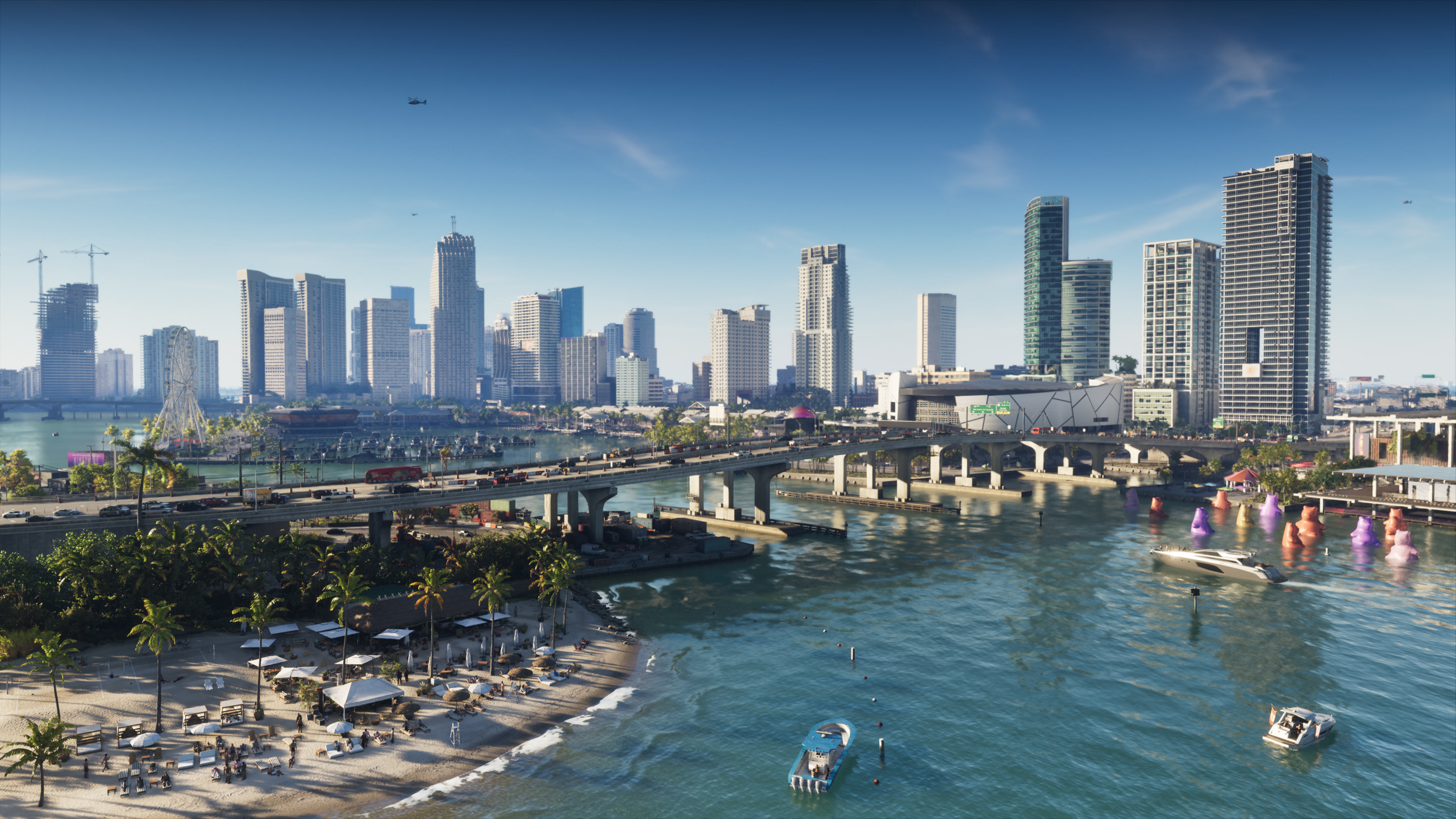
Grand Theft Auto 6 arrived this Thursday (November 19) on Xbox Series X and Xbox Series S with the same 30 frames-per-second target — and with a difference that matters at checkout: the Series X renders at 1440p and upscales the image to 4K, while the Series S starts at 720p and outputs 1080p. Digital Foundry's technical analysis, published by Oliver Mackenzie on the eve of launch, covered more than 100 hours of play across all four console versions and concluded that the pricier machine holds its frame-rate better, but that the cheaper one preserves the essence of Leonida. The decision is not only about pixels: it involves a 210GB install, hardware prices in a market where Xbox stock is scarce, and what each box offers beyond the game.
What changes between the two Xbox consoles
Both consoles run the same game, with the same content and the same campaign. The difference lies in how Rockstar spends each machine's hardware budget. The Series X has three times the GPU power, 16GB of memory against the Series S's 10GB, and twice the storage on the standard model. The Series S, in turn, relies on a temporal upscaler — AMD's FSR 4 — to make up for its lower internal resolution.
| Model | GPU / memory | Internal resolution | Output | Frame-rate | US list price |
|---|---|---|---|---|---|
| Xbox Series S (512GB) | 4 TFLOPS / 10GB | 720p with FSR 4 | ~1080p | 30fps, dropping to 20–25fps | $499.99 |
| Xbox Series X (1TB) | 12 TFLOPS / 16GB | 1440p with TAA | 4K | 30fps, with occasional drops | $749.99 (digital) / $799.99 (disc) |
It is worth spelling out what the table does not show: neither console has a 60fps mode, and Rockstar offers no menu to switch frame-rate. The studio explained its 30fps choice before launch, and it applies to every platform, including the PS5 Pro. Anyone waiting for a performance mode will have to follow future updates — and, for now, none have been announced.
Resolution and performance: 1440p against 720p
According to Digital Foundry, the PS5, PS5 Pro and Xbox Series X all run GTA 6 at 2560x1440, with no immediate signs of dynamic resolution. On the Series X, the image is upscaled to 4K using Rockstar's own temporal anti-aliasing (TAA) — not FSR. The result is a softer image, without the detail boost a more sophisticated temporal upscaler provides. The Series S is the outlier: it renders at 720p and uses FSR 4 to reach roughly 1080p. According to the outlet, it is the first Xbox game to use the final version of AMD's upscaler.
In practice, the fourfold difference in pixel count shows at the edges. In still images, the Series S surprises: character models remain detailed and ray-traced global illumination is intact. In motion, aliasing becomes more visible on fences, grates and rooftops, and the image loses sharpness during camera turns. It is the kind of difference that almost disappears on a 40-inch TV and jumps out on a large HDR panel.
The 30fps are not the same on both consoles
The Series X hits the target most of the time. Digital Foundry describes dips into the 20s during chases, explosions and combat in crowded areas, with worst cases in the low 20s. Even so, the verdict is positive: the game "looks and plays well" on Microsoft's most powerful console, with the caveat that the image is softer than on the PS5 Pro.
On the Series S, the problem is consistency. The console offers the "loosest 30fps lock" of the four platforms, according to the analysis, with large portions of the game running between 25 and 30fps. In dense combat, the rate sits in the mid-20s for extended periods; with a grenade launcher destroying vehicles, it can touch the high teens. Digital Foundry is blunt in calling the Series S the hardest version to recommend.
"Series S offers the loosest 30fps lock, with large portions of the game playing out at frame-rates from the mid to high 20s. The other consoles do a credible job of hitting 30fps, but Series S often lies in a 25-30fps no-man's-land."
It helps to understand where the limit comes from. At 30fps, each frame has about 33 milliseconds to be ready. Simulating a city with traffic, pedestrians and physics demands CPU time, and the Series S has the most modest processor of this generation. An upscaler relieves the GPU, not the CPU — which is why lower resolution does not translate into smoothness. Digital Foundry also measured around 180ms of end-to-end camera latency on the Series X, including a wireless controller and about 10ms of display latency, in line with Red Dead Redemption 2.
VRR: an advantage that applies to both Xbox consoles
One detail separates the Xbox family from the PlayStation versions and does not appear in a resolution table: both Microsoft consoles can run GTA 6 inside a 120Hz VRR container, an operating-system feature that smooths frame presentation. It is not a 120fps mode — the game stays at 30fps — but variable refresh with low-frame-rate compensation reduces the perception of stutter when the rate fluctuates.
On the PS5, according to Digital Foundry, there is no 120Hz option, and system-level VRR only operates above 48fps, without low-frame-rate compensation. In a game locked to 30fps, that does practically nothing. For anyone with a compatible TV, the Series X and Series S have an edge on this specific point, even though the Series S struggles more to hold the target.
What the Series S keeps and what it loses
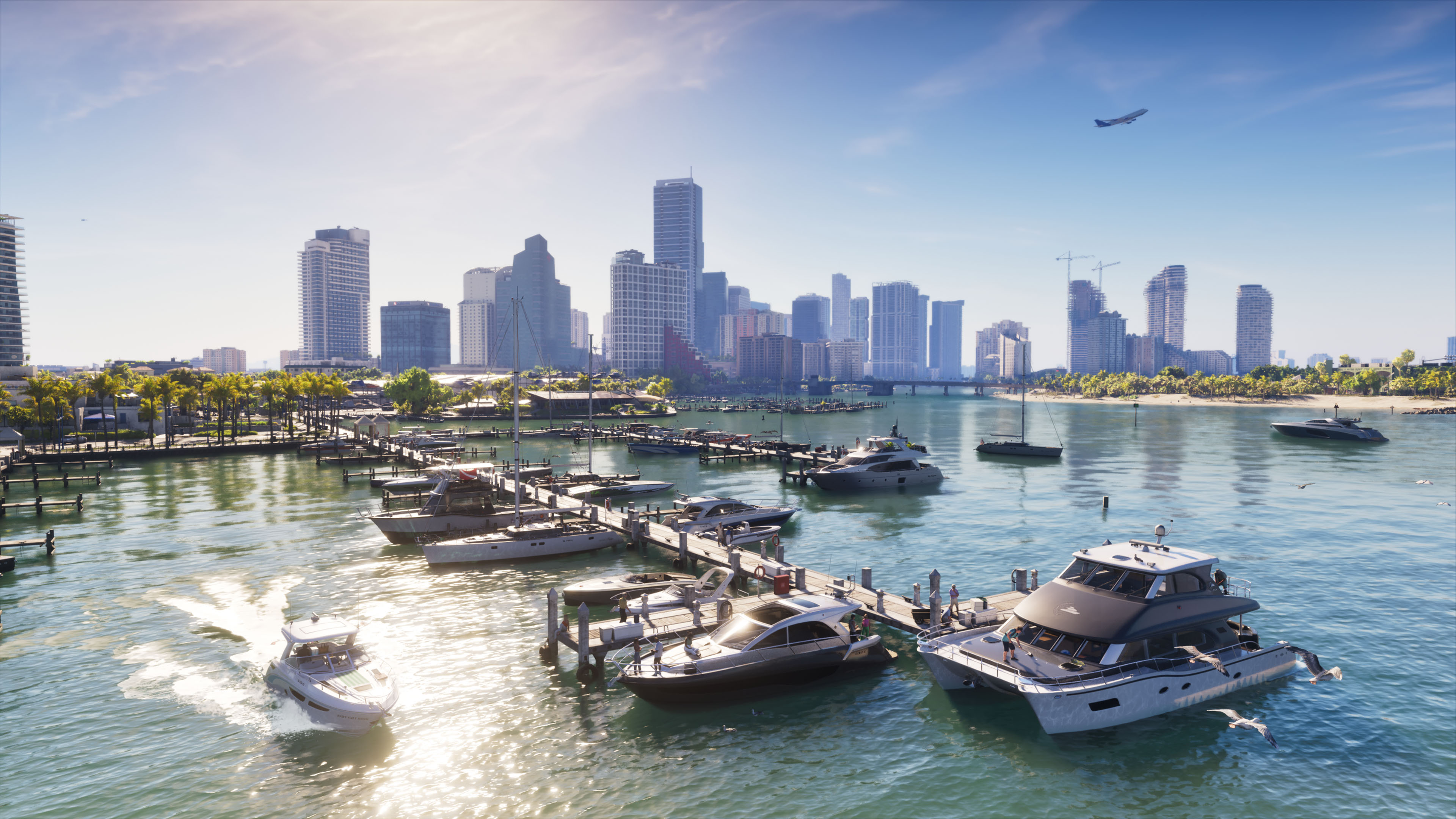
The Series S version is more complete than one might expect from an entry-level console. Digital Foundry confirms that the game keeps ray-traced global illumination and reflections, strand-based hair and the same scale of Leonida. The CPU and SSD are the same as the Series X, which preserves simulation density and loading times. No reduced map, no cut missions.
The losses are in the finishing touches. Lighting is lower precision, ray-traced reflections are softer and sometimes miss detail, and shadows use lower-resolution shadow maps, with self-shadows absent in some cutscenes. The list also includes more visible pop-in at high speed, blurrier textures at oblique angles, lower-resolution volumetric clouds, flatter water, less defined hair and facial hair, and simpler depth of field.
Neither Xbox has ray-traced shadows — that is a PS5 Pro exclusive. The only meaningful image setting is motion blur, which defaults to 3 out of 10 and can be lowered for clarity or raised for smoother motion. Rockstar also said it had identified an issue that made vignetting stronger than intended.
Storage: 210GB weighs more on the Series S
GTA 6 is a big game in every sense. Figures circulated during preload point to an install of roughly 210GB on Xbox — the number that made the rounds was 209.86GB. On a 1TB Series X, which offers about 802GB free for games, that is just over a quarter of the drive. On a 512GB Series S, with around 364GB usable, the game takes up almost 58% of the storage.
The problem is that Series X|S optimized games cannot run from a USB external drive. You can store the game outside the internal SSD, but you have to move it back to play — or buy an official expansion card. For anyone with a 512GB Series S holding Fortnite, Call of Duty and a football game, the math simply does not work without deleting something. The 1TB Series S solves the squeeze, but costs $599.99 in the United States, narrowing the gap to the 1TB digital Series X ($749.99).
There is also a common confusion worth clearing up: the physical GTA 6 box contains no disc, only a download code. That means the Series S, which has no disc drive, plays the retail edition without any workaround — and the Series X disc drive does not install the game any faster. The download is the same in both cases.
Price: what the difference buys — and the Brazilian problem
In the United States, after the global price increase that took effect on August 1, 2026, the 512GB Series S costs $499.99 and the 1TB digital Series X costs $749.99. That is $250 more, or 50%, in exchange for three times the GPU, 6GB of extra memory, double the storage, 4K output and a much sharper image. The game costs the same on both consoles: R$449.90 for the standard edition in Brazil.
In Brazil, the math is more complicated. Microsoft stopped selling Xbox Series consoles officially in the country in February 2025, and what remains at retail is leftover stock or imports. The last suggested prices, from 2023, were R$3,599 for the 512GB Series S and R$4,499 for the 1TB Series X with a disc drive — figures that now serve only as a reference, because the market charges premiums that vary from store to store and week to week. Those looking for the Series X tend to find fewer units and proportionally higher prices, which flips the American logic: the more powerful console can cost well above the official 50% difference.
For comparison, Digital Foundry's analysis of the PlayStation versions is in our PS5 vs Xbox Series X comparison, and the cost-benefit angle between the most expensive and the cheapest console appears in PS5 Pro vs Series S. If the doubt is between the two Xbox consoles, the decision comes down to three questions: how big your TV is, how much free space you have on the SSD, and how much you are willing to pay for extra stability.
Verdict: who each console is for
Stick with the Series S if…
- You play on a TV or monitor up to 43 inches at 1080p and do not plan to change screens soon;
- Budget is the deciding factor and the Series X premium in the Brazilian market exceeds 50%;
- You accept frame-rate drops in combat and chases in exchange for playing the same GTA 6, with the same map and campaign;
- You already own a Series S: there is no reason to change consoles just for GTA 6.
Go for the Series X if…
- Your TV is 4K with good HDR — that is where the gap between 720p and 1440p truly shows;
- Drops to 25fps bother you and you want the most stable version in the Xbox family;
- You need space: 1TB against 512GB matters with a 210GB game;
- You plan to use the disc drive for other games, even though GTA 6 does not ship on physical media.
The point the comparison demolishes is the idea that the Series S is a "broken" experience. It is not. The game keeps its distinctive look, the density of Leonida and the main lighting effects. The difference shows in smoothness and sharpness, and that is exactly where the Series X's extra money is justified — or not, depending on your screen and your budget. The launch frame-rate issues, by the way, already have a history of their own: we gathered the reports of bugs and FPS drops in the first hours.
What could still change
Neither version is expected to get a 60fps mode in the short term. Rockstar has not announced a performance patch, and the studio's technical explanation practically closes that door on current consoles. In an interview with IGN, development head Rob Nelson was direct about what it would take to double the frame-rate:
"A lot, a lot. It would not have been acceptable to anyone. The simple answer is: when you ask the technical team, they say 'have you seen the game?'. There would be too many compromises to achieve that."
What can change is perception. Updates usually fix specific smoothness issues, and Digital Foundry noted that the game's heaviest areas have not been measured in depth. There is also no date for the PC version, which is where the frame-rate debate really gets resolved, with graphics options and variable hardware. Until then, the choice between Series X and Series S is a matter of screen, SSD and budget — not content.
To follow the next technical analyses and game updates, keep up with our GTA 6 coverage on O Santuário Geek. The sources for this article are Digital Foundry's technical analysis, Xbox's price update and Rockstar's Newswire.