Eminence in MTG: how the command zone ability works
Published on · Updated on
Eminence lets a commander generate value straight from the command zone without being cast. Here are the rules, all eight commanders and the debate.
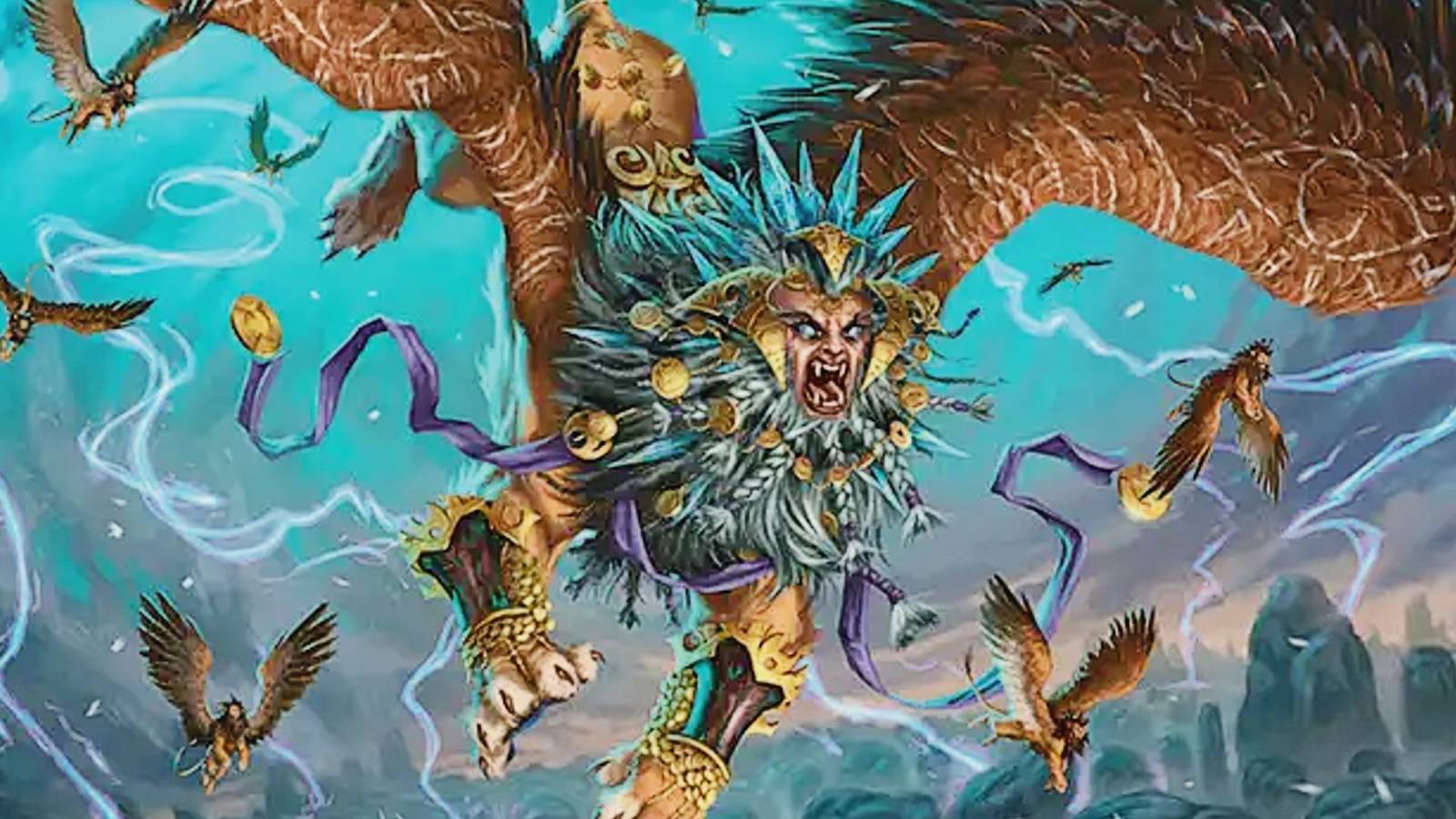
Eminence is the ability word that lets a Magic: The Gathering commander influence the game without ever leaving the command zone. Created for the Commander 2017 line, released on August 25 of that year, it now appears on seven printed cards — Edgar Markov, Inalla, Arahbo, The Ur-Dragon, Sidar Jabari of Zhalfir, The Ur-Sphinx and Sahir, Visitor in Darkness — and it has a precursor that predates the name: Oloro, Ageless Ascetic, from 2013. The mechanic's return in 2026, with a nine-mana Sphinx and a wizard that damages its own controller, revived the question that has split the community since the first season: does it make sense to get value "for free" from a zone no opponent can attack? This guide explains the rules, lists the eight commanders and shows where the controversy comes from.
What Eminence actually is
Eminence is not a keyword, and that is the first confusion that shows up at tables. It is an ability word — the italicized term followed by an em dash that Wizards uses to group abilities that work the same way. It has no rules of its own: it is not like flying, trample or haste, which carry a built-in effect. What Eminence does is written on each card, and the label exists so players can recognize the pattern.
The pattern is always the same: an ability that works only if that card is in the command zone or on the battlefield. On Edgar Markov, for example, the text reads "Eminence — Whenever you cast another Vampire spell, if Edgar is in the command zone or on the battlefield, create a 1/1 black Vampire creature token." On The Ur-Dragon, Eminence is static: as long as the Dragon is in one of those two zones, other Dragon spells you cast cost {1} less. The Ur-Sphinx repeats the logic for Sphinxes.
The key point is that the ability does not require the commander to be cast. It is available from turn one, with no commander tax, no mana, no trip through the stack as a creature and no chance for an opponent to remove the source. You do not "activate" Eminence: it simply exists while the card sits in the command zone. That is why the mechanic is described as value from the "safe zone" — and that is exactly where the debate starts.
The Commander 2017 line was designed by Gavin Verhey, who later became Magic's principal game designer. The original idea was to solve a real problem in the format: tribal strategies require players to commit many creatures to the battlefield, and a single board wipe can dismantle the entire plan. Eminence would provide a safety net, a continuous effect that survives the cleanup. It worked — perhaps too well.
The rules that actually matter at the table
Players who arrive in the format because of a leak or a video often memorize the effect and ignore the conditions. But Eminence is one of the most zone-sensitive abilities in the game, and a few details change entire matches.
The command zone counts; the cost does not
Commander tax is only charged when you cast the creature from the command zone. Because Eminence works without casting, the tax is irrelevant to it: even if Edgar Markov costs ten mana after several removals, the effect keeps producing tokens for free. Likewise, there is no way to "respond" to the commander's presence in the command zone, because it is not a permanent and cannot be targeted by removal, discard or counterspells.
Leave the zone and the ability turns off
The condition is literal: command zone or battlefield. If the commander goes to the graveyard, exile, hand or library, Eminence stops working until it returns to one of the two valid zones. On triggered abilities, the check happens twice — when the trigger fires and when it resolves. Edgar Markov's official rulings make this explicit: if he is on the battlefield or in the command zone when you cast another Vampire but leaves that zone before resolution, the ability "won't do anything". An object that changes zones is considered a new object.
It does not have to be your commander
Few players notice, but the "on the battlefield" clause also applies to copies. An Edgar Markov that is not your commander — copied, reanimated or put onto the battlefield by another effect — still creates tokens when you cast Vampires, because the battlefield condition is satisfied. The command zone clause only matters for the card that actually starts the game there.
Eminence is not a "commander ability"
The mechanic does not create a special category of ability. It is an ordinary ability that mentions the command zone. Effects that interact with "commander" do not automatically interact with Eminence, and effects that silence creature abilities on the battlefield do not reach the version sitting in the command zone. To fight it, opponents have to attack what the ability produces, not the source.
The eight commanders that use Eminence
Seven cards have the word Eminence printed on them. The eighth, Oloro, Ageless Ascetic, works the same way but was printed in 2013, before the mechanic had a name. In practice, eight commanders can generate value without being cast.
| Commander | Release | Tribe | What Eminence does |
|---|---|---|---|
| Edgar Markov | Commander 2017 | Vampires | Creates a 1/1 Vampire token for each Vampire spell cast. |
| Inalla, Archmage Ritualist | Commander 2017 | Wizards | May pay {1} to copy each nontoken Wizard that enters, with haste. |
| Arahbo, Roar of the World | Commander 2017 | Cats | Gives another Cat +3/+3 at the beginning of combat. |
| The Ur-Dragon | Commander 2017 | Dragons | Reduces the cost of other Dragon spells by {1}. |
| Sidar Jabari of Zhalfir | March of the Machine Commander (2023) | Knights | Draws and discards a card when attacking with Knights. |
| The Ur-Sphinx | Reality Fracture Commander (2026) | Sphinxes | Reduces the cost of other Sphinx spells by {1}. |
| Sahir, Visitor in Darkness | Mystery Booster Commander Edition (2026) | Wizards | Deals 1 damage to you on your upkeep — Eminence with a drawback. |
| Oloro, Ageless Ascetic | Commander 2013 | Giant | Gains 2 life on your upkeep if in the command zone. The keywordless precursor. |
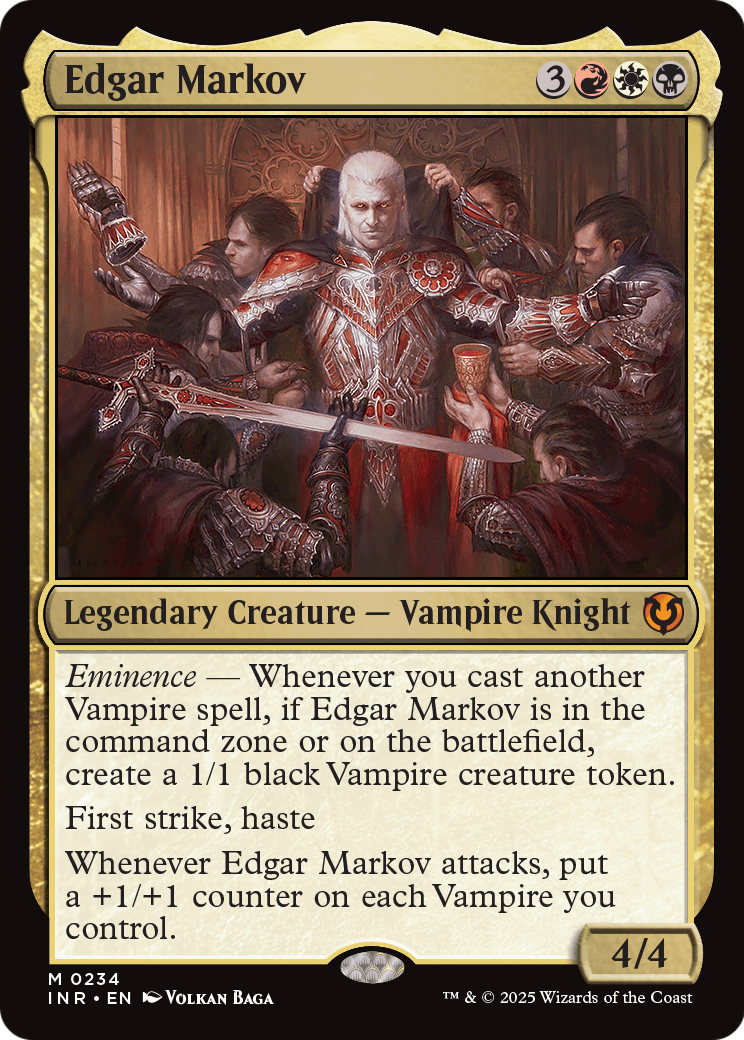 Edgar Markov (Photo: Courtesy of Wizards of the Coast)
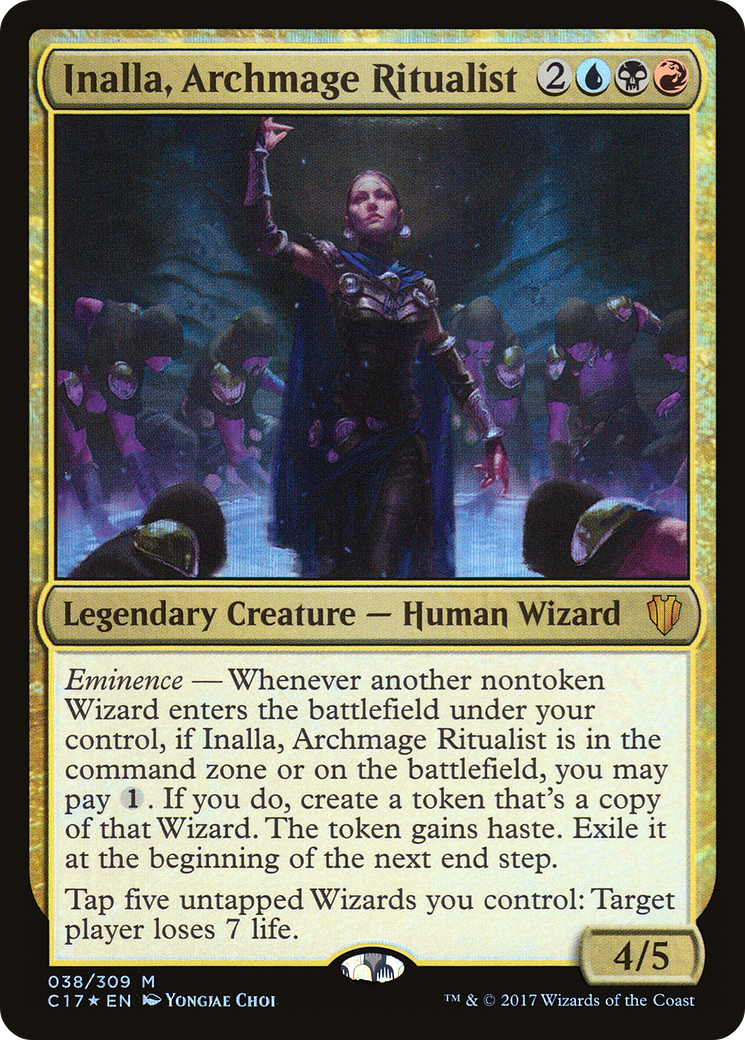 Inalla (Photo: Courtesy of Wizards of the Coast)
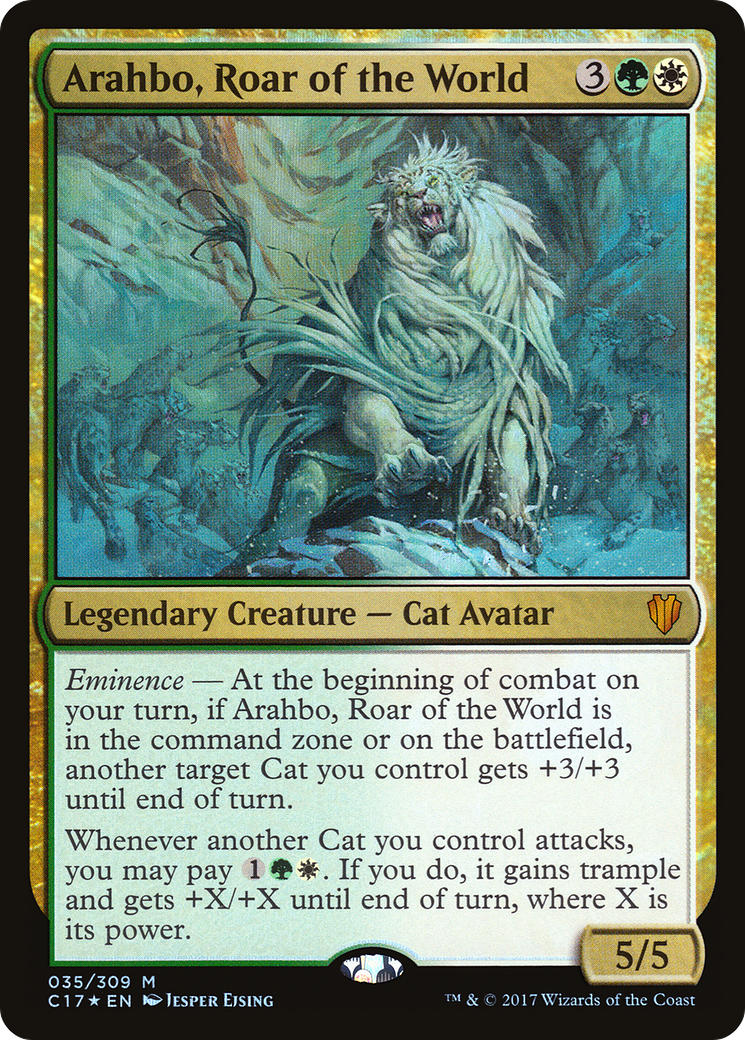 Arahbo (Photo: Courtesy of Wizards of the Coast)
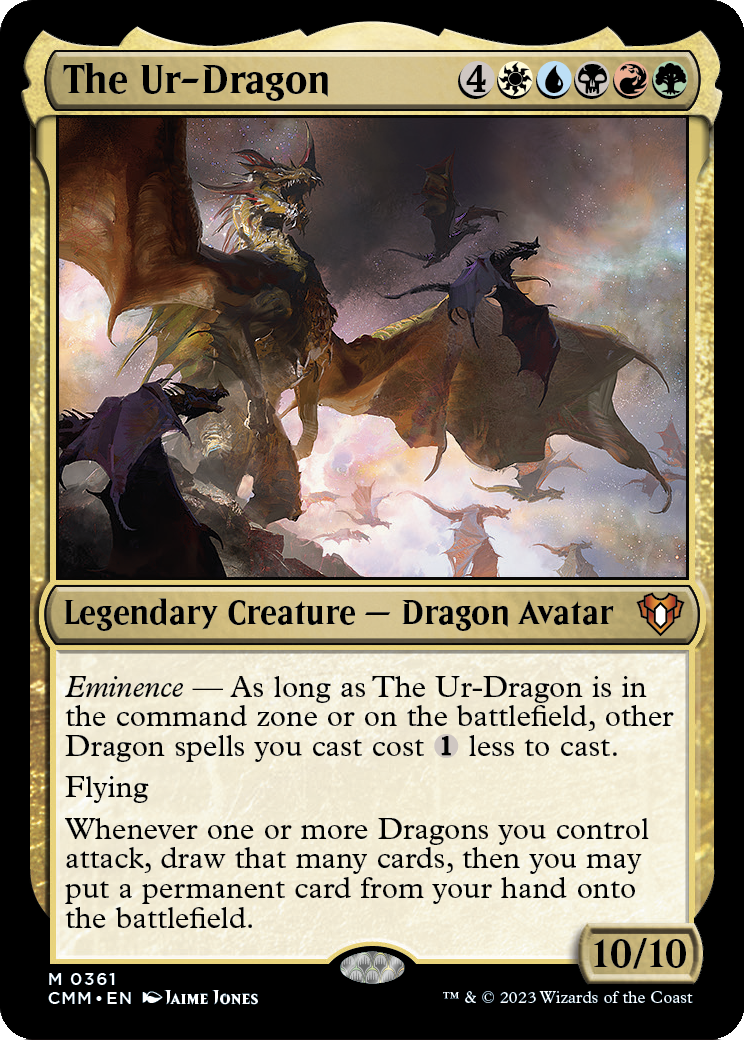 The Ur-Dragon (Photo: Courtesy of Wizards of the Coast)
The two that became synonyms for the problem
Edgar Markov and The Ur-Dragon are the names that come up in any discussion about Eminence, and it is no coincidence. Edgar turns every Vampire spell into two creatures: the one you paid for and the free token. Since Vampires are already one of the densest tribes in the game, the commander never needs to enter the battlefield to build an army. The Ur-Dragon does something quieter but equally cumulative: a permanent {1} discount on Dragons, an expensive tribe by definition, which converts into mana advantage every turn. According to TheGamer, the Dragon is the second most popular commander of all time.
The result is a specific feeling of helplessness. The opponent looks at the command zone, sees the game engine running and has no target to remove. They can kill the creatures, wipe the board and counter the spells — the commander is still there, generating value next turn.
The ones that prove the mechanic is not the problem
Arahbo and Sidar Jabari are usually cited as counterarguments. Arahbo gives +3/+3 to a Cat, but requires another Cat already on the battlefield to receive the bonus; Sidar Jabari merely filters cards when attacking with Knights, without generating net card advantage. Neither dominates tables the way Edgar and Ur-Dragon do. For Verhey, that suggests the issue is not Eminence itself but the combination of the chosen tribe and the rate of value it delivers.
The precursor: Oloro
Oloro, Ageless Ascetic was printed in Commander 2013 with an ability that worked from the command zone — "at the beginning of your upkeep, if Oloro is in the command zone, you gain 2 life" — years before Wizards named the pattern. The card is remembered as the experiment that proved you could design a commander that acts without being cast. When the company decided to turn the idea into a mechanic for an entire product line in 2017, the precedent was already on the table.
Why Eminence sparks so much debate
The controversy is not about raw power in a vacuum. It is about the kind of experience the mechanic creates. The arguments fall into five categories.
- Uninteractable value. The command zone is the only place in the game an opponent cannot touch. All of Magic's interaction — removal, discard, counterspells, exile — assumes the threat is accessible. Eminence bypasses that assumption.
- Snowball effect. Edgar does not deliver one token; he delivers one token per Vampire. The longer the game goes, the wider the gap, and the commander never needs to be cast for that to happen.
- Reward out of proportion to the deckbuilding cost. Anyone playing Vampires was already going to play Vampires. Eminence does not demand an exotic build; it improves the plan the player would follow anyway.
- Homogenization and design space. Tribal commanders with Eminence tend to push every list toward the same structure. At the same time, Wizards has to choose tribes carefully: the stronger the tribe, the more dangerous the effect.
- Social perception and Rule 0. At casual tables, the pregame conversation has become part of the game. Edgar and Ur-Dragon decks are often treated as higher-level threats, and many playgroups agree on informal restrictions to keep the balance.
The mechanic's own creator has publicly acknowledged the problem. In a January 2025 broadcast, Gavin Verhey summed up the experience with a rhetorical question:
"What could go wrong? As it turns out, giving you something extra for free from the Command Zone: very powerful. In most cases, too powerful."
On another occasion, he was more direct: Eminence is something Wizards wants to use "sparingly". The next line, repeated in interviews and videos throughout 2026, explains the criterion: if the mechanic returned, it would be for creature types far less powerful than Vampires and Dragons. The example he gave in conversation was "elephants".
2026: sphinxes, self-sabotage and a shark
After Sidar Jabari in 2023, Eminence sat unused for three years. It returned twice in 2026, and both cards say a lot about how Wizards intends to use the mechanic going forward.
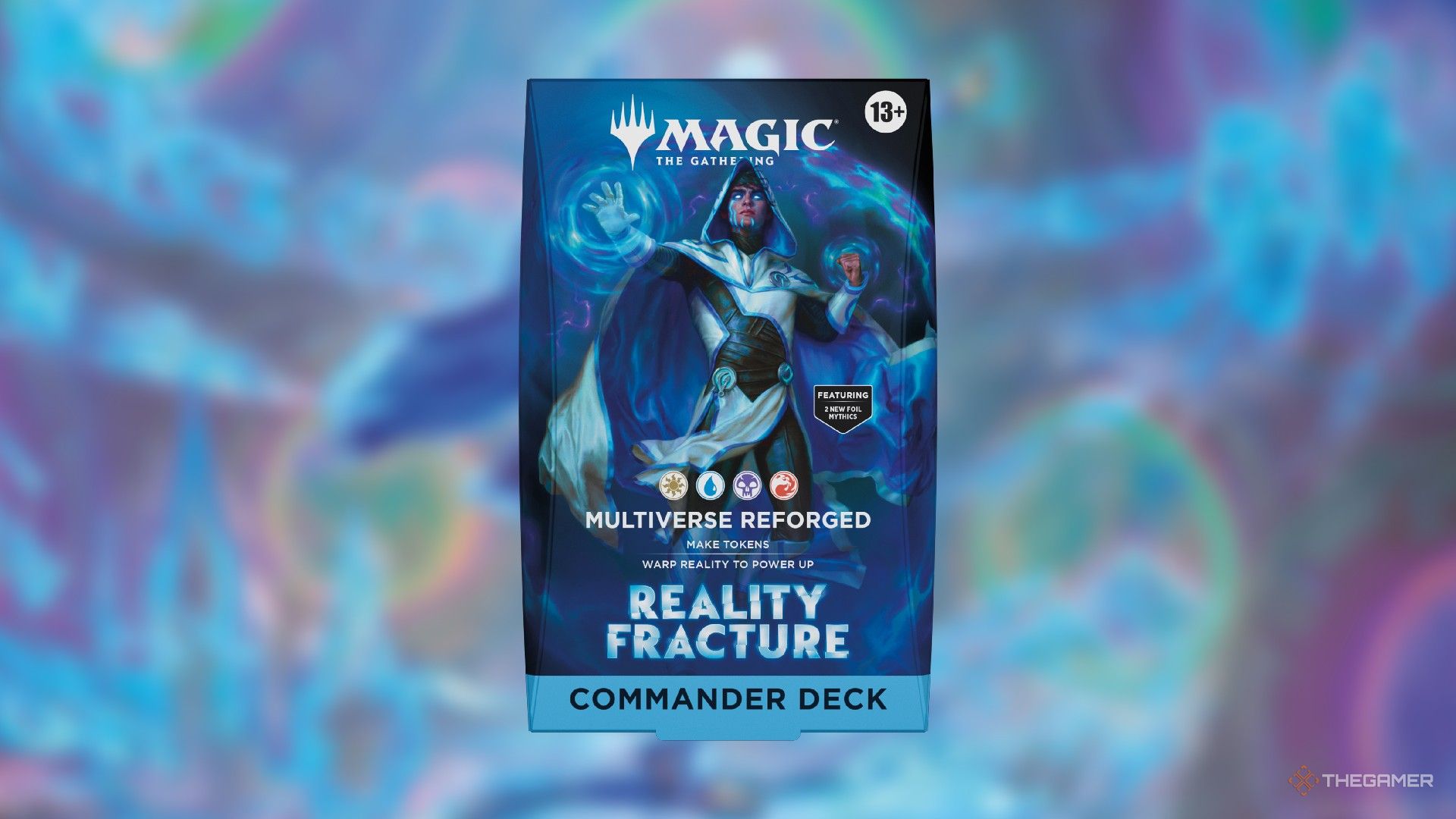
The Ur-Sphinx arrived in Reality Fracture Commander on October 2, 2026, as a mirror of The Ur-Dragon for Sphinxes. It costs nine mana — {6}{W}{U}{B} —, is a 10/10 flier and reduces the cost of other Sphinx spells by {1} while it is in the command zone or on the battlefield. When it attacks with Sphinxes, each player mills that many cards, and you may cast a card milled this way from each player without paying its mana cost. It is an aggressive Eminence, applied to a tribe historically less efficient than Dragons.
Sahir, Visitor in Darkness arrived in Mystery Booster Commander Edition on October 19, 2026, and proposes the opposite: an Eminence that hurts its owner. At the beginning of your upkeep, Sahir deals 1 damage to you while it is in the command zone or on the battlefield. In exchange, every source you control that deals exactly 1 damage to you, or every spell that causes you to lose exactly 1 life, puts a +1/+1 counter on it; the second time in a turn, you draw a card. It is a commander built around controlled self-harm rather than free value.
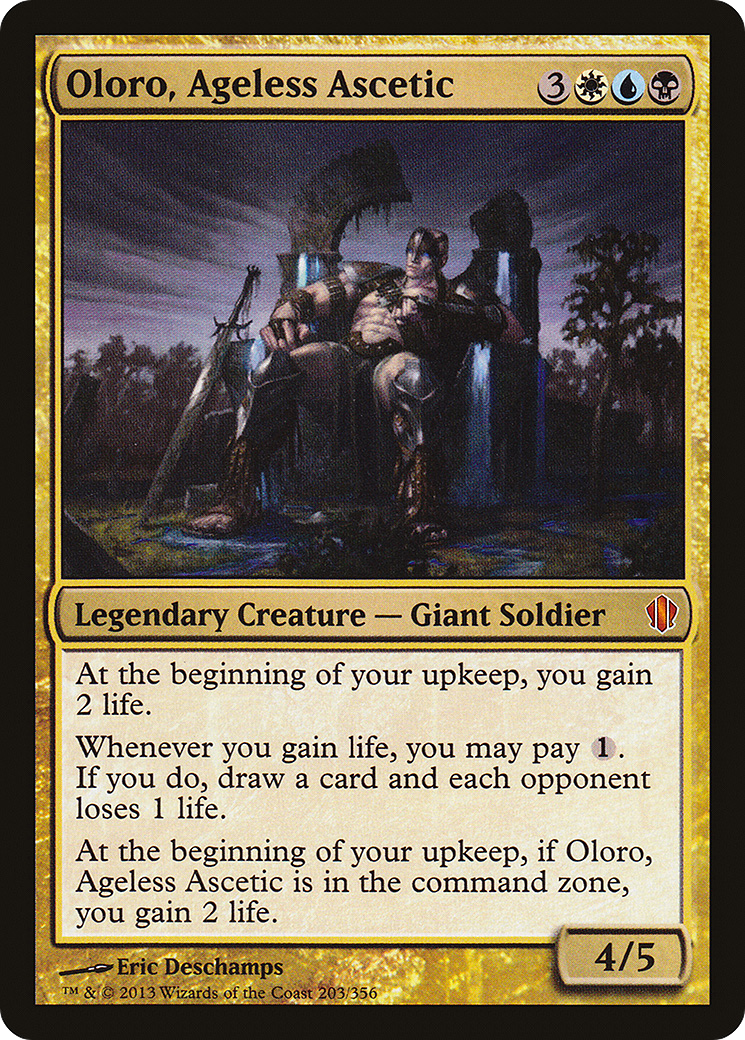 Oloro (Photo: Courtesy of Wizards of the Coast)
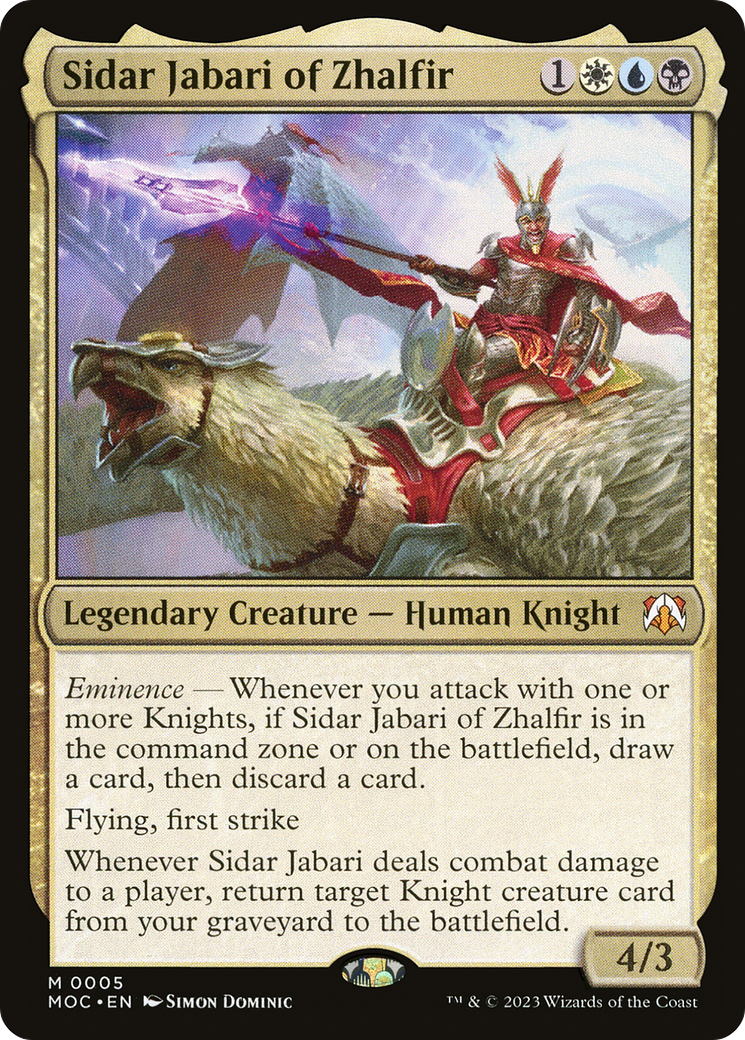 Sidar Jabari (Photo: Courtesy of Wizards of the Coast)
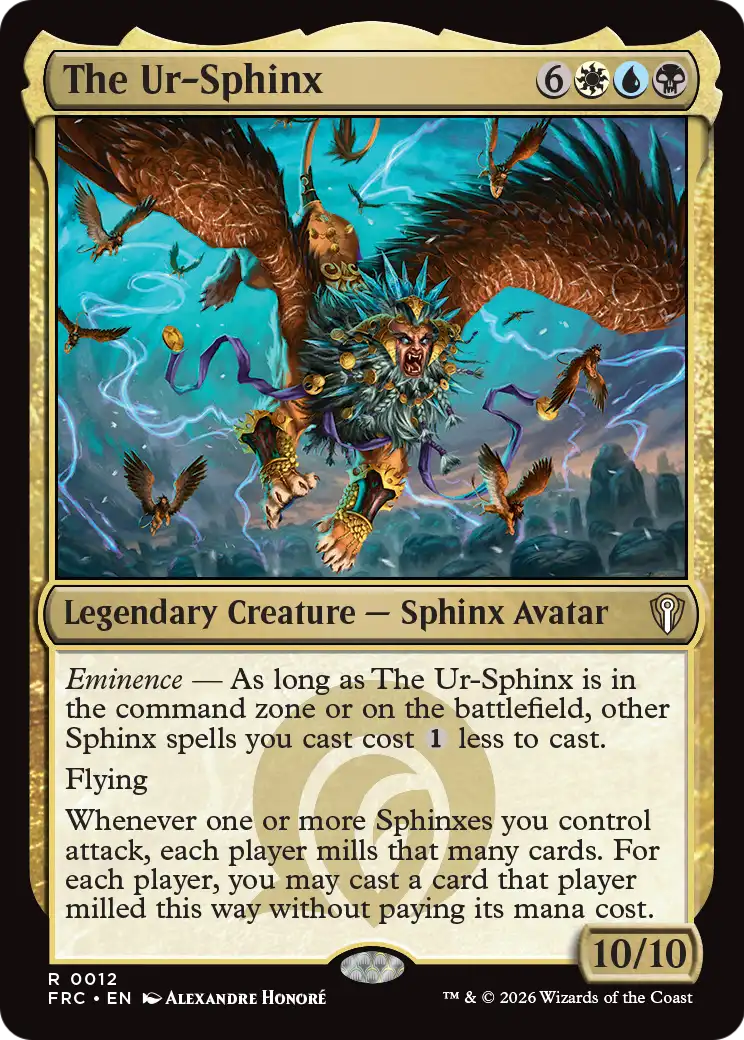 The Ur-Sphinx (Photo: Courtesy of Wizards of the Coast)
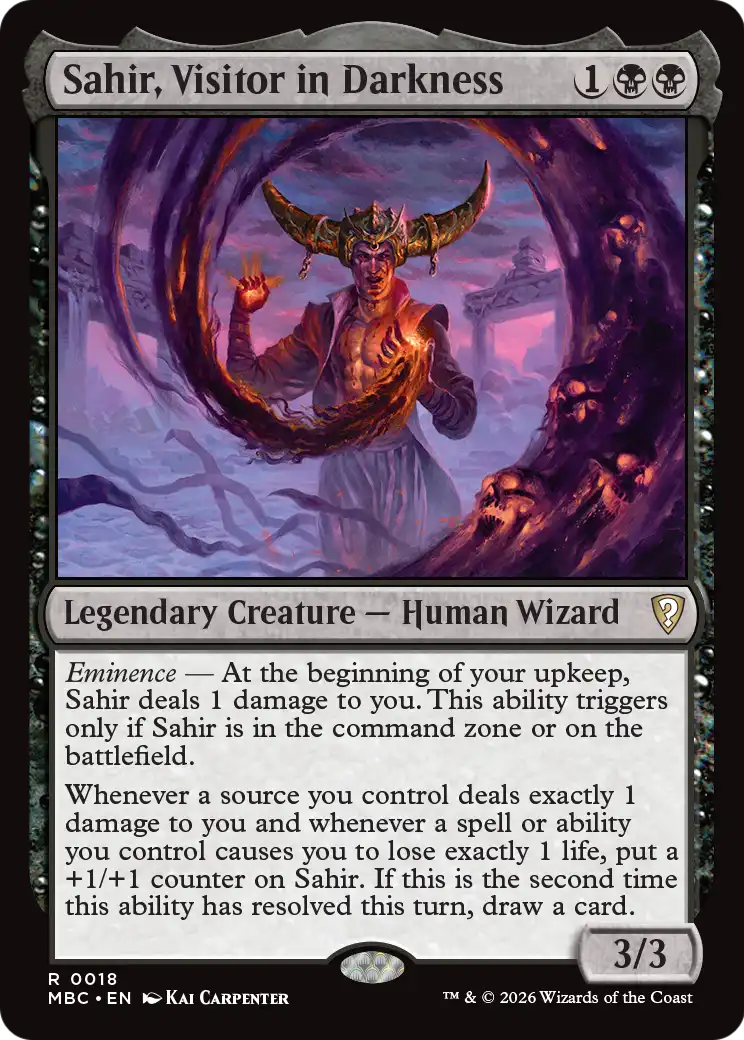 Sahir (Photo: Courtesy of Wizards of the Coast)
Verhey described the Sphinx's return as a deliberate nod to old commanders. During the Multiverse Reforged deck presentation, he explained where the idea came from:
"I thought it would be so fun to call back two cards from old Commander products and old decks that are really beloved. In this world, in the main set, there are these elder sphinxes, right? So what if we did that with The Ur-Sphinx?"
The question is whether the new batch represents a course correction or just a truce. The Ur-Sphinx is, according to TheGamer, the most aggressive iteration of Eminence ever printed in terms of rate; Sahir, on the other hand, is the first version with a built-in drawback. The two cards coexist, and that coexistence is exactly what keeps the conversation alive.
The Nauctis shark leak
In November 2026, Eminence returned to the spotlight for another reason. After Wizards revealed the four Commander decks for Nauctis: The Sunken Realm on November 13, a deleted Reddit post resurfaced that had predicted three of the four archetypes with unusual accuracy. The same user, identified as Medical-Cranberry827, also described a Shark commander with Eminence for the Blood in the Water deck: seven mana, 6/6, first strike, +3/+3 for other Sharks and the ability to create a Blood token whenever you attack with one or more Sharks, as long as the card is in the command zone or on the battlefield.
Wizards had not confirmed the commander as of this writing. The case is interesting because it shows how Eminence has become a mental shortcut: as soon as a leak mentions the word, the community knows exactly what kind of engine to expect. What the deleted Nauctis leak really proves is detailed in another Santuário Geek report, with the scorecard of what has been confirmed and what remains speculation.
How to play against (and with) Eminence
The first lesson is not to spend removal on the commander by reflex. Killing Edgar Markov on the battlefield may be necessary, but it does not turn off Eminence if he returns to the command zone — and returning is exactly what the owner will do. The priority targets are the effects that multiply the value: lords, token makers, cost reducers and card-draw engines.
The second is to understand that board wipes do not solve the structural problem. A board wipe buys turns, but Eminence keeps producing next turn, at no cost. Against Edgar, the ideal is to force the owner to cast the commander and then remove the payoffs; against Ur-Dragon and Ur-Sphinx, the priority is to stop the tribe from reaching the battlefield in enough numbers to convert the discount into real advantage.
- Counter triggers, not the source. Stifle-style effects and Tale's End can neutralize Edgar's or Inalla's triggered ability, but they do not reach the static Eminence of Ur-Dragon and Ur-Sphinx.
- Attack the token engine. Against Edgar, removing the Vampires that generate more tokens is worth more than removing Edgar himself.
- Mind the graveyard. Reanimation and copies of commanders with Eminence keep the ability active on the battlefield. Well-timed graveyard hate cuts off that plan.
- Table politics. The Eminence player tends to win long games. Focusing them early, before value accumulates, is a strategic decision, not revenge.
- For pilots: do not use Eminence as an excuse to never cast your commander. The ability is a floor, not a ceiling; the strongest versions of these decks win precisely when the commander hits the battlefield.
What to watch going forward
Eminence turns a decade old in 2027 with a curious record: seven cards, two commanders that dominate power-level conversations, a historical precursor and a reputation its own creator admits he underestimated. The 2026 return does not end the debate — it updates it. If Wizards follows the criterion Verhey stated, the next cards should target increasingly niche tribes and, perhaps, include built-in costs like Sahir's. If the Nauctis shark is confirmed, 2027 begins with another chapter.
For players starting in Commander, the practical takeaway is simple: Eminence is a legitimate and powerful ability, but it is not a shortcut to winning. It rewards those who build the deck around the tribe and punishes those who expect the commander to win the game alone. And, like every mechanic that touches the command zone, it works best when the table has agreed on the power level before shuffling. Readers who want to follow the discussion can check our review of the Multiverse Reforged Commander deck, the product that brought The Ur-Sphinx, and keep up with the next Nauctis reveals at Santuário Geek.
Sources: Magic: The Gathering's official site, Scryfall, TheGamer and Wargamer.
Suggested and related articles
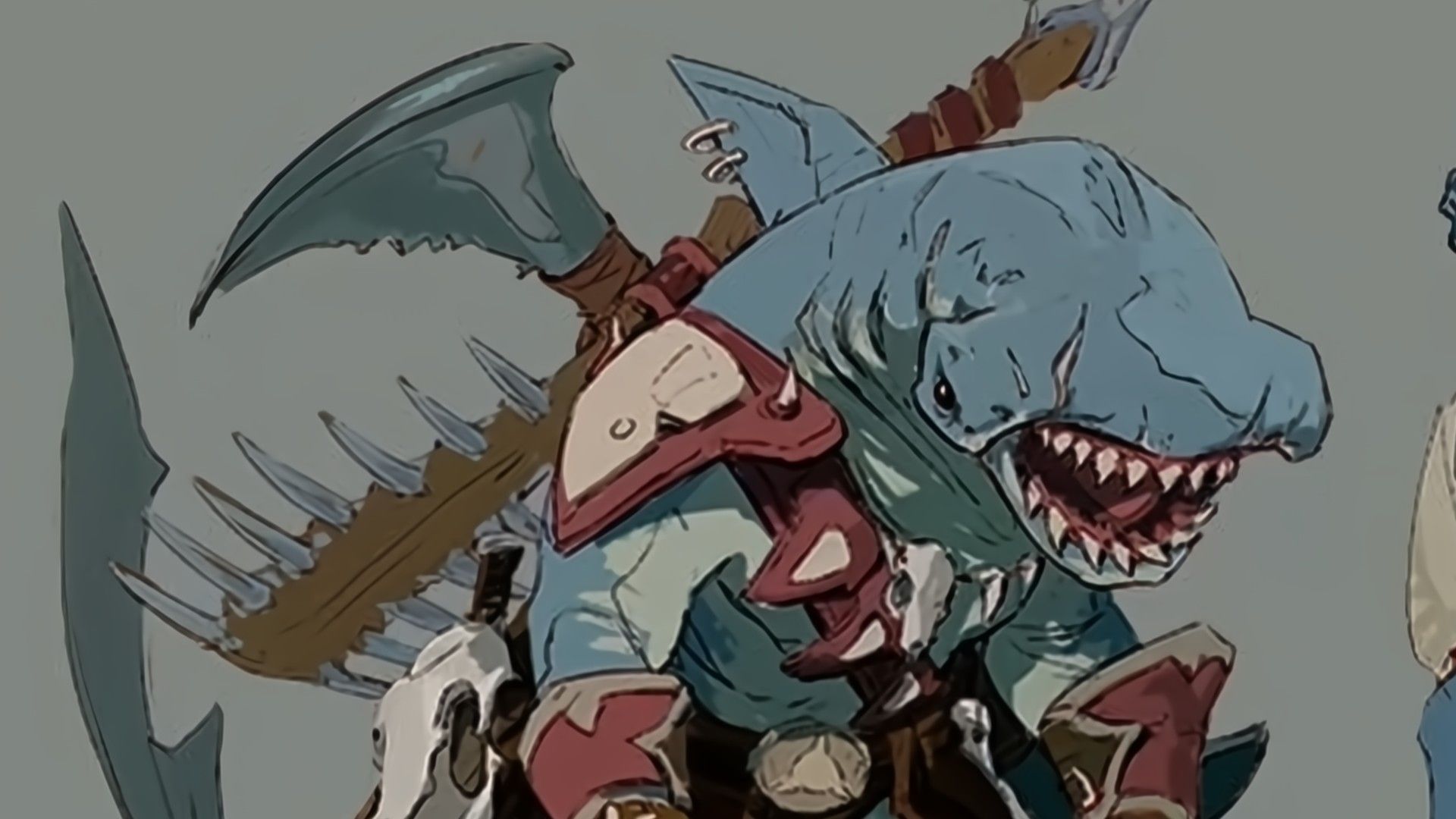
Nauctis MTG: What the Deleted Reddit Leak Really Proves
Pokémon Day 2027 TCG Collection launches January 29
Riftbound: Radiance puts Ekko and K/DA on the TCG stage
Is MTG's Multiverse Reforged Commander Deck Worth It?
Heir of the Dog Review: A Brilliant Victorian Adventure