Madden: What Is Fact and What the Movie Invents
Published on · Updated on
David O. Russell’s film gets the 1984 Amtrak meeting and the refusal of 7-on-7 right, but invents the 1977 party and Al Davis’s role in the NFL license.
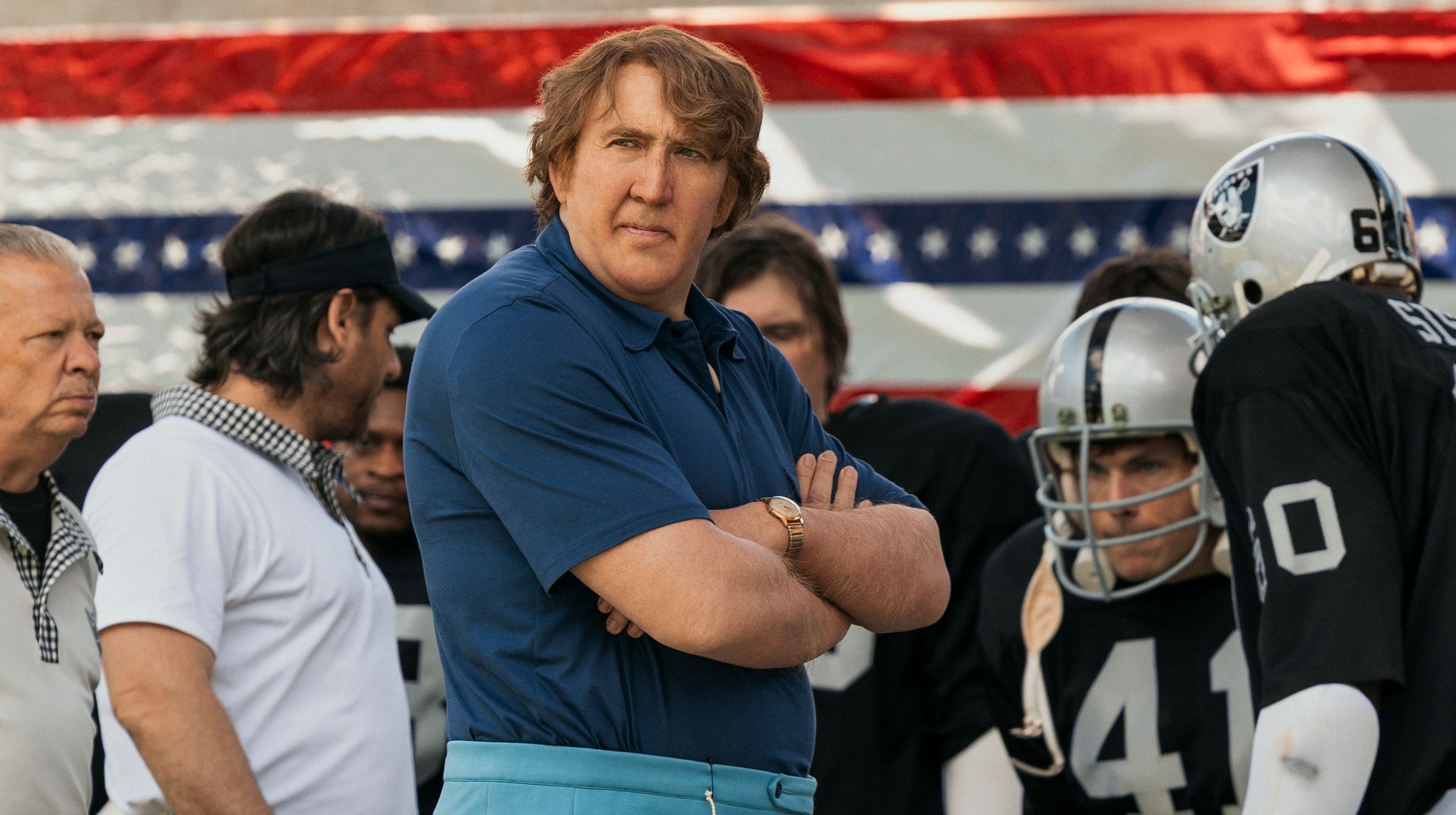
Madden, David O. Russell’s film that opened in select theaters and on Prime Video on Nov. 18, 2026, turns John Madden’s life into a big-screen drama — and, like any fact-based film, it mixes historical reconstruction with narrative liberties. The movie follows the coach who won a Super Bowl with the Oakland Raiders in 1977, became a CBS commentator and lent his name to the game that helped turn the NFL into the most valuable sports property in the United States. Sean Gregory’s report for TIME interviewed Trip Hawkins, founder of Electronic Arts and a central figure in the third act, and makes it possible to separate precisely what the film gets right from what was invented for the screen.
What the movie is about
Written and directed by Russell, who also produces, Madden travels across three fronts of its protagonist’s life. The first is his coaching career, including the Super Bowl win and the conflict between his passion for football and the attention he owed his family — Kathryn Hahn plays Virginia, Madden’s wife. The second is his transition to the broadcast booth, when he became CBS’s lead football commentator in 1981 and later moved through FOX, ABC and NBC, building a popular persona that led to commercials for Miller Lite, Ace Hardware and Tinactin.
The third front — and the most revealing for anyone who follows games — is the creation of John Madden Football. Comedian John Mulaney plays Trip Hawkins, and the scenes devoted to the game’s development illuminate one of the least explored chapters of Madden’s biography and, according to the report itself, perhaps the most important one for understanding the league’s growth in the 21st century.
The train meeting: what really happened
The factual core of the film lies in the first contact between Hawkins and Madden. In 1984, the Electronic Arts founder boarded an Amtrak train in Denver and walked to the dining car to pitch his idea to the CBS commentator, who was known for avoiding planes. The scene is real, and so is the context: Hawkins wanted to license the name of a popular figure for a football video game.
The problem was technical. The 8-bit home consoles of the era could not replicate a full 11-on-11 NFL game. Hawkins therefore proposed a reduced 7-on-7 version. Madden refused on the spot, arguing that football without the broad-shouldered linemen slamming into one another at the line of scrimmage was not real football.
“He just looked at me and said, ‘That’s not real football,’” Hawkins told TIME. “He’s always going to do that. He’s going to just look you in the eye, he’s going to be deadly serious, he’s going to speak with his even tone, and it’s going to be like the voice of God. And you’re going to do exactly what he says.”
Madden’s stubbornness delayed the project, but it also set the standard for the game. The demand for fidelity to the league is, therefore, one of the points where the biopic gets it exactly right.
The 1977 Super Bowl party that never happened
The first major dramatic license appears early in the video game arc. In the film, Mulaney’s Hawkins pitches the idea to Madden during the 1977 Super Bowl victory party, shortly after the Raiders beat the Minnesota Vikings. The scene works as a character introduction, but it never happened: the first meeting between the two men was indeed on the Amtrak train, in 1984, seven years later.
Russell acknowledged the change and explained his reasoning in an interview with the magazine. “I wanted to get him going in the story,” the director said. “There’s feature filmmaking then there’s documentaries. In feature filmmaking, you want to meet a character that foreshadows your future.” It is a clear example of temporal compression: a real event is moved forward to create narrative tension and justify the collision of two worlds that, in real life, took years to meet.
Al Davis and the NFL license: the scene Hawkins denies
Another liberty in the script involves Christian Bale, who plays Al Davis, the mercurial Raiders owner and Madden’s former boss. In the film’s version, Davis takes part in the effort that allows Electronic Arts and Madden to secure an NFL license to use team names and logos. Hawkins was categorical in denying it.
“Al Davis had nothing to do with that,” the EA founder said.
The denial matters because Davis was, in real life, a relentless litigant against his fellow franchise owners. Turning him into a facilitator of a licensing deal is a screenwriting choice that reinforces his emotional bond with Madden, but it does not match what happened behind the scenes of the league agreement.
What the movie leaves out
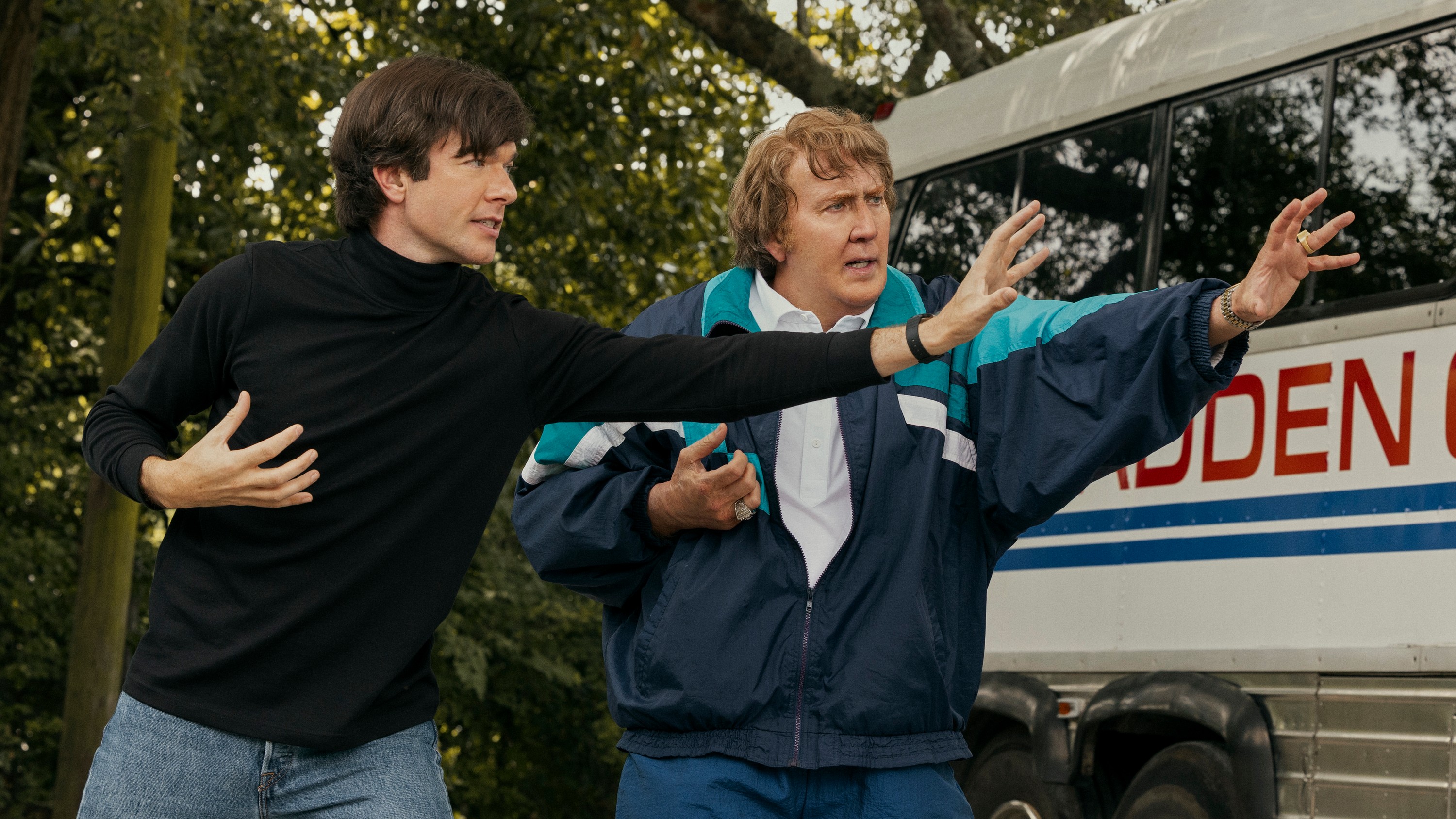
The script also omits details that would have humanized Hawkins and explained the dynamic between the two men more clearly. The executive was no complete stranger to football: he played on Harvard’s freshman team. That information, however, does not serve the drama — the clash between the businessman and the coach works better when one appears to know nothing about the other’s sport.
“They didn’t speak each other’s language,” Mulaney said of his character and Cage’s Madden. “When you put someone like me in there, it’s a good signal to the audience: this might not be a guy who’s always in the huddle.”
Before landing on Madden, Hawkins tried other routes. His first choice was Joe Montana, the Hall of Fame quarterback and four-time Super Bowl champion with the San Francisco 49ers, but the player had a deal with Atari. Hawkins even released the basketball game One on One: Dr. J vs. Larry Bird before returning to football. He then approached former quarterback and coach Joe Kapp, who changed his mind and demanded his own name on the product plus royalties on sales. Joe Kapp Football was not going to fly. That is when Hawkins decided to pay royalties to John Madden.
Fact or fiction: what the film gets right and what it invents
| Scene in the film | What actually happened | Verdict |
|---|---|---|
| Hawkins pitches the game at the 1977 Super Bowl party | The first meeting took place on an Amtrak train in 1984 | Fiction |
| Madden rejects the 7-on-7 version | He insisted on 11-on-11 and said the other format “wasn’t real football” | Fact |
| Al Davis helps secure the NFL license | Hawkins says Davis “had nothing to do with that” | Fiction |
| Hawkins is portrayed as a football novice | He played on Harvard’s freshman football team | Omission |
| Madden wins the Super Bowl as Raiders coach | A real victory, in 1977, against the Minnesota Vikings | Fact |
| The creation of the game drives the third act | The title debuted in 1988 and became one of the best-selling sports games ever | Fact |
From “Tripp’s Folly” to a sales phenomenon
Skepticism inside Electronic Arts was high. Madden’s insistence on reproducing full football delayed the schedule, and some executives began calling the project “Tripp’s Folly.” The game only reached the market in 1988, for the Apple II, and gained real traction with the Sega Genesis version in 1990.
From there, the evolution was fast and decisive for the franchise. In 1993, Madden NFL ’94 was released for the Sega Genesis and Super NES with NFL-licensed team names and logos, becoming a best-seller. The following year, real player names were included. Since 1995, “Madden Bowl” tournaments have taken place during Super Bowl week, bringing together celebrities and esports athletes.
Why the game turbo-charged the NFL
The report’s central thesis is that the video game was not merely a product derived from the sport, but an engine for the league’s own expansion. Many fans — especially children — learned the rules, memorized formations and built ties to teams and players inside the game before watching a real match. NFL revenue jumped from about $4 billion in 2000 to more than $23 billion in 2025, and Electronic Arts — which also owns FIFA, the college football game and franchises such as The Sims — was sold in August 2026 to an investor consortium for $55 billion.
Wide receiver Julian Edelman, a three-time Super Bowl champion with the New England Patriots and MVP of Super Bowl LIII, is one of the witnesses to that relationship. He and Marshawn Lynch, the running back known as “Beast Mode,” appear in the film as nerdy video-game programmers — casting that reinforces the production’s affectionate tone.
“It’s given people the language to be able to communicate football,” Edelman said. “You got to be your favorite professional football player. I got to be Jerry Rice, Steve Young, Jeff Garcia. It just inspired you because you wanted to be those guys.”
The director himself found the inspiration for the film in his teenage son’s routine. “It was a revelation to me how this was this campfire, or street corner, through which he and his friends hung out,” Russell said. “I saw his joking and dancing, and it was a whole side of him that came to life from playing this game.”
Legacy and where to watch
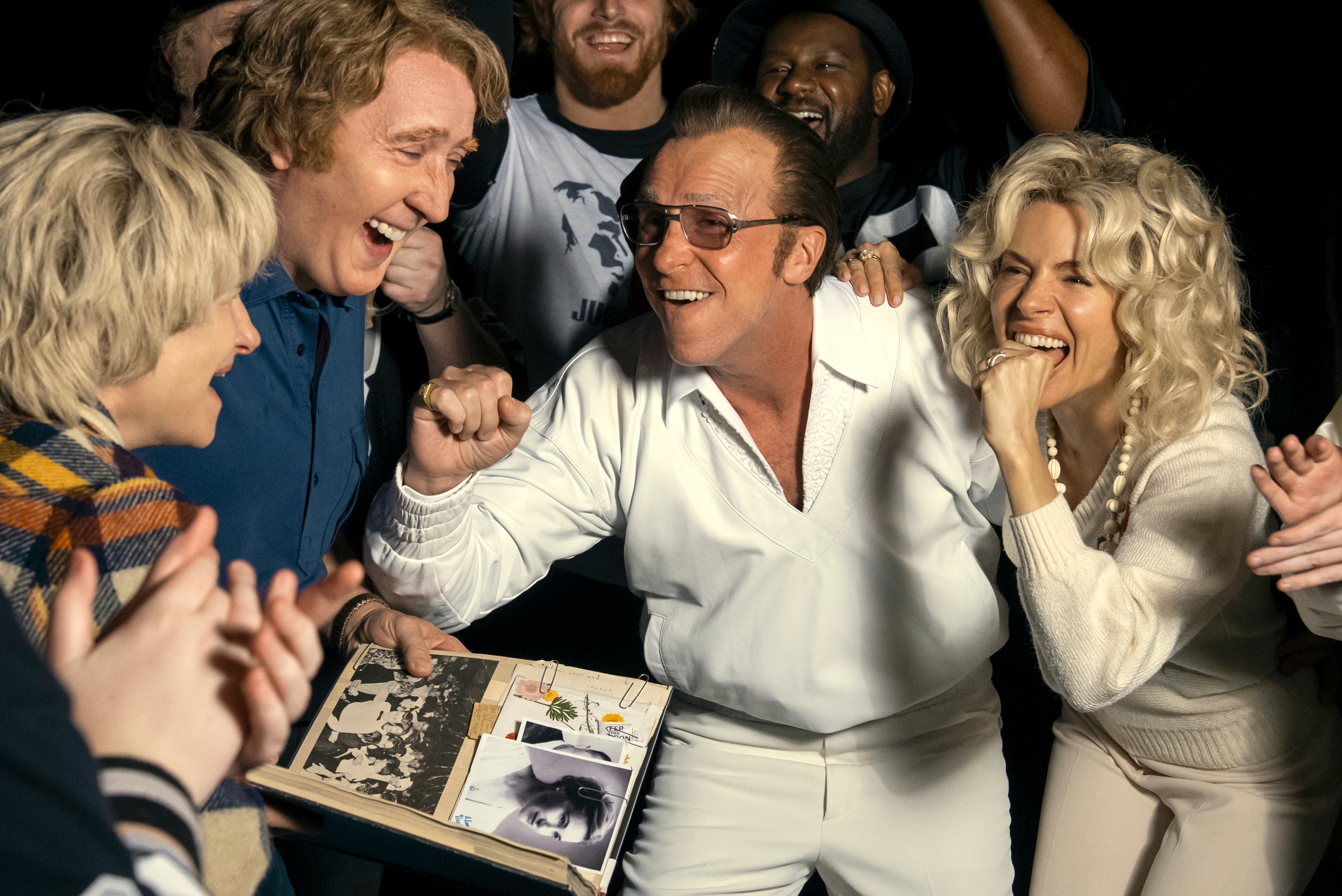
John Madden retired from the booth in 2009 and died in 2021, but his name lives on in the game he helped shape. The film arrives at a moment when the Madden NFL franchise is still an annual release and the league keeps stacking billion-dollar broadcast deals. For Brazilian viewers, who mostly follow football through the regular season and the Super Bowl, the movie works as an entry point into the story of a man who explained the sport to millions — first as a coach, then as a broadcaster and finally as the name on a video game cover.
Madden is in select theaters and available on Prime Video since Nov. 18, 2026. For those who want to compare the on-screen portrait with the real trajectory, TIME’s original report by Sean Gregory gathers the interviews with Hawkins, Russell, Mulaney and Edelman that informed this analysis. Readers interested in the sports side can explore the film coverage and the gaming section of O Santuário Geek, which follows both movie releases and the annual seasons of EA’s franchise.
Suggested and related articles
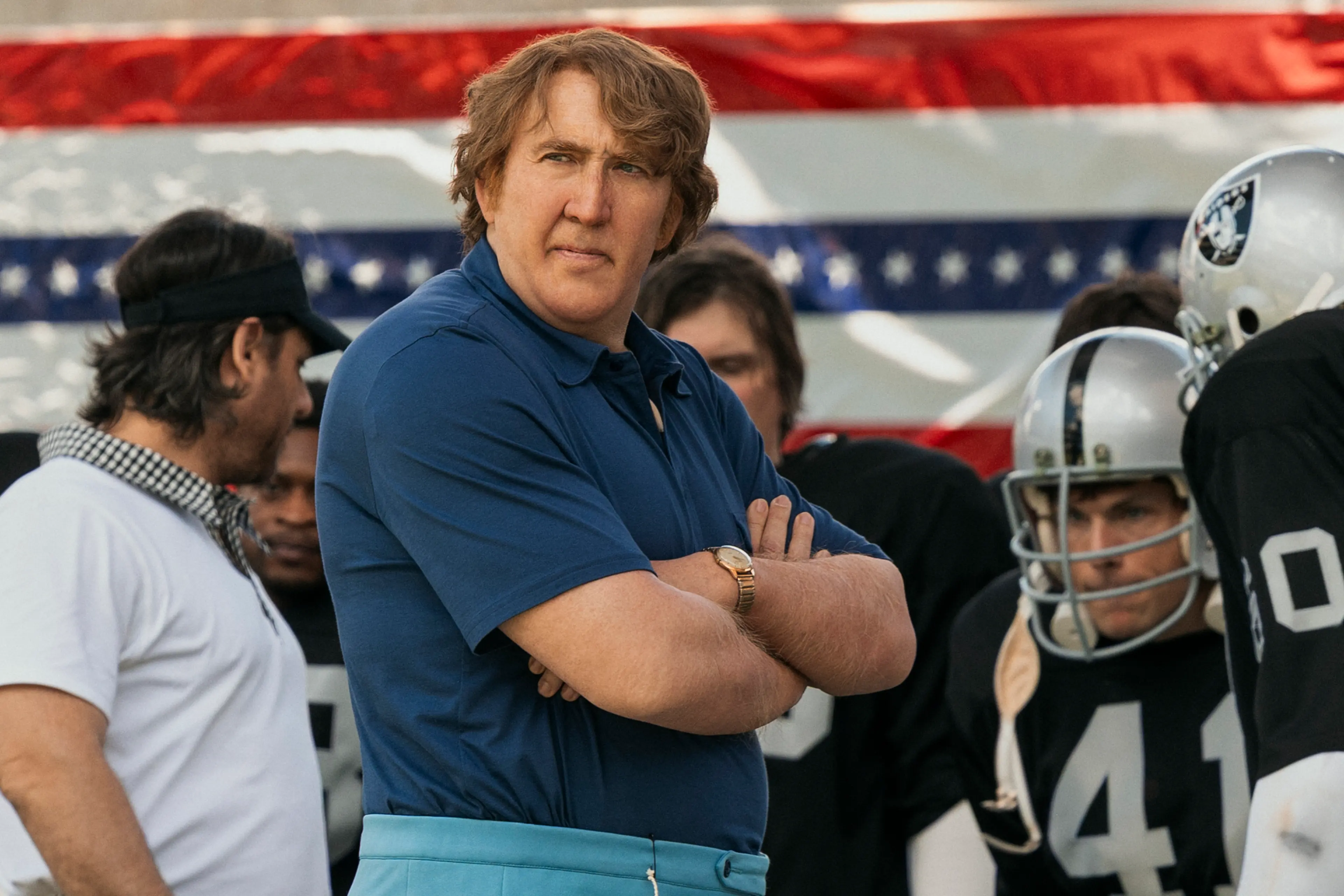
Madden: where to watch the Nicolas Cage movie

Expelled from Paradise: Resonance Opens at No. 5 in Japan

Purge List: live-action film starts shooting for 2027

EA Sports confirms Fight Night is coming back

Need for Speed: Underground 2 now runs in your browser