
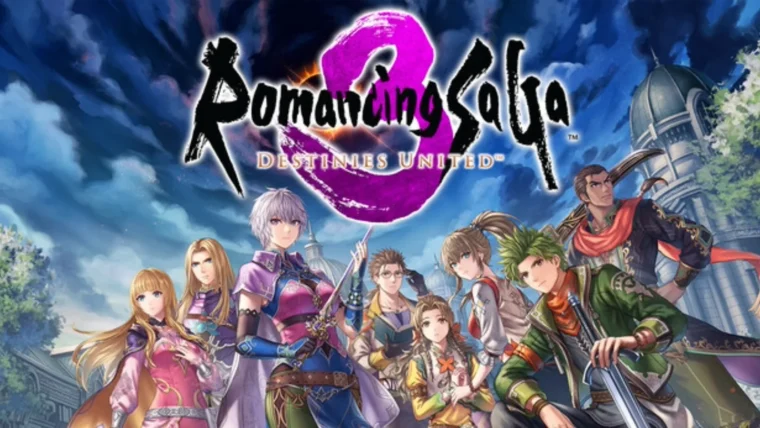
Square Enix has finally lifted the veil on one of its most anticipated and mysterious projects at Tokyo Game Show (TGS) 2026: Romancing SaGa 3: Destinies United. The remake of the 1995 classic, kept secret until the very last moment, built huge expectations among fans and the specialized press. Our team at O Santuário Geek was at the Square Enix booth to see up close what this new version of the RPG has to offer.
The anticipation was palpable, especially because the title had not even been revealed at Square Enix’s own pre-TGS events. With the promise of revitalizing a game with more than three decades of history, the big question was: how to balance nostalgia with the demands of a modern audience? The first impression is that the developer found a path that honors the past while embracing the future.
A Three-Decade Visual Leap
You do not need to be an expert to notice the visual transformation. Thirty-one years separate the original Romancing SaGa 3, released for the Super Famicom in 1995, from its reimagined version. Comparing the pixelated graphics of the 16-bit era with today’s polygonal models and high-definition textures would be, at the very least, unfair. The hardware of the time, however advanced it was, does not compare even to today’s smartphones.
The true measure of a remake, however, lies in its ability to capture the essence and atmosphere of the original. The character designs, for example, were masterfully translated. The personality and physical traits of each hero and villain are immediately recognizable, even with the redesign. Still, there is a subtle shift in artistic sensibility.
The characters of the original game, drawn in pixel art, conveyed an impression of sharper eyes and a certain roughness. In the remake, that intensity was softened. A clear example is the character Muse: while the original version exuded an aura of mystery and fragility, Destinies United preserves her delicacy but tones down the impression of extreme frailty. This adaptation seems to nod to contemporary artistic trends without distorting the original work.
“Character designs generally translate the original’s traits well. They faithfully capture not only each character’s personality, but also their physical characteristics.”
Compared with its predecessor, the Romancing SaGa 2 Remake, the visual evolution is remarkable. While it does not reach the photorealism of top-tier AAA titles, the unique style of Romancing SaGa 3: Destinies United shines on its own, preserving the series’ distinct flavor. Whether the visuals capture the spirit of the original can be answered with a resounding yes.
Narrative and Immersion: First Impressions
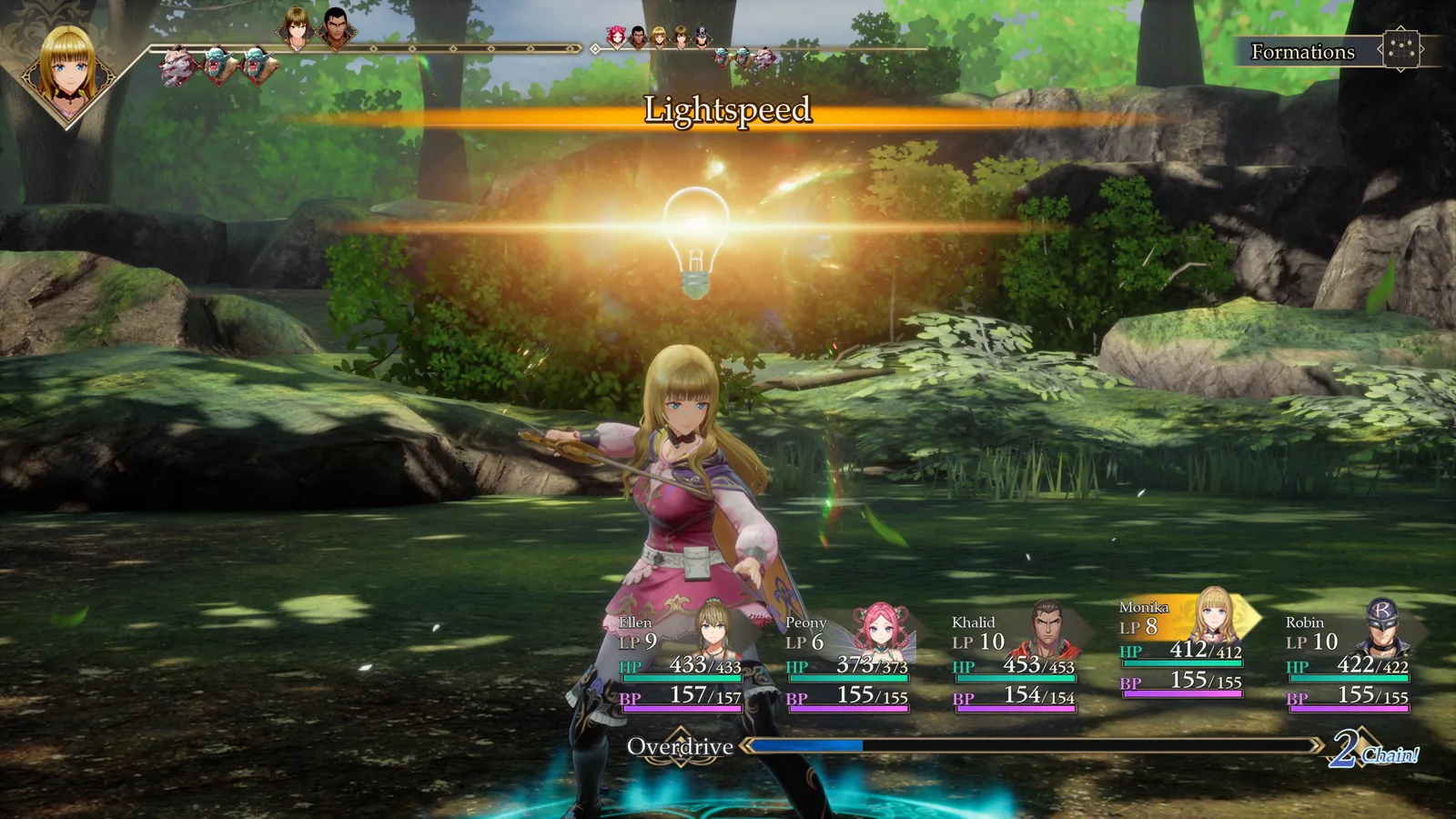
The TGS demo, with its limited 20 minutes, did not allow an in-depth analysis of the story. It was a brief glimpse, splitting time between story mode and a battle against a demo-exclusive boss. Even so, the effort devoted to the narrative came through in the dialogue, the character voice acting, and the cutscene presentation.
The voice acting proved vibrant, with each voice clearly conveying its character’s personality. Even without the full context of the plot, the situations and the characters’ motivations were immediately clear. This suggests Square Enix invested heavily in making the narrative experience more accessible and engaging, for series veterans and newcomers alike.
The Heart of Combat: Tradition and Innovation
Combat, naturally, took up most of the demo. Romancing SaGa 3: Destinies United does not merely copy the original battle system; it reinterprets it to suit modern sensibilities while keeping the essence that made the game a classic.
Strategic Formations
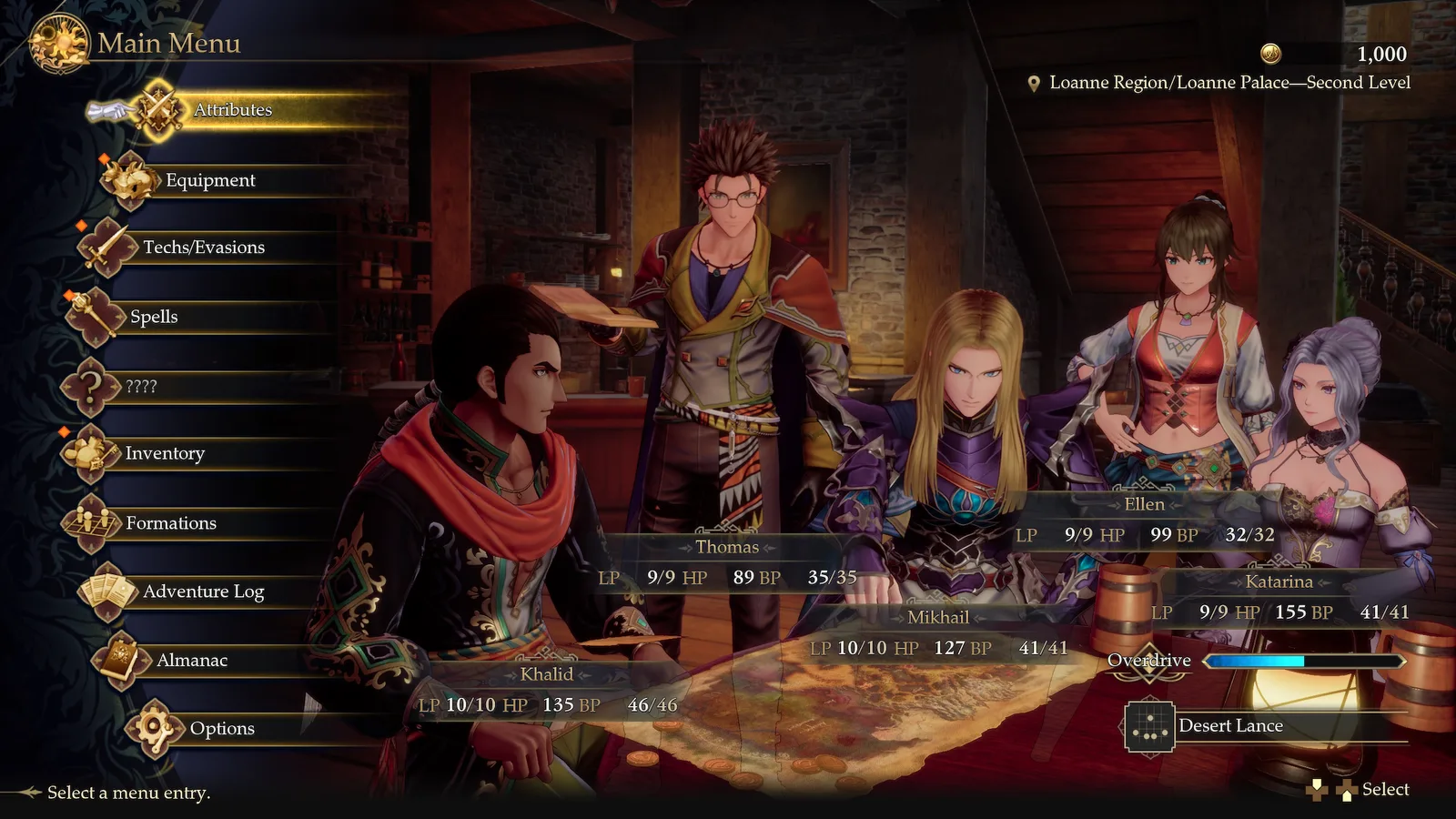
Formations, a pillar of the original combat system, are back. In the 1995 game, they ranged from 1 to 5 characters and granted special effects such as increased attack, defense, speed, or HP recovery. The remake keeps this structure but with a more fluid approach, allowing position changes within a standard five-character layout.
In the demo, three formations were available:
- Free Fight: Lines up the party members in a row, with no special formation effects.
- Desert Lance: Places a single tank at the front, with the other characters at the rear, focused on defense.
- Whirlwind: Grants special bonuses, such as increased agility for the whole party.
An interesting detail is that, even in formations with no inherent effects, certain characters received attribute bonuses, pointing to a synergy between specific characters and the chosen formations.
Glimmer: The Spark of Innovation
The Glimmer (閃き) system, which lets characters randomly learn new techniques in the middle of combat, was faithfully reproduced. When using basic attacks or certain skills, characters can “spark” a new technique in the heat of battle. The chance of a Glimmer rises against stronger enemies, and techniques learned this way are often more powerful.
“Glimmer faithfully reproduces the original system: as characters fight enemies, they suddenly spark new techniques – a randomized form of character growth.”
This mechanic, unique to the Romancing SaGa series, is one of its greatest charms. Instead of learning skills by level or proficiency, Glimmer adds an element of surprise and strategy, promising the same fun for longtime fans and a singular progression experience for newcomers.
Area Attacks and New Mechanics
Area attacks (AoE), which hit columns, rows, or all enemies, were recreated as well. The remake, however, adds an extra layer of strategy by differentiating attack widths. Even among column attacks, there are now techniques with narrow or wide hitboxes, requiring players to consider the area of effect to maximize damage.
The big new additions to combat are the Overdrive gauge and the United Attacks. Overdrive works as an ultimate gauge shared by the whole party. As you attack enemies, the gauge fills, and once it is full, you can unleash a United Attack centered on a chosen character.
There is one important condition: combos can only be performed between two connected characters within the formation. For example, if Thomas is in the center with Julian and Monica at his sides, combos are restricted to Thomas and Julian, or Thomas and Monica. Consuming a dedicated resource, the United Attack is powerful, with two characters striking simultaneously and dealing heavy damage, so timing is crucial.
In the demo, only “2-Chain” attacks were available, but the designation suggests longer chains, involving three or more characters, may unlock as the game progresses.
A Delicate Balance
In short, Romancing SaGa 3: Destinies United is a game betting on modernized visuals and presentation while staying as faithful as possible to the original battle mechanics. That balance is essential for any remake. Drastically changing the gameplay could alienate fans who waited years for the series’ return.
In that sense, the remake, at least in the demo, chose to raise visual and presentation standards while keeping the original’s core. The impression is that Square Enix met longtime fans’ expectations.
That does not mean the game is only for veterans. Strategic elements such as Formations, Glimmers, and area attacks, now complemented by Overdrive and United Attacks, offer enough depth for new players to find great satisfaction in the battle system.
With launch scheduled for February 17, 2027, there are still about five months left for final polish. While the visuals are already decent, an extra touch of “wow factor” would be welcome to crown the work. The expectation is that the title will arrive even more refined and dazzling.
For more in-depth analyses, exclusive news, and complete coverage of the biggest releases in gaming, movies, and anime, keep following O Santuário Geek. Your definitive source for pop culture!



💬 Comentários (0)
Deixe sua teoria ou opinião sobre esta matéria.
Nenhum comentário por enquanto. Seja o primeiro a comentar!