
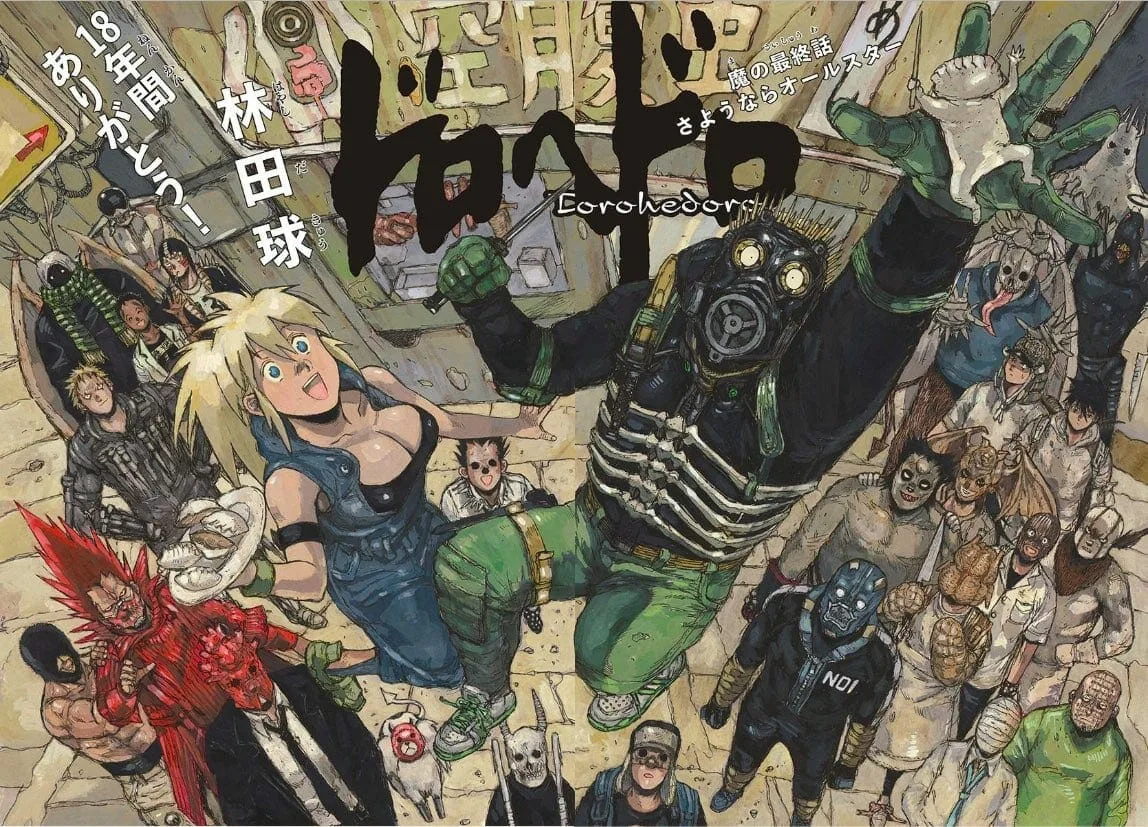
Studio MAPPA broke a six-year silence by revealing the real reasons behind the long wait for the second season of Dorohedoro. During the Anime Central event, director Yuichiro Hayashi, creative producer Yusuke Tannawa, and animation producer Koya Okamura explained how industry giants delayed the project, the impact of the end of TV censorship on streaming, and the studio's firm stance on artificial intelligence.
The Real Reason for the 6-Year Wait and the Impact of Attack on Titan
Many fans feared that the adaptation of Q Hayashida's bloody manga had been canceled, but director Yuichiro Hayashi assures that the intention to produce a sequel existed since the first season ended. The major obstacle arose when the industry production committee handed MAPPA the project for Attack on Titan: The Final Season, a work with extremely high technical demands that also relied heavily on 3DCG. Soon after, the studio took on the second season of Vinland Saga.
To avoid shelving Caiman and Nikaido's journey, the studio's leadership made a strategic decision. The team developed character designs and visual elements for Dorohedoro in parallel with the climax of Attack on Titan over two years. This overlap allowed Attack on Titan animators to help bolster production, while the core group of directors and artists from the first season remained intact. The main structural change in the workflow was outsourcing background art to specialized studios Studio Easter and MOA Studio.
End of TV Censorship Unleashed Full Gore and Silent Hill Homages
Despite internet rumors suggesting the new season switched from 3D to traditional 2D, producer Yusuke Tannawa clarified that the ratio between the two formats remained virtually the same. The major visual difference perceived by the audience came from the change in distribution: without the restrictions imposed by Japanese broadcast TV censorship guidelines, the studio could produce all the original gore and visceral violence for streaming.
Director Hayashi emphasized that this freedom allowed them to deliver the exact brutality demanded by author Q Hayashida. The sequence where the character Ebisu is split in half exemplifies the new level of anatomical detail. A horror movie enthusiast, Hayashi incorporated direct references to genre classics and pointed to Konami's Silent Hill game franchise as his primary visual and atmospheric inspiration for the setting of the Hole.
Soundtrack with 60 New Tracks and the Status of Dai Dark Adaptation
The anime's musical identity maintained its partnership with the group (K)NoW_NAME, brought back by the music department of distributor TOHO. The music collective composed between 50 and 60 new tracks in just four months, receiving updated storyboards from the studio to align each note with the story's frenetic atmosphere.
With the sequel now solidified, questions arose about the possibility of MAPPA adapting Dai Dark, another sci-fi and dark comedy work by Q Hayashida. The technical team expressed great fondness for the story but confirmed that they currently lack the operational capacity and schedule space to take on a new title by the author.
Restructuring Against Crunch and Total Ban on AI Use in Art
Known in the past for controversies involving exhausting work routines in the anime industry, MAPPA's management used the panel to detail internal changes focused on team health. The studio expanded its permanent staff and adopted a rule allocating each animator to only one major production at a time, preventing professionals from splitting their attention across multiple simultaneous projects.
Regarding the use of Artificial Intelligence in animation, the studio reiterated the warning displayed in the credits of Chainsaw Man – The Movie: Reze Arc, prohibiting the use of its works for training generative models. Tannawa assured that the studio will never use AI to create images, background art, or visual concepts, limiting interest in the technology exclusively to bureaucratic and administrative automation to optimize the human production line.