LoL Arena: Champion Tier List and Best Duos for the 2026 Season
Published on · Updated on
Arena is League of Legends' 2v2 mode with duos, augments and revive. Check the 2026 tier list and best duo synergies.
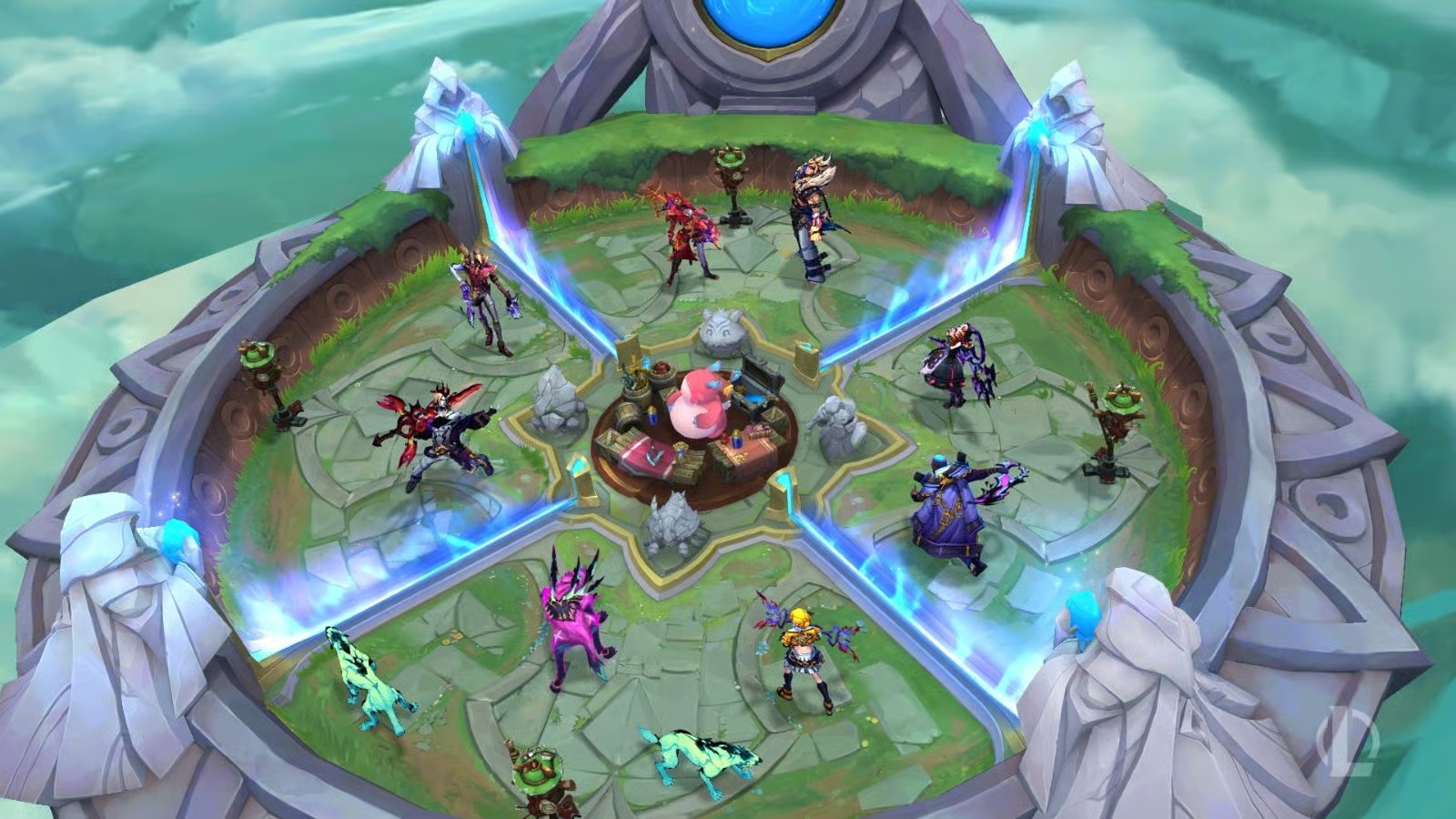
The Arena mode is League of Legends' 2×2 format: four duos drop into an arena that shrinks every round and fight until only one team remains standing. Along the way, each round grants augments — modifiers that change the rules of engagement — and a downed partner can return to combat through revive. No towers, no minions, no long farming: pure survival in short rounds.
What Is Arena Mode
Arena was born as a Riot Games experiment outside Summoner’s Rift and returned in revamped versions, with a new look, refreshed augments, and a special item per match. The pitch is straightforward: instead of a 5v5 that usually runs past 30 minutes, you play 2 versus 2 in 15- to 20-minute matches, with nearly instant combat.
Each match brings together four duos. Each round pairs teams off against each other, losers lose a heart, and a duo whose reserve hits zero is eliminated — the last one standing wins. It is the ideal format for testing duo compositions the Rift rarely allows, for playing with a friend without depending on eight other people, and for training damage-trading mechanics at a fast pace. For more content like this, follow our games coverage.
How It Works
More important than memorizing champion names is understanding Arena's three engines: rounds, augments, and revive. They decide who wins.
Rounds
Each round pairs the surviving duos and the fight takes place on a map smaller than any Rift lane. The duo that loses the fight loses a heart; with no hearts left, it is eliminated. The field also shrinks throughout the match — the classic ring of fire — forcing teams to meet earlier and turning the late game into controlled chaos.
Augments
At the end of each round, each player picks one augment from the options offered by the match. Augments can boost stats, modify abilities, or even create new rules for the fight — and the combination chosen by the duo defines the team's playstyle: a duo stacking damage augments becomes a burst team, while one prioritizing healing becomes an attrition composition. Rounds also grant gold and item choices, so the build evolves along with the strategy.
Revive
When your partner falls, they are not necessarily out of the round: there is a revive area on the map, and standing on it for a few seconds brings the ally back into combat — normally once per round. The catch is that the area is contested: the enemy can occupy it or punish anyone trying to revive in the middle of the fight. That risk means every round can turn around until the very last second.
Tier List by Archetype
Important note: the list below is by archetype, not by champion. The Arena meta changes with every patch — what is strong today may lose strength in the next update — so specific champion ratings go stale within weeks. That is why no placement here is a final verdict: it is a starting point. Check the updated meta in the game client before building your duo. The pace of change is part of the mode's charm — and one of the topics driving pop culture around games.
In broad format terms, the archetypes behave like this:
- Tier S — Duelists and Tanks: overall, dueling and durability champions dominate the Arena meta, because the mode rewards whoever wins the head-on fight.
- Tier A — Control: strong when the duo works together, turning the shrinking map into a zoning advantage.
- Tier B — Pure Support/Utility: on average, it appears less often as the star, but it sustains attrition compositions — and can climb tiers depending on the patch.
Duelists
Duelist champions are the ones that win even damage trades: high mobility, focused damage, and some sustain tool. In Arena they stand out because rounds start at close range and fights are decided in seconds — there is no time to set up long ambushes or farm until you get strong. The mobility edge is worth gold on a shrinking map: the duelist chooses when to engage and when to leave the fight.
Control
The control archetype uses stuns, slows, and blocking zones to set the pace of the fight. It is a style that grows stronger as the arena shrinks: with less room to escape, good zoning turns the map into a trap. The caveat is that control alone takes no one down — it needs a duo partner who converts the vulnerability window into damage. In coordinated duos, though, it is one of the most consistent archetypes.
Tanks
Tanks survive the burst at the start of the round and stretch the fight until the opponent makes a mistake. In Arena, where everyone receives augments and items, the ability to absorb the first combo and keep fighting is hugely valuable: while the tank holds, the partner stacks damage and the enemy duo burns its own resources. Tank compositions also punish burst teams — if the first combo does not kill, the round turns into attrition favoring whoever endures longer.
Support/Utility
The support and utility archetype delivers healing, shields, and buffs that multiply the partner's value. In long rounds, sustain decides: the duo that re-enters combat with more health wins the next trade. The weak point is the lack of its own damage — a support without a damage-dealing partner becomes a team that only prolongs defeat. That is why it is a duo archetype: almost never the star alone, almost always decisive in attrition compositions.
Best Duos
More than individual champions, Arena rewards role synergy. Duos that cover each other's weaknesses win more rounds than two damage champions fighting over the same resources.
Damage + Control
The classic combination: control locks down the target and damage converts the window into an elimination. In Arena, where combat starts up close, a good stun followed by the partner's burst ends the round in seconds — and reduces the risk of a prolonged damage trade, where control alone loses strength. It demands communication, but it is the synergy with the highest ceiling for fast matches.
Damage + Tank
The tank holds the frontline and absorbs the first combo; the damage champion stays alive to stack damage and clean up the round. It is the most mistake-forgiving composition: even if the opposing duo plays the opening seconds better, the tank stretches the fight until the carry takes over. A good pick for anyone starting out in the mode.
Tank + Sustain
Duos that never die: while the tank absorbs and sustain restores health, the round drags on until the ring of fire closes in and the opponent is forced to attack at a disadvantage. The price is pace: the match takes longer, and enemy damage augments piling up can break the plan. It works best for duos that know their own style.
Want to dig deeper into champion mechanics and stories? The Revista Pixel games hub gathers guides and stories from the League of Legends universe and beyond.
Frequently Asked Questions
Is Arena a ranked mode?
Queue setup changes between seasons: in some windows Arena arrives with its own ranked queue, in others it is normals only. Each window's format is announced in the official client and patch notes — worth checking before queueing up.
How many augments do I pick per match?
Generally, one pick per round, from the options offered by the match — and each player picks their own. The exact pool of options and pick frequency vary by patch, so best to follow what is in rotation in the mode.
How does revive work?
After falling in combat, your partner can return to the game by standing in the map's revive area for a few seconds, normally once per round. The area is contested: if the enemy controls it, the rescue can cost dearly — which turns every takedown into a tactical decision.
Does the tier list change every patch?
Yes. Riot adjusts champions, augments, and items frequently, and the Arena meta moves with them. That is why this guide is intentionally general — for updated ratings, check the meta in the game client and the official notes.
For official information about the mode, rotation schedule, and patch notes, visit the official League of Legends site.
Suggested and related articles
K/DA: Riot announces Worlds 2026 brand collabs
Monster Hunter Now Halloween event starts October 26
Riot delays private LoL replays to patch 26.21

Netflix Announces Release Date for Money Heist Spinoff Starring Berlin
Needy Streamer Overload Creator Announces New Psychological Visual Novel for 2026